
Let me begin with a confession.
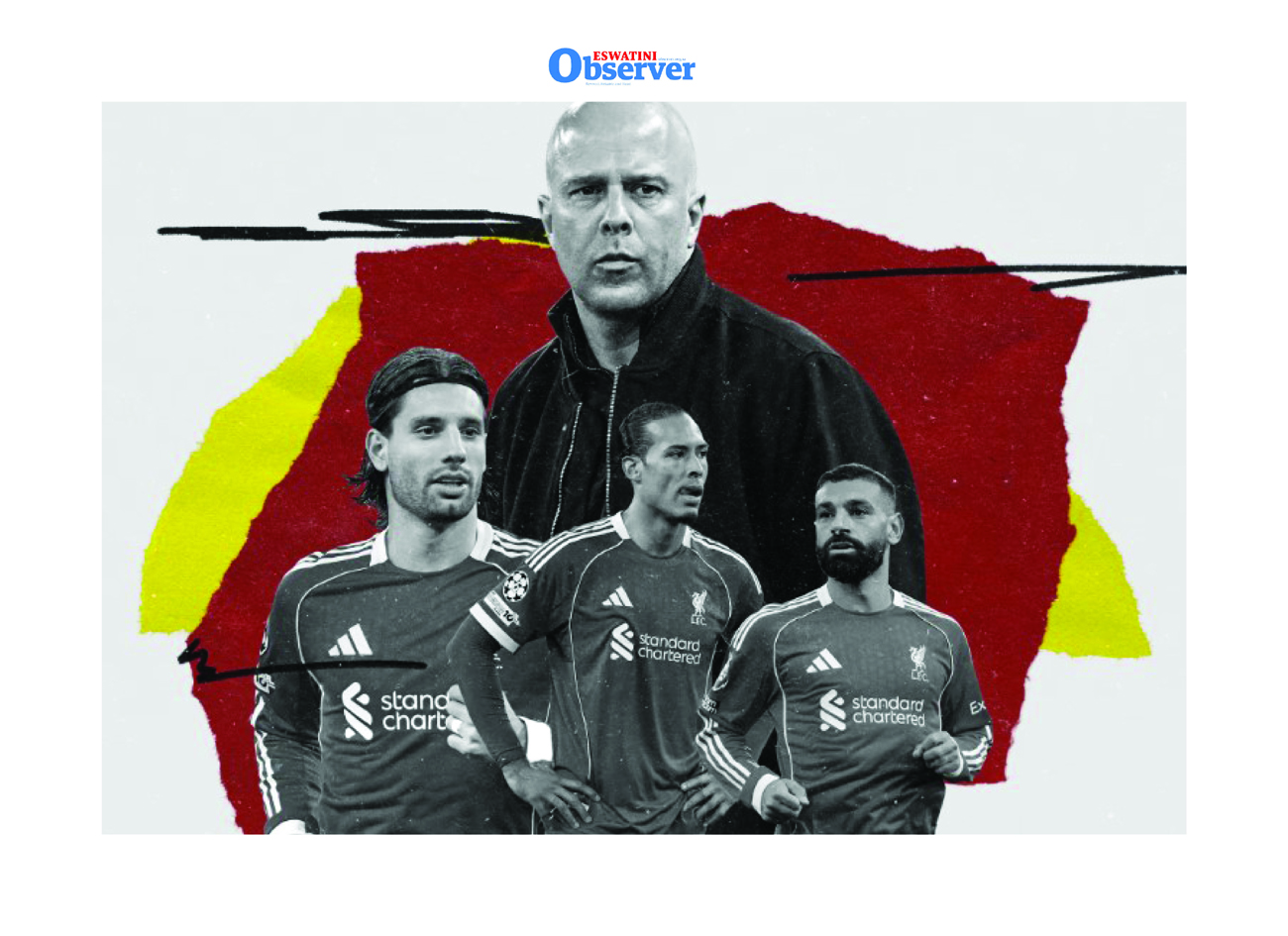
As I write this, my beloved Liverpool is being torn apart on the pitch.
It is painful, disorienting, and almost surreal to watch a team you trust unravel so completely.
And yet, that feeling is nothing compared to watching the slow, public implosion of Cabinet.
Because what we are witnessing is not just dysfunction. It is collapse.
There was a time when Cabinet inspired confidence. It felt cohesive, purposeful – a team that, even when imperfect, could be trusted to act in the public interest.
Today, that illusion has shattered.
The cracks are no longer subtle; they are glaring, widening, and impossible to ignore.
Even the Deputy Prime Minister Thuli Dladla, with all her political experience and steadying presence, appears unable to hold the centre – and we all know she is well capable of it.
A mother-figure everywhere she goes, the woman we all refer to as Aunt Thuli has not shied away from playing her role in such tumultuous times in Cabinet, accepting that she is after all, the senior-most in Cabinet.
Her recent remarks in the Senate should alarm anyone still clinging to the hope that unity and direction can be restored in this Cabinet.
Revealing that she had tried more than once to call for sensibility and that members of Cabinet are doing as they please, the DPM informed us all that things were worse than could be imagined.
“I’ve tried to bring unity, but failed,” she told a stunned Senate. Much more interestingly, these words were said in the presence of the prime minister.
“I ask them to sit down and thrash their differences, but all they do is just look at me and do nothing,” she stated.
These remarks reveal a Cabinet so divided that the question is no longer whether the cracks can be papered over – but whether anything remains to hold together, despite there being a combination of mature and seasoned politicians.
Yet, what is now obtaining in Cabinet is not disagreement – it is plain disintegration. The mere fact that this is now being revealed for the public to know says a lot. That we are all raising our concerns and worries is enough to show the centre isn’t holding.
The latest episode of such sensational Cabinet implosion was laid bare on Friday at the signing of the Memorandum of Understanding between the Mbabane Municipal Council and the Mbabane West and Mbabane East Tinkhundla at the Hilton Garden Inn.
Here were three Cabinet ministers – colleagues, ostensibly aligned, and as they should be – standing on the same platform to endorse a developmental initiative.
Two spoke passionately about progress and cooperation and the need for such an agreement, which of course is crucial for the progress of the constituencies under the tinkhundla.
However, the third, the tourism minister, walked out and refused to sign the agreement, claiming to have been ambushed.
Now pause a little on that. A Cabinet minister, rejecting a process involving fellow Cabinet members, in full public view. To make things worse, she admits to this in an interview with the media, telling Channel Swati that she was invited only on consultative basis and not to sign off – and that she had not been part of the conversation hitherto!
If ever there was a moment that captured the depth of this dysfunction, this was it.
To be clear, the minister is not wrong to resist signing something she does not fully have the authority to endorse. In fact, it is big of the minister to still respect the position she holds in being the people’s representative, clearly not undermining the importance of the buy-in from the constituency. But, that is neither here nor there.
The issue is how such a breakdown could even occur among ministers expected to act collectively. How does Cabinet arrive at a public event without internal alignment on something so basic?
The answer is as troubling as it is obvious; there is no longer a shared centre.
This is no longer a Cabinet that speaks with one voice.
It is a loose collection of individuals, increasingly at odds, increasingly public in their disagreements, and increasingly unconcerned with the principle of collective responsibility.
The Mbabane incident is not isolated – it is symptomatic of a deeper rot. We have seen ministers openly contradict the prime minister on budget allocations.
We have seen public disagreements over major national initiatives, including the controversial Google MoU, which by the way opened the floodgates to the free-for-all criticism of this Cabinet and its leadership.
The now public incident of the alleged sacking of the minister of ICT Savannah Maziya has got us where we are, where it has become increasingly difficult to conclude that these two simply do not get along.
The incident – whatever happened in the PM’s office in Parliament – has only served to fuel further instability, including the commerce minister this week publicly siding with his colleague over the Google MoU while on the other hand, the education minister has stuck to his guns over the SADC University controversy. Each of the episodes chips away at what little cohesion remains.
At some point, we must stop calling these ‘incidents’. This is a pattern. And patterns, when left unchecked, become culture.
At the centre of all these ‘incidents’ of course stands the concerning allegations over the existence of a cabal – both in government and in Parliament.
It is hard to dismiss this claim, and one has previously supported the PM’s position in this matter.
And you have to admit that this has made the PM’s job that more difficult, that he has struggled under the sheer weight of the cabal and the strings it pulls around him.
Sadly, it doesn’t seem evident if he has any plan to tackle the cabal, except to publicly confirm that it does exist.
It doesn’t help anyone, for instance, when the public is left to figure this on its own, while the PM is left to argue in public with his ministers.
The Parliament episode, for instance – once seen as a warning sign, now looks like the beginning of a much more serious disease.
What we are witnessing today is not a Cabinet under pressure – it is a Cabinet that has lost its ability to function as a unified executive.
The consequences are profound. If Cabinet cannot agree internally, how can it govern externally? If ministers cannot trust one another, how can the public trust them? If decisions are contested in public after the fact, what confidence can investors, partners, or citizens possibly have in the State’s direction?
These are not abstract concerns. They go to the heart of governance.
A divided Cabinet does not merely look weak – it is weak. And a weak Cabinet cannot deliver.
So the question is no longer whether things are bad. That is beyond dispute.
The real question is: what happens next?
Because just like a football team in freefall, there comes a point where denial is no longer an option. Either there is a reset – decisive, uncomfortable, and immediate – or the decline becomes irreversible.
Right now, Cabinet looks like my Liverpool that has lost its shape, its discipline and its belief (and it is painful to watch your team lose 4-0). And unless something changes – quickly and fundamentally – the season is already over.
Except that governance, unlike football, does not allow for a bad season and a hopeful rebuild next year. The stakes are higher, the consequences real, and the damage cumulative.
Right now, Cabinet resembles a team where every player has a different game plan, no one is listening to the coach, and the match is being played in full view of a bewildered crowd.
The difference is that in football, the final whistle eventually blows. In governance, the damage lingers.
And judging by current form, Cabinet is nowhere near turning this around.