



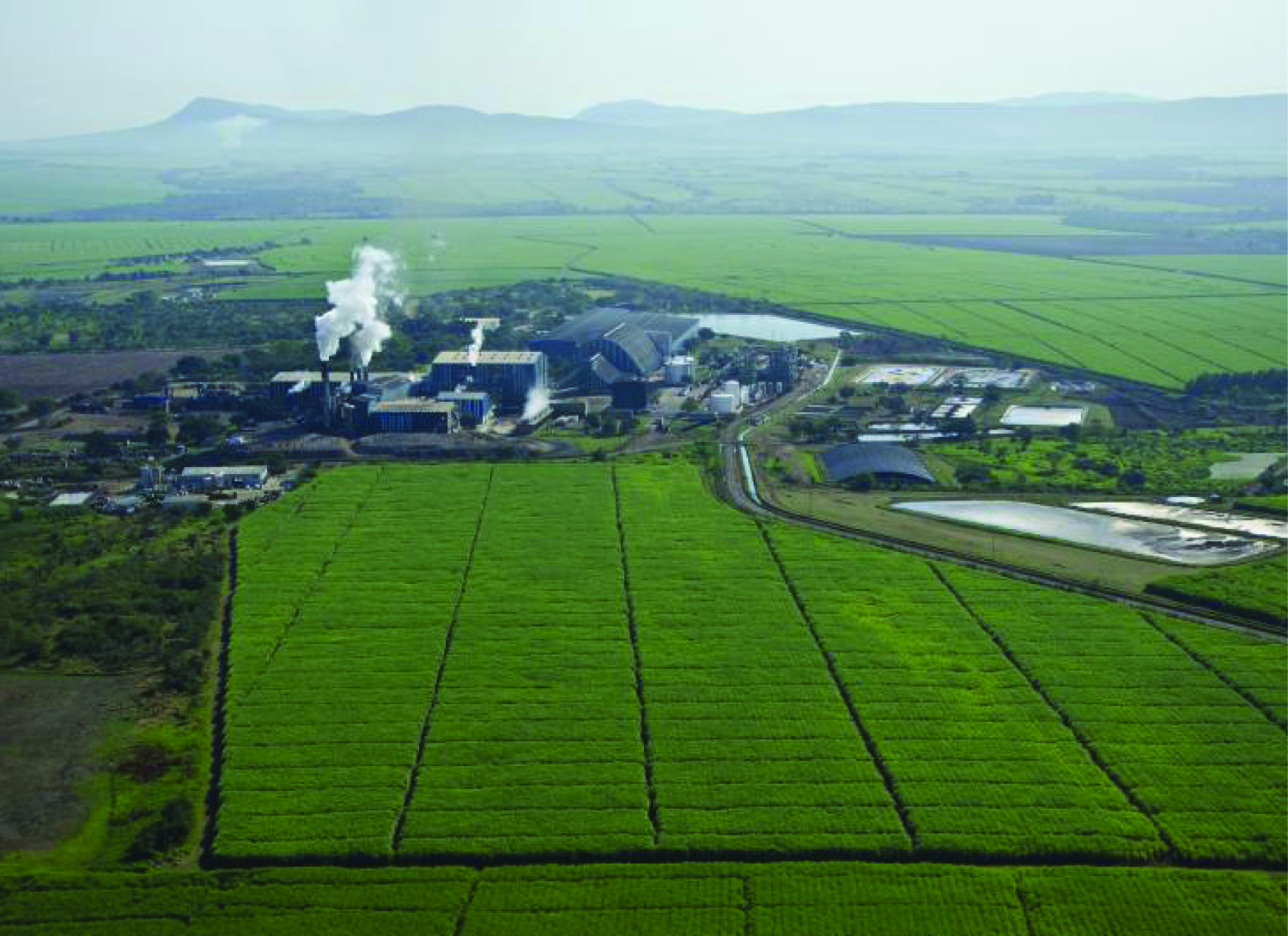
REVENUE generated by local sugar industry climbed to E8 billion during the 2025/26 financial year, underscoring the sector’s resilience despite one of the toughest global trading environments in recent years.
Eswatini Sugar’s latest Integrated Annual Report shows revenue rising from E7.7 billion the previous year, supported by higher sugar sales, improved production and strategic investments. This is despite that international sugar prices slumped to multi-year lows and producers grappled with rising operating costs.
Although total sugar production edged slightly lower to 639 998 tonnes, sugar sales increased significantly to 647 572 tonnes, while cane crushed rose to 5.46 million tonnes, reflecting improved operational performance across the industry.
Eswatini Sugar Chairman Meshack Kunene said the performance demonstrated the industry’s ability to withstand mounting external pressures.
“The year unfolded against a difficult global environment for the sugar industry, testing the resilience of growers and millers across the sector,” Kunene said.
He noted that lower world sugar prices, climate variability, increasing input costs and biological threats had combined to squeeze producer margins, making collaboration across the value chain more important than ever.
Kunene said investment in expanding production through the Lower Usuthu Smallholder Irrigation Project Phase II, together with continued grower and miller cooperation, would strengthen the industry’s long-term competitiveness.
He also identified escalating electricity costs as one of the industry’s biggest concerns, particularly for growers dependent on irrigation, saying disciplined cost management and operational efficiency would be essential as global sugar prices remain under pressure.
Despite the difficult environment, the chairman expressed confidence in the sector’s future, pointing to competitive production costs, established export markets and growing African demand.
“Sugar is indeed Eswatini gold,” he said.
Eswatini Sugar President Nick Jackson described the reporting period as ‘a perfect storm’ in which collapsing global sugar prices, adverse exchange rate movements and unfavourable weather conditions converged to strain the industry.
Global raw sugar prices, he noted, had fallen from above 25 US cents per pound two years earlier to below 14 US cents, forcing the industry to discount prices to remain competitive while record production from Brazil, India and Thailand flooded international markets.

Jackson said prolonged rainfall also disrupted harvesting, leaving significant volumes of cane unharvested by the close of the season.
However, he said the industry continued investing for long-term growth through expanded cane production under LUSIP II and by strengthening sustainability certification.
He said Bonsucro certification, already achieved by one mill and one large grower, would become increasingly important for maintaining premium export market access.
Jackson also stressed that the long-term outlook remained encouraging, supported by growing sugar demand across Africa.
“The sugar industry will remain an important economic development contributor by continuing to improve productivity, increase production capacity and generate foreign exchange export earnings,” he said.
Chief Executive Officer Banele Nyamane said the higher revenue reflected the industry’s ability to improve areas within its control despite severe external headwinds.
He said production increased following interventions aimed at reversing declining yields, while customer complaints over sugar quality dropped significantly after concerns experienced during the previous two seasons were addressed.
Nevertheless, Nyamane cautioned that grower profitability remained under pressure as weak international prices coincided with escalating electricity and fertiliser costs.
Approximately 200 000 tonnes of cane also remained unharvested because of prolonged rainfall, prompting the industry to review future milling schedules to improve flexibility during extreme weather events.
Beyond production, the industry is intensifying efforts to diversify markets, expand exports of value-added direct-consumption sugar and strengthen the ‘Eswatini Sugar’ brand following its rebranding from the Eswatini Sugar Association.
Management is also investing in locally driven agricultural research to develop sugarcane varieties better suited to Eswatini’s conditions, reducing reliance on imported research while improving long-term productivity.
Nyamane said sustainability certification, stronger stakeholder collaboration and protection of the Southern African Customs Union market would remain central priorities as the industry navigates the current commodity cycle.
Eswatini Sugar 2025/26 report at a glance:
| Indicator | 2025 | 2026 | Change |
|---|---|---|---|
| Revenue | E7,7 billion | E8,0 billion | Increased |
| Sucrose produced | 754 703 tonnes | 756 583 tonnes | Slight increase |
| Sugar produced | 89,94 tonnes | 91,06 tonnes | Increased |
| Cane crushed | 5,36 million tonnes | 5,46 million tonnes | Increased |
| Area harvested | 59 588 hectares | 59 979 hectares | Increased |
| Cane harvested per hectare | 89,94 tonnes/ha | 91,06 tonnes/ha | Improved |
| Sucrose yield per hectare | 12,67 tonnes/ha | 12,61 tonnes/ha | Slight decline |
| Sugar sales | 591 986 tonnes | 647 572 tonnes | Increased significantly |
Sweet sales, bitter threats
WHILE the local sugar industry delivered stronger sales performance during the 2025/26 financial year, global price pressures continue to threaten profitability and future growth.
The latest integrated annual report highlights a widening gap between improved operational performance and a challenging trading environment. Higher sales volumes and production gains were achieved against a backdrop of weak international sugar prices, driven by increased global supply from major producers such as Brazil, India and Thailand.
The global market moved into a surplus of about 2.2 million tonnes, placing significant pressure on prices and intensifying competition among exporters. Eswatini Sugar President Nick Jackson said the industry was operating in a difficult commodity cycle, requiring producers to focus on efficiency, innovation and market positioning.

“The sugar industry will remain an important economic development contributor by continuing to improve productivity, increase production capacity and generate foreign exchange export earnings,” Jackson said.
With traditional bulk sugar markets under pressure, the industry is shifting focus towards higher-value opportunities, including refined and specialty sugars.
Efforts are also underway to strengthen sustainability credentials through certifications such as Bonsucro and Fairtrade, which are increasingly important for accessing premium markets.
The report notes that Africa’s growing population and rising sugar demand present long-term opportunities, but producers will need to remain competitive as global supply continues to influence pricing.
Industry leaders say diversification, cost efficiency and value-added products will be key to navigating the current low-price environment and strengthening the sector’s resilience.