



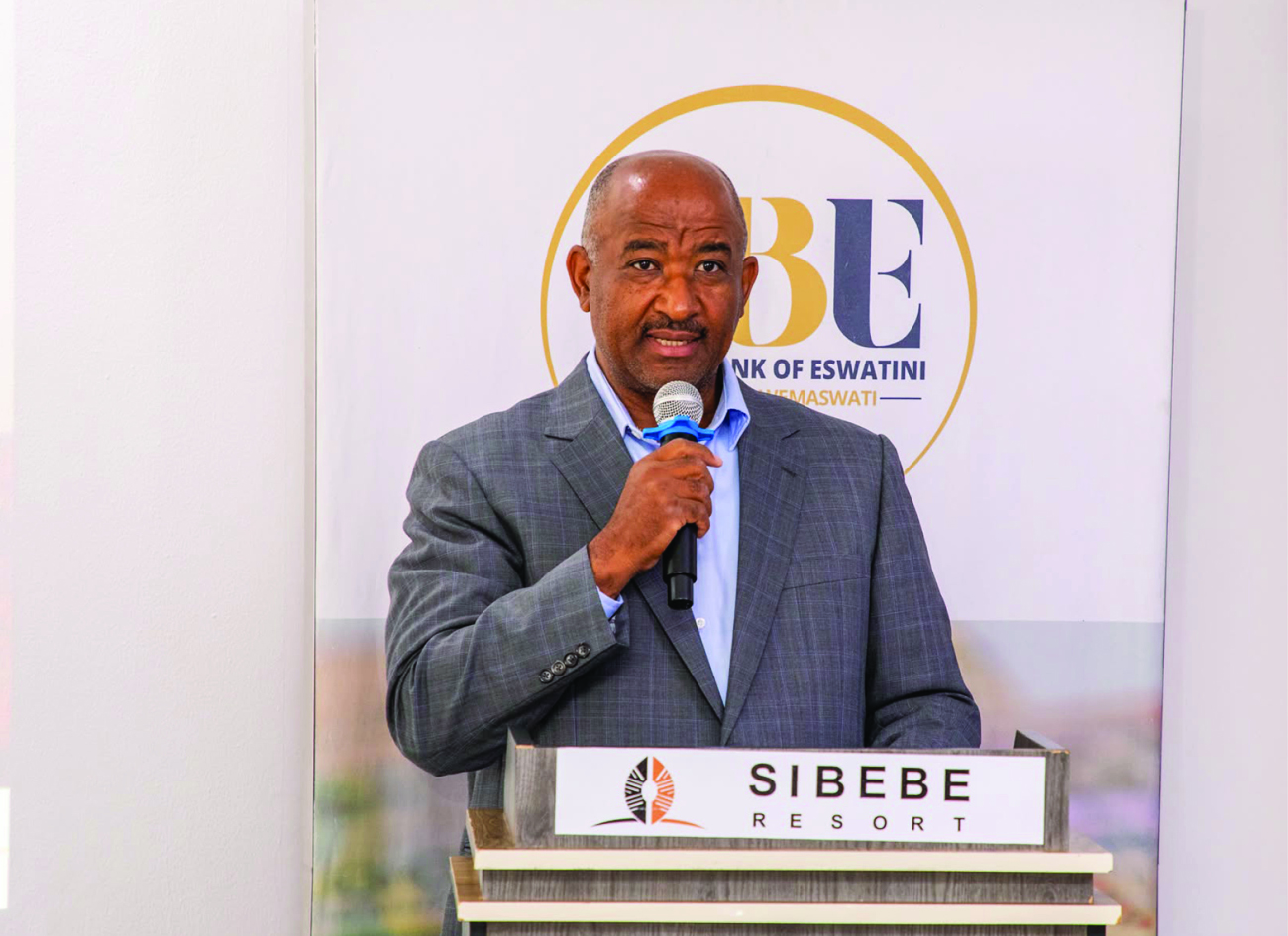
The Central Bank of Eswatini (CBE) is standing firm on a cautious monetary policy stance as global inflationary shocks intensify.
CBE Governor Dr Phil Mnisi stressed that the bank is deliberately avoiding aggressive interest rate hikes, choosing instead a measured approach to shield households from rising costs.
“Through our monetary policy stance, we take a cautionary approach. Instead of raising interest rates, we said let’s take a cautionary approach. Through our monetary policy and policy formulation, that is how we respond to these global shocks and the inflationary pressures. We use our tools and of course, taking into consideration that we are not operating in isolation,” he said.
The governor’s comments came after Eswatini Observer Editor Nomthandazo Nkambule asked the governor on what concrete tools beyond interest rates the bank was deploying, given the mounting imported inflation from global oil and food markets further intensified by the Middle East crisis. This was during a media engagement themed ‘Coffee with the governor 2.0,’ held at the Sibebe Resort on Friday.
Last week, the governor announced that the CBE had decided to maintain the discount rate at 6.75% and not hike it despite the South African Reserve Bank (SARB) having increased interest rates by 25 basis points to 7%, with the prime rate rising to 10.5%.
He had said the reason not to hike was reached upon by the Monetary Policy Consultative Committee (MPCC), taking into consideration relevant global, regional and domestic economic factors, as well as the price and financial stability mandate.
Explaining further on Friday, the governor said the bank is closely monitoring the impact of the price shock and the Middle East crises.
As the bank has an MPCC to strengthen decision making, ensure diverse input and maintain credibility in monetary policy, Dr Mnisi said such a committee, though South Africa can make changes in aspects like interest rate, does not necessarily copy what the neighbours are doing.
“We look at our local posture. Our MPCC is composed of independent members who are not in the bank, they advise on the appropriate monetary policy stance. In some instances, we align with South Africa for fundamentals,” he explained.
He said the direction of the monetary policy would continue to be driven by the assessment of risks and uncertainties in international, regional and the domestic economy.
Turning to price developments, Dr Mnisi said headline consumer inflation increased to 2% in April from 1.6% in March. He said this rebound was primarily driven by housing and utilities as well as transport.
“This development reflects the impact of rising global oil prices, which have been influenced by ongoing geopolitical tensions in the Middle East. Considering these developments, the bank has revised its short to medium term inflation forecasts upward. Inflation is now projected to average 3.31% in 2026, and 3.74% for 2027. These revisions mainly reflect emerging inflationary pressures stemming from elevated global oil prices and increased uncertainty associated with geopolitical developments.”
Adding, Governor Dr Phil Mnisi shared that the country’s economy continues to demonstrate resilience despite a challenging global environment characterised by heightened geopolitical tensions, volatile commodity prices, and ongoing uncertainty in international markets.
On the domestic front, he said economic activity remained robust during the final quarter of 2025. Real Gross Domestic Product (GDP), on a seasonally adjusted basis, grew by 5.7% year on year in the fourth quarter of 2025. While this represents a slight moderation from the revised growth rate of 5.9% recorded in the third quarter, it nevertheless reflects sustained economic momentum.
He said rising tensions have already increased fuel and energy prices, making life more expensive for households and businesses across the world.
“On inflation, global pressures remain significant. Global inflation is projected to rise to 4.4% in 2026 before easing to 3.7% in 2027. Higher prices for fuel, food and other commodities continue to affect many countries, increasing the cost of living for ordinary people. While the global economy has shown resilience during recent crises, significant risks remain. Cooperation and sound policies will be essential in building a more stable and prosperous future for all.”