



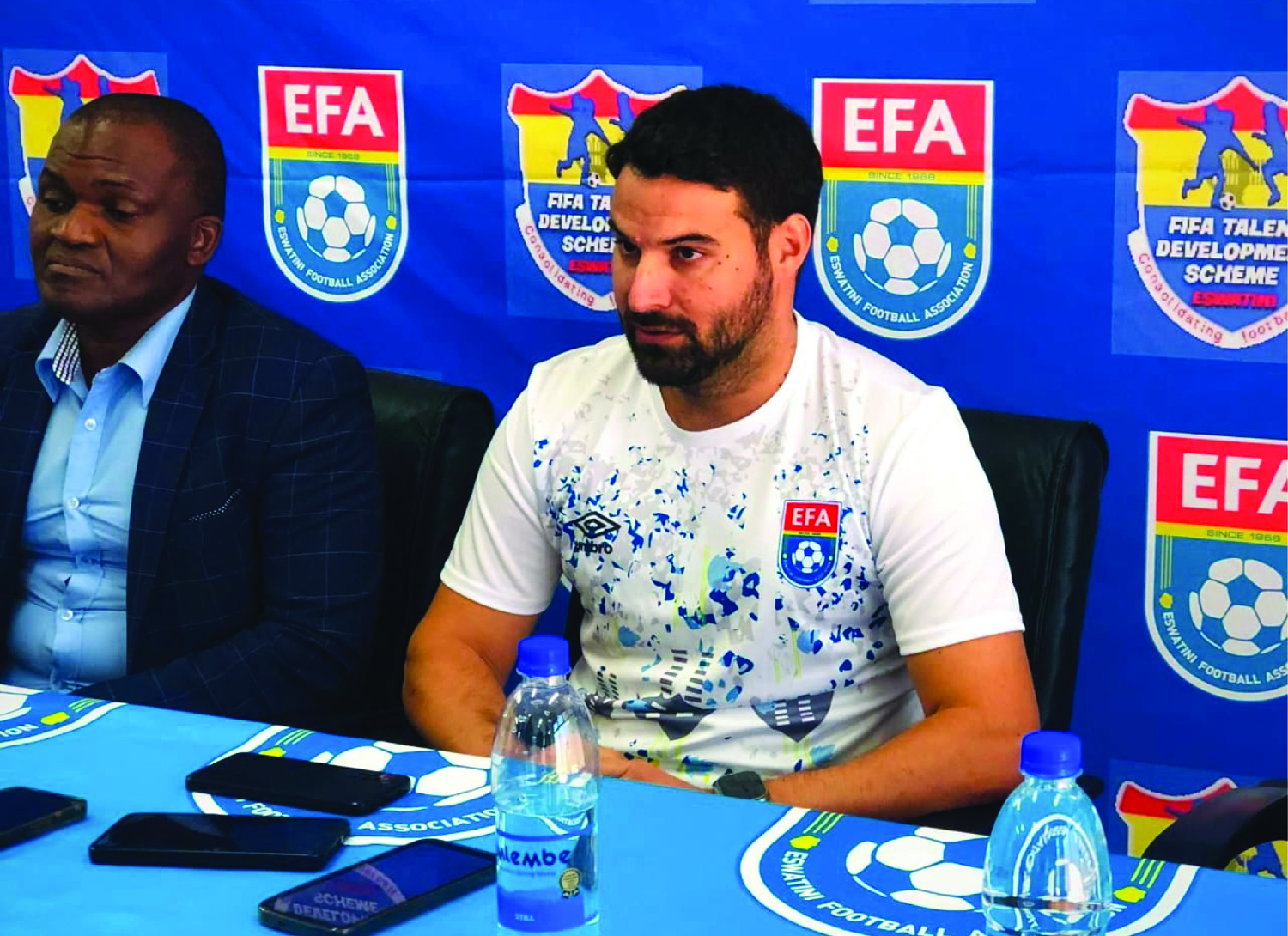
SOCCER – As Spain celebrates conquering the football world and inspiring a fresh wave of global admiration, the Eswatini Football Association (EFA) has moved swiftly to tap into that success by appointing Spanish coach Tomeu Perello Palou as its new Talent Coach.
This is a strategic move that reflects both the country’s growing football ambitions and government’s push for long-term sports development. With Spanish football currently enjoying unprecedented global attention following its FIFA World Cup triumph, the EFA’s decision is being viewed as a deliberate investment in a proven development philosophy rather than a short-term fix.
The appointment also comes at a time when Prime Minister Russell Dlamini has repeatedly urged national sporting bodies to prioritise grassroots development and sustainable talent pathways instead of focusing solely on immediate results.
The move is aimed at strengthening the country’s long-term player development pathway through the FIFA Talent Academy Programme, with the new coach expected to use his Spanish influence to help improve Eswatini’s national team structures and build a clear football identity from the grassroots upwards.
Perello, who will be based in the country for the next two years, was officially introduced during a press briefing at Sigwaca House, where EFA Chief Executive Officer Frederick Mngomezulu outlined the association’s vision of producing players capable of competing at the highest level of international football.
Mngomezulu said the appointment forms part of the EFA’s expanded talent development strategy under the FIFA Talent Development Scheme, which was launched in 2023.
“We have a responsibility of producing players for the elite level – men and women who will represent our national teams in international competitions. That requires us to employ several tactics, plans, strategies and approaches to realise that,” said Mngomezulu.
He explained that talent development had become one of the key focus areas supported through FIFA programmes, alongside governance, infrastructure and football development.
“We have upscaled talent development. We have now realised what we call a FIFA Talent Academy Programme. We have a group of 20 boys and 20 girls from across the country who are enrolled at Evelyn Baring High School for further training and development to become our future stars.”
Mngomezulu said the academy represents a significant investment in the country’s future, with the EFA covering school, tuition and boarding fees for the selected players.
“It calls for huge investment with particular attention to player pathway development, including individual player development. From the football side, we are taking care of these children’s school fees, tuition fees and boarding fees. This means we are co-parenting because the sole objective is to develop these talented boys and girls into national football stars.”
The players, aged between 13 and 14, are expected to progress through the national youth structures with the objective of improving performances at Under-17, Under-20 and eventually senior national team level.
“We want to see that when they reach the Under-17s and Under-20s they produce better performances for the country. The impact and influence of this programme will extend to clubs, leagues and ultimately the national teams. The pinnacle of football is the FIFA World Cup and that is the journey we are starting now,” Mngomezulu said.
He added that Perello would not only work with the 40 academy players but would also be involved in talent development initiatives across the country.
“He will be working across the country and involved in all development projects of the EFA. He will also make proposals and identify areas that require improvement, including better training and better preparation.”
Mngomezulu said the EFA considered Spain’s football philosophy when selecting the new coach.
“Spain are the fresh FIFA World Cup champions. They are on top of the world and it was interesting that when we were looking for a coach, we considered the style of football we want to play and the similarities in the characteristics of our players.”
He added that Perello’s previous experience in European football academies, including Al Nassr, where Cristiano Ronaldo plays, would contribute to the country’s football development.
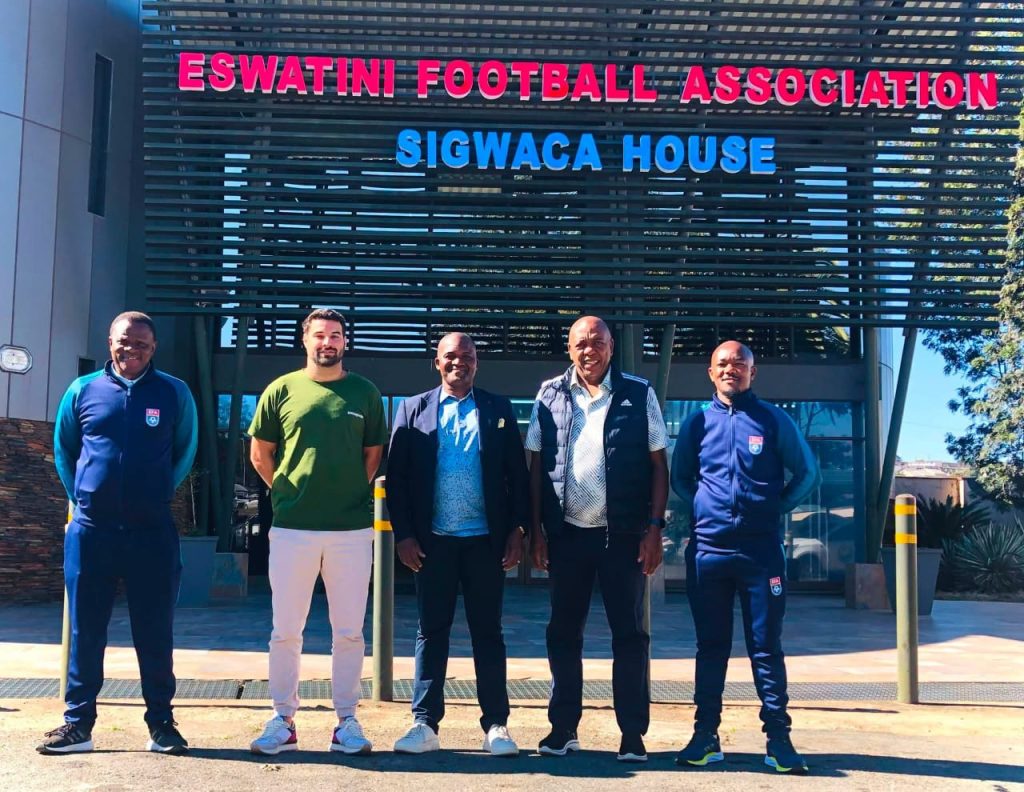
South African football coach and FIFA Regional Technical Consultant Serame Letsoaka said the programme forms part of FIFA’s broader strategy to improve player development in emerging football nations.
He explained that when former Arsenal manager Arsene Wenger joined FIFA, he committed himself to talent identification and player development.
“When Arsene Wenger was approached by FIFA, he said he would not only be an ambassador but would also work in talent identification. Research was conducted to analyse the football ecosystem in different countries and identify the challenges affecting talent development and playing styles.”
According to Letsoaka, those findings led to the introduction of the FIFA Talent Development Scheme to narrow the gap between established football nations and developing associations.
“Wenger decided that academies should be established where talented players could train together under a structured programme.”
He said Eswatini has become only the fourth COSAFA member association to establish a FIFA Talent Academy after Malawi, Lesotho and South Africa.
“The Spain that we see today winning the World Cup is the result of the many academies in Spain. For us, this is just the beginning.”
Letsoaka said Perello’s responsibilities would extend beyond the academy at Evelyn Baring High School.
“This programme will spread across all four Technical Centres in Ka-Langa, Mkhuzweni, Lobamba and Nhlangano, where Evelyn Baring High School is based.”
He added that FIFA would provide financial support for the project, including funding Perello’s salary, accommodation and transport.
“We will give the project our full support and ensure that Eswatini grows to become a giant in football.”
Speaking for the first time since his appointment, Perello said he was eager to begin working with Eswatini’s young players.
“I already feel at home and I thank the people of the country for welcoming me. We will develop the talent in this country, which I believe is in abundance.”
The Spanish coach said a unified development philosophy had been central to Spain’s football success and would also underpin his work in Eswatini.
“Spain believes in working the same way across all academies. The same playing methodology is used throughout the development system. Talent is identified, players are brought into academies and they are trained using one methodology.”
He explained that Spanish players begin competing from the Under-7 level and continue following the same football principles throughout their progression into senior football.
“Across all the age groups, the development pathway is streamlined. That is what we have to do in Eswatini by implementing the country’s playing identity. We have to create an identity for Eswatini football,” he said.