
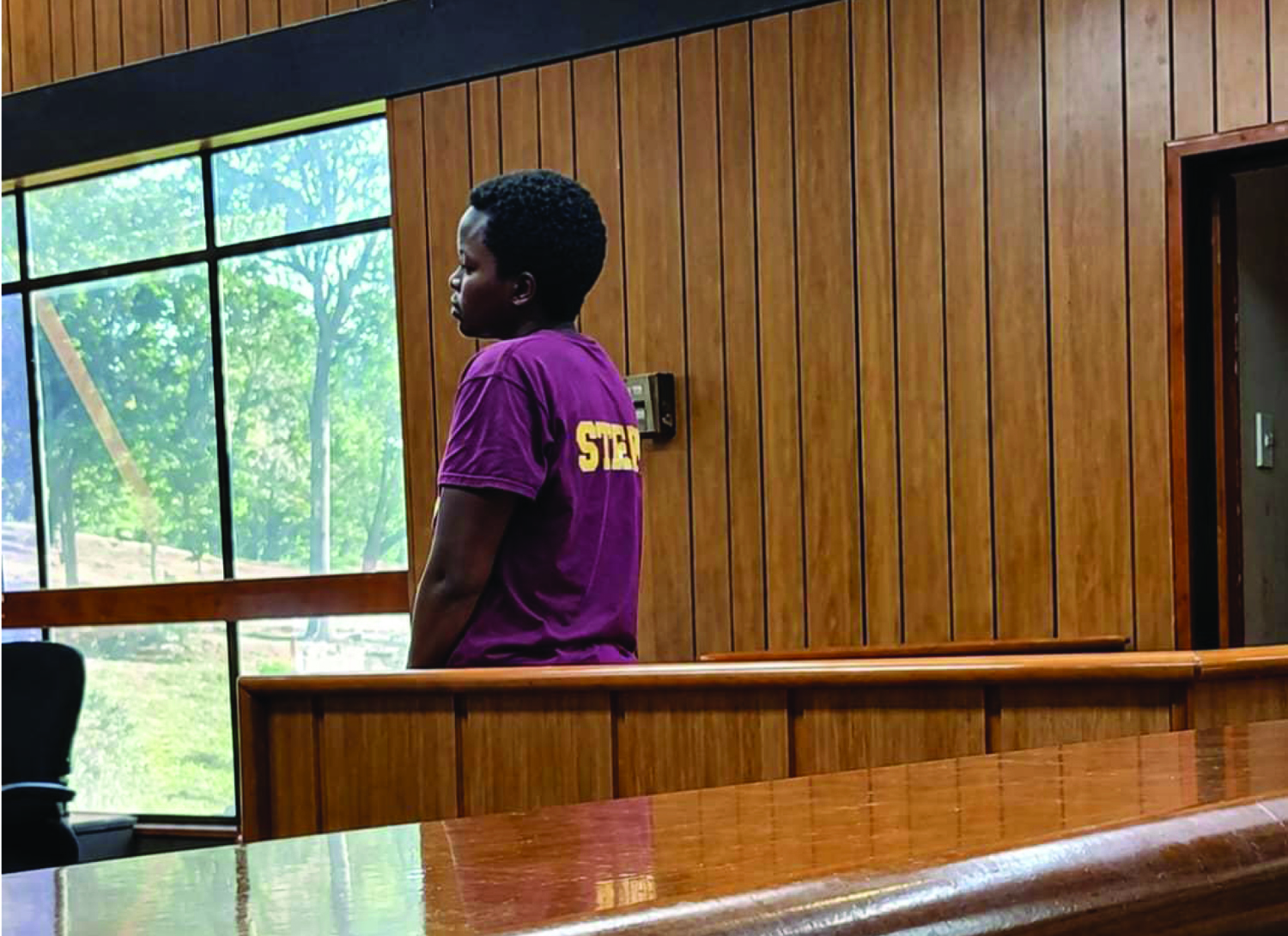
The act of young mothers leaving their babies abandoned while going to ‘groove’ is becoming a concerning trend, with a number of such cases recently ending up before the courts.
The cases involve infants as young as five, six and seven months old and have seen mothers face criminal charges after leaving their children without appropriate care while they went out drinking or socialising.
Deputy Prime Minister’s Office Deputy Director of Social Welfare Marcelia Neves-Dlamini has since said the office is greatly concerned about child neglect and was working to strengthen awareness among parents about children’s rights. Dlamini said the office was currently in the process of upscaling its sensitisation programmes from community level to national level because parents needed to understand the rights of children.
She said the office was working to ensure that children were not neglected by their parents and warned that where reports of neglect were received, the authorities would ensure that the matter was dealt with accordingly. “We are all out and when we get such reports, we always make sure that they face the law,” Dlamini said.
Meanwhile, among the cases is that of Ncamsile Shongwe, a mother of six, who was sentenced to 12 months’ imprisonment after leaving her five-month-old baby while she went drinking.
Shongwe told the court that she had gone to look for the father of two of her children to seek maintenance. However, the case also highlighted the vulnerability of the infant who was left without proper care. Another case involved Nokwanda Mkhabela, who was sentenced to one year in prison with an option of paying a E2 000 fine after leaving her seven-month-old baby while she went out with friends.
The cases follows that of Thandeka Mndzawe of Msumpe, who was found guilty of neglecting her six-month-old baby. There is also the case of 19-year-old Bandiswa Nkonyane, who was sentenced to two years in prison after admitting to abandoning her baby. While the cases were dealt with individually by the courts, their recurrence has raised questions about the responsibility of young parents towards infants who are entirely dependent on adults for their basic needs. On another note, Dlamini drew a distinction between parents who deliberately leave children to go out drinking and those who leave children because they have gone out to seek a livelihood.
Dlamini said social welfare had attended cases where parents had left children while looking for ways to make a living and such parents were not necessarily arrested.
Instead, she said, the office looked at ways of supporting the family and intervened by finding alternative caregivers, including relatives, where necessary. She said this distinction was important because not every case of a child being left in the care of another person amounts to abandonment or neglect. The concern arises when a parent leaves a child without ensuring that the child is in the care of a responsible and competent person and the child’s basic needs are not met.
Dlamini encouraged parents experiencing difficulties with relatives or other family members who could assist with childcare to approach the deputy prime minister’s office rather than leaving children exposed to situations that could put them at risk. She said the office was willing to intervene in family conflicts and help find solutions in the best interests of the children.
The warning comes against the backdrop of Eswatini’s legal framework on children’s rights. The Children’s Protection and Welfare Act 2012 places responsibilities on parents and guardians to protect and care for children and further provides for the protection of children who are neglected or require care and protection. A child’s basic needs do not disappear because a parent has other commitments.
Children are entitled to care and protection and parents have responsibilities relating to their welfare, including providing necessities such as food, clothing, healthcare, education and shelter.
For infants, these responsibilities are particularly critical because they cannot provide for themselves or seek assistance when they are hungry, frightened or in danger.
The law does not prohibit a parent from leaving home or having a social life. The responsibility is to ensure that the child is safely cared for during the parent’s absence.
Dlamini called for parents facing family difficulties, including disputes that prevent them from leaving their children with relatives, to seek help. She said some young mothers may have limited support, strained relationships with relatives or difficulties obtaining assistance from the fathers of their children. In such circumstances, the answer cannot simply be punishment after a child has already been placed at risk.
She said they were willing to intervene, encouraging those with such issues to approach them before they find themselves on the wrong side of the law.
The issue is particularly relevant in a country where teenage pregnancy remains a concern. The country recorded 536 teenage pregnancies in 2024, according to previously reported national figures, while international data continues to show a substantial adolescent birthrate among girls aged 15 to 19.
The country has also recorded pregnancies among girls in the 10 to 14 age group, highlighting the need for continued education on sexual and reproductive health, contraception, relationships and the responsibilities that come with parenthood.
The 2025 Global School-based Student Health Survey found that 28.3% of learners aged 13 to 17 reported that they had engaged sexual intercourse, compared with 20.6% in 2013.
Condom use among sexually active learners also fell from 62.4% in 2013 to 55.3% in 2025. These figures do not mean that every young person who becomes sexually active will become a young parent or neglect a child. They do, however, demonstrate why discussions around early sexual activity and pregnancy prevention remain important.