



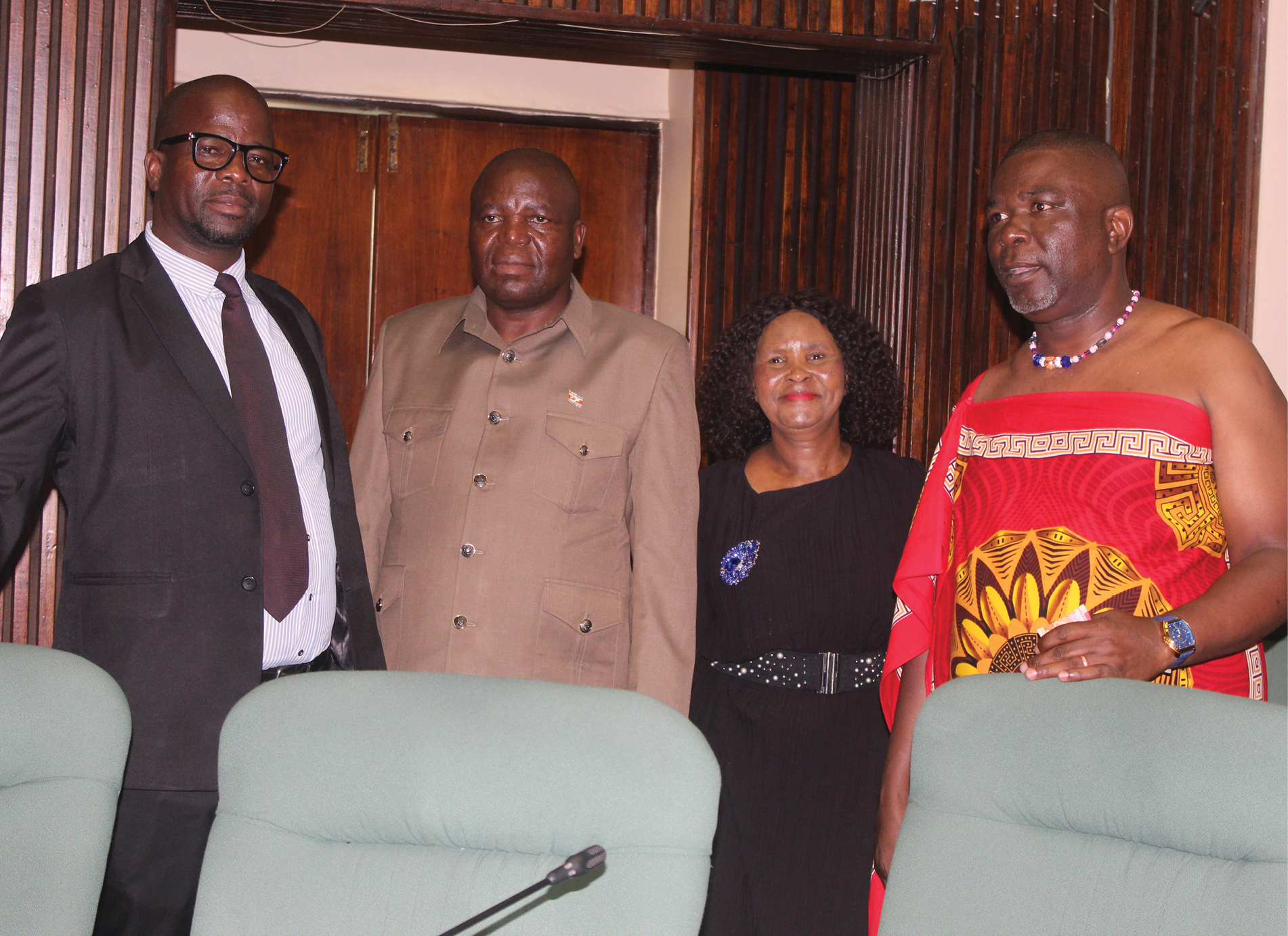
LOBAMBA Lomdzala Member of Parliament (MP) Marwick Khumalo says at a time when inflation is high, there is a source of annoyance, which are electricity tariffs now expected to increase by 18.36%.
This was shared by Khumalo during the debate of the mid-term budget review report for the 2026/2027 financial year yesterday.
The MP raised this at a time when the Eswatini Energy Service Regulatory Authority (ESERA) announced that it had received a tariff hike application from the Eswatini Electricity Company (EEC) of 18.38% for the 2027/2028 financial year and 14.68% for the 2028/2029 financial year.
Khumalo said this was caused by government appearing as if it was mitigating the problem by decreasing the hikes to a single digit. He said government’s failure to mitigate the issue caused the 18.38% suggested increase. He wanted to know if there was a provision that government was making to cushion the increase, as this would negatively affect citizens.
He said they were aware that government was intending to cushion the EEC with E200 million but asked if it was good enough. He questioned if the money was for cushioning last year’s increases or would be done going forward.
“How do we mitigate the hikes because the nation is complaining?” he said.
Khumalo said it was commendable that the ministry has increased domestic revenue by E500 million, but asked what the ministry’s projection was for the whole year as there was an increase mid-term.
There was also an issue of the Sovereign Wealth Fund, asking why it was not mentioned in the report. He said the minister was also blamed for the lack of service delivery, as reported by newspapers, asking him to clarify if he was really to blame.
In response, Minister of Finance Neal Rijkenberg said they were still working on the fiscal deficit.
He said they cannot cushion EEC this year, as it was bad practice for government to constantly cushion utilities. It was better to use a principle to pay for what one uses instead of cushioning everybody.
He said the user pays principle was the best. He was praying, as the minister of finance, that they do not cushion EEC, but do all they can to make sure that the impact was mitigated through the country producing its own power.
By building its own solar plants and hydropower plants, the country was going to get the biggest cushion, he said.
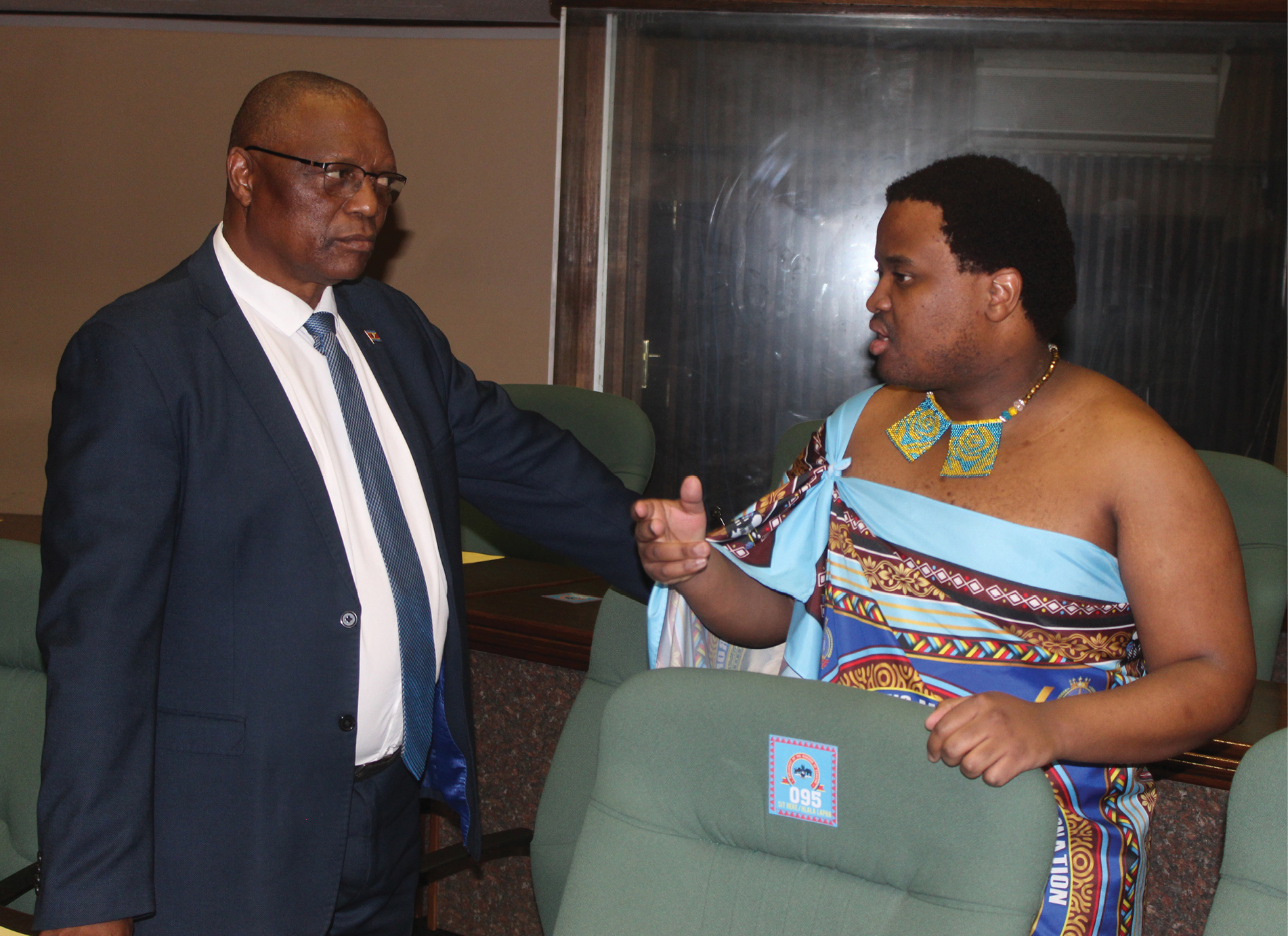
MP Prince Lindani stresses a point.
Growth has not translated to jobs
MBABANE East MP Welcome Dlamini says the country’s economic growth has not translated into job creation.
The MP said people were not seeing jobs and money in their pockets, while there was growth being spoken about. The country has an unemployment rate of 33.5%, of which 52.2% was the youth. This dampens the talk of economic growth, because it was raising questions, as this was one of the highest rates in the world.
He said this should raise the alarm for them on what they were doing when it comes to addressing the challenge.
There were funds to deal with youth unemployment as MPs passed a loan bill of E400 million to deal with youth unemployment, which targets 30 000 young people.
He said there were over 190 000 young people that were currently unemployed, stating that targeting only 30 000 was a drop in the ocean. He said things were bad.
“The report states that non-performing loans amount to E1.4 billion, which signals an economy that is not growing and where there are no jobs. Banks sell people’s properties because they are not able to service their loans. We need to conduct a study on whether Emaswati or foreigners are buying these properties. These properties are brought by the people who have money and not us,” he said.
Dlamini asked how banning Dubai cars has assisted Emaswati. He said the country was vulnerable before, and they need to do something on the country’s system of governance, asking if they were not exposing themselves to risks by being in serious debt.
Kubuta MP Masiphula Mamba, on the creation of jobs, said the minister had revealed that the country has initiated projects, which was why there was growth in employment.
He, however, noted that on the ground, it was hard to witness it. The reports speak about economic growth, while people do not get the impact.
Mamba added that there were projects that were approved but have stalled for years. There were some projects that were funded, like Johnson Work Wear in Nhlangano that were taking forever, while the nation was promised jobs.
He said yearly, they were adding E4 million on the budget for factory shells, asking what the ministry was saying on the issue.
Close to 3 000 Emaswati were promised jobs, while for over four years the projects have stalled with no one getting employed. This was a cost to government, if its money was invested while the project has not taken shape.
Minister Rijkenberg, in response stated that every sector was needed to create employment.
He conceded that building Johnson factory had taken long, as there was a storm and half the roof was blown off. The factory was now ready and they were now moving in.
PAYE still holding nation by the throat
KUBUTA MP Masiphula Mamba says Pay As You Earn (PAYE) is still holding the nation by the throat.
He asked the ministry of finance to find solutions on how to decrease the percentage being deducted from workers’ salaries.
He mentioned that on PAYE alone, government collected E700 million more, which shows that workers were the ones who were carrying government on their shoulders.
He said PAYE was affecting Emaswati, as it has increased by E700 million mid-term, which was a lot. This made the public ineffective when it comes to influencing the economy yet the economy strives when people have buying power. He reiterated that PAYE was strangling Emaswati.
“The minister should consider how they can decrease PAYE so that it becomes convenient for the working population. This is what contributed to the decrease of company taxes and VAT because people do not have buying power,” he said.
In response, Rijkenberg said PAYE is only effected on those who were paid E3 500 or more. He said they have not increased the threshold yet, as those who were earning below E3 500 were not paying anything.
Compared to other places in the world, the country was not overtaxing its people, he said.