


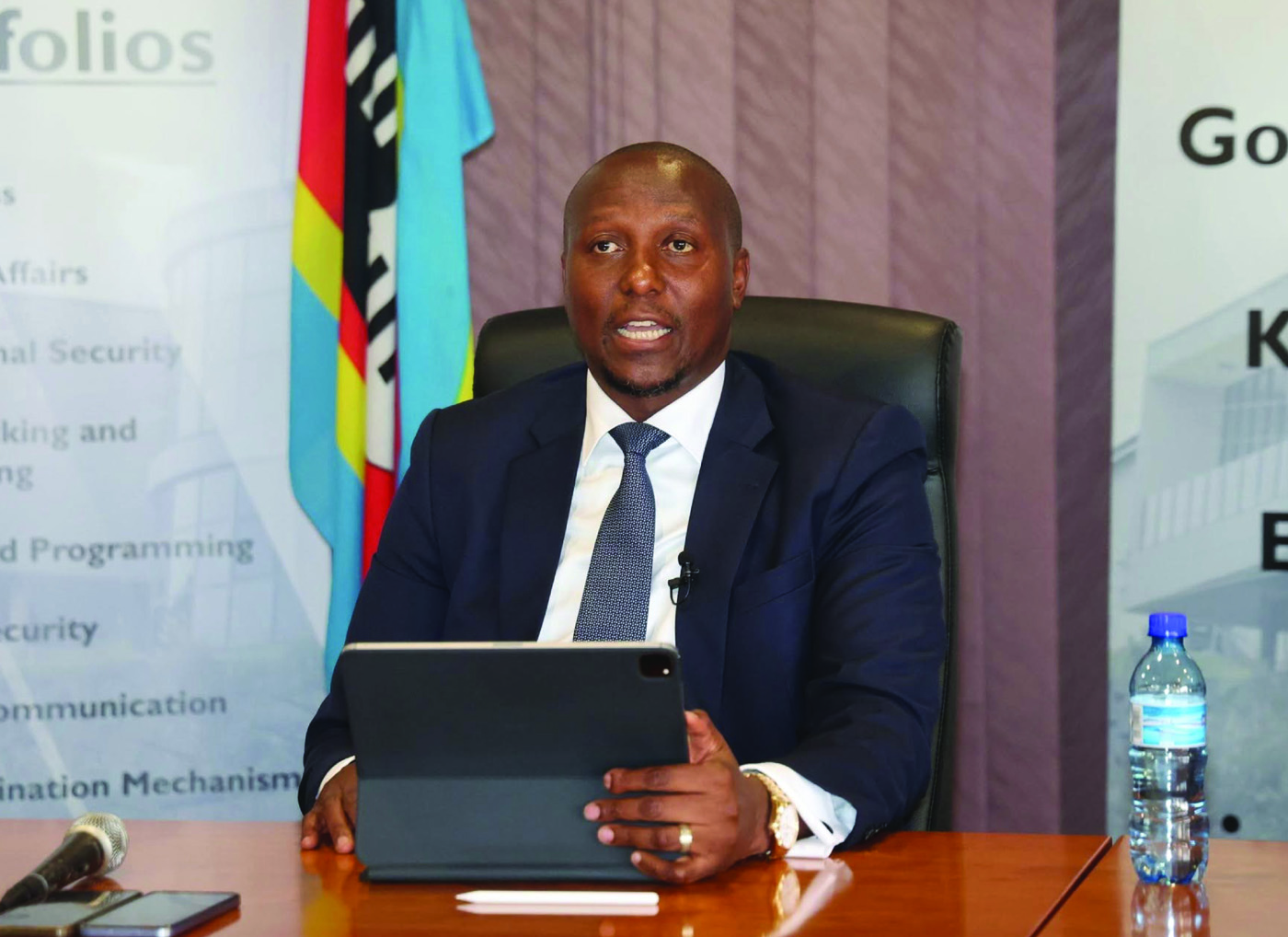
PRIME Minister Russell Mmiso Dlamini has defended the establishment of the commission of inquiry into the Eswatini Medical Christian University (EMCU).
He argued that it was lawfully constituted, approved by Cabinet and prompted by longstanding allegations of maladministration, financial irregularities and governance failures at the institution.
In an answering affidavit filed before the High Court, Dlamini asked the court to dismiss the EMCU council’s urgent application with costs, maintaining that it created its own urgency by failing to obtain a Government Gazette that had already been published.
The premier said Legal Notice No. 98 of 2026, published in the Government Gazette on June 15, formally appointed the commission and clearly outlined its terms of reference.
The five-member commission is chaired by Mbuso Simelane, deputised by Setsabile Matsebula-Khumalo, with Mangaliso Magagula and Lunga Dlamini serving as members, while Hlobsile Ndzimandze is the secretary. According to the legal notice, the commission was mandated to investigate EMCU’s financial management, allegations of fraud, maladministration, misconduct, governance failures, conflicts of interest, political interference, abuse of authority and compliance with legislation.
It was also tasked with assessing internal controls, evaluating human resource capacity and recommending corrective measures. The inquiry was given four weeks to complete its work, with its costs to be borne by EMCU.
Dlamini argued that contrary to the council’s claims, the commission’s mandate had been publicly available days before the court application was filed.
“The applicant assumed that there had been no publication in the gazette and relied on that assumption to ground urgency which must be based on facts and not assumptions,” he stated.
The PM added that challenges to the legality of a commission could be brought while its work was underway or after it had completed its investigations. He further challenged the council’s legal standing, arguing that an education council established under the Higher Education Act does not possess legal personality to sue or be sued.
He maintained that Cabinet resolved to establish the inquiry after receiving numerous complaints from various stakeholders regarding the operations of the university.
Among the documents attached to his affidavit is a memorandum from the principal secretary in the Cabinet office dated June 8 requesting publication of the commission in the Government Gazette. The memorandum states that the prime minister’s office had received various concerns and complaints from various agencies and stakeholders regarding EMCU’s operations, necessitating an investigation into suspected fraud, malpractice and maladministration.
It further states that Cabinet approved the commissioning of the inquiry to establish the facts, identify wrongdoing, quantify losses, determine accountability and recommend corrective or disciplinary measures.
Dlamini also relied on correspondence from EMCU Vice Chancellor Professor Paul Yang, who alleged widespread financial irregularities at the university. In the letter addressed to the prime minister, Yang accused the bursar and registrar of spending university funds on hotels, resorts and restaurants without management approval.
He alleged that a stay at Pigg’s Peak Hotel between February 27 and March 1 this year cost the university over E105,000 with a significant portion allegedly spent on alcohol. Yang further claimed that EMCU had spent approximately E3.89 million on hotel accommodation, meals, transport and air travel between May 2025 and February. He also alleged that the corruption began after the appointment of the current university council.
Dlamini said these and other complaints contributed to Cabinet’s decision to establish the commission. However, the prime minister also attached a response from the EMCU Council disputing Yang’s allegations.
In its submission, the council maintained that EMCU is a Category A public enterprise established through Legal Notice No. 72 of 2013 and argued that the current management inherited a university that had been in severe financial distress. The council claimed that before 2020, the institution had a E47 million deficit but under the current administration had accumulated more than E50 million in reserves after introducing tighter financial controls.
It further alleged that previous executives had misused more than E36 million in government funds, which the institution is seeking to recover through legal action. The council also defended expenditure questioned by Yang, saying many travel costs, allowances and legal fees related to official government oversight functions and approved university business.
It further alleged that Yang had attempted to access E10 million from the university’s reserves for infrastructure projects before resigning and later refused to vacate office after his notice period expired. According to the council, Yang subsequently sought control of the university’s bank accounts despite no longer holding a valid contract.
The council also raised objections to the commission of inquiry, arguing that it duplicated investigations already being undertaken by a parliamentary select committee, the auditor general and the Anti-Corruption Commission (ACC). It questioned the impartiality of some commissioners, alleging that the commission’s Chairperson Simelane had previous links with the EMCU Foundation, while commissioner Mangaliso Magagula is representing Yang in litigation against the university.
Dlamini rejected those allegations, saying the commissioners were appointed on the basis of their professional competence and had disclosed any previous association with the institution.
“They shall recuse themselves if a conflict situation arises,” he said.
The prime minister further argued that multiple investigations could lawfully proceed simultaneously.
“A commission of enquiry can exist alongside a parliamentary inquiry, criminal investigation, disciplinary proceedings, civil litigation and a criminal trial,” he added. He also dismissed concerns over the ACC’s search and seizure operation carried out at the university on June 19.
Supporting affidavits from ACC investigator Vulindlela Dlamini stated that the commission has been investigating EMCU since 2024 following numerous complaints. The investigator confirmed that electronic devices seized during the search were analysed and returned to the university on June 29 while other items remain available upon request or by court order if required for university operations.
The prime minister further defended his authority to establish the commission, arguing that under the Constitution and the Assignment of Responsibilities to Ministers Notice of 2015, he is a minister with authority to exercise powers under the Commissions of Enquiry Act.
“The prime minister is a minister. The Act does not define ‘minister’ to exclude the prime minister,” he submitted.
Dlamini argued that the commission was lawfully established, serves the public interest and is necessary to investigate allegations involving governance, financial management and the administration of a publicly funded institution. He therefore asked the High Court to dismiss the council’s application and allow the probe to proceed with its work.