
Eswatini has been ranked among the 10 most taxed countries in the world, with tax revenue equivalent to about 30% of the entire economy, placing the kingdom alongside some of Europe’s high-tax welfare states.
The ranking, published by Kenyan digital news platform TUKO this week and citing International Monetary Fund (IMF) data, places Eswatini eighth in the world with a tax-to-gross domestic product (GDP) ratio of 30.7%.
Only Denmark, Bulgaria, Sweden, Namibia, Iceland, New Zealand and Norway ranked higher, while Eswatini was placed level with Luxembourg and ahead of Finland.
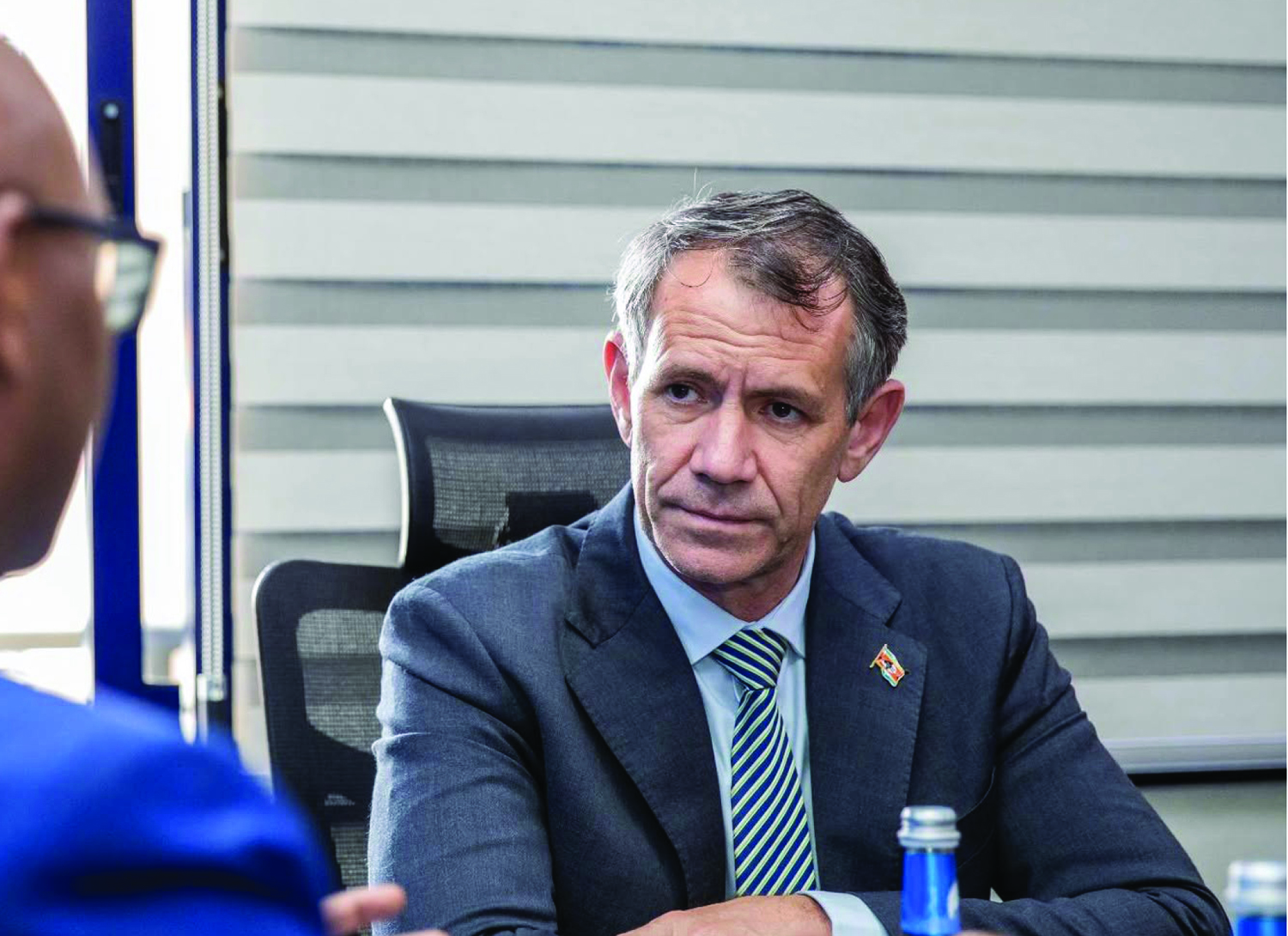
The figure, however, comes with a qualification. Minister of Finance Neal Rijkenberg said the headline number creates a misleading impression of how heavily Emaswati themselves are taxed because a sizeable portion of the revenue counted in the ratio comes from the Southern African Customs Union (SACU).
“I saw that article you’re referring to, placing us about in the top 10 and sitting at about 30% tax to GDP,” Rijkenberg said.
He said SACU accounted for at least 12 percentage points of the figure.
“The fact that most of that SACU money does not actually come from Emaswati, it places us at about 18% tax to GDP, which is very low again. It’s far from the top levels,” the minister explained.
The distinction is important in understanding what the international ranking actually means. A tax-to-GDP ratio compares tax revenue collected by government with the total value of goods and services produced by an economy. In simple terms, a 30% ratio means tax revenue is equivalent to roughly E30 for every E100 of economic output.
It does not, however, mean that an ordinary Liswati is handing 30% of his or her income to government. In Eswatini’s case, the headline ratio is complicated further by SACU.
As a member of the customs union alongside South Africa, Botswana, Lesotho and Namibia, Eswatini receives a share of the common customs and excise revenue pool.
Those transfers are recorded as government tax revenue even though they are not the same as personal income tax (PAYE) deducted from an employee’s salary, VAT paid at a local till or corporate income tax paid directly by an Eswatini business.
The IMF’s fiscal figures underline just how large that effect can be. For 2024/25, the Fund estimated Eswatini’s tax revenue at 30.3% of GDP, but SACU receipts alone accounted for 14.2% of GDP. For 2025/26, the IMF projected tax revenue at 27.2% of GDP, including SACU receipts equivalent to 10.7% of GDP.
That means stripping SACU out dramatically changes the picture of revenue raised directly from the domestic economy. The minister therefore, rejected the suggestion that Eswatini’s appearance alongside some of the world’s traditionally high-tax economies means households and companies face a comparable direct tax burden.
For households, Rijkenberg said the more relevant taxes were PAYE and VAT. He said government had not increased the personal income tax brackets and argued that the tax system was structured to protect lower-income households.
“We haven’t increased the tax brackets, which means what they paying is always what they have been paying. We haven’t increased that,” he said.
Under the current income tax structure, individuals are taxed progressively, with rates rising as taxable income increases. The minister also pointed to the design of VAT, arguing that essential goods consumed by lower-income households were deliberately protected through zero-rating.
A range of basic food products, including brown bread and maize meal are zero-rated for VAT, meaning consumers do not pay VAT on those qualifying products.
Rijkenberg said government had over time reviewed the list to ensure the relief was concentrated on genuine necessities. The principle, according to the minister, is to reduce the effect of consumption taxes on households least able to absorb them.
Businesses, meanwhile, pay corporate income tax on profits rather than simply on turnover. Rijkenberg argued that this meant companies facing genuine financial difficulties were not taxed on profits they had not made.
“Where the company makes a profit, they pay tax. If they don’t make a profit, they don’t pay tax,” he said.
He added that tax rules allowing losses to be carried forward meant a company recovering from a loss-making period could offset those losses before becoming liable for tax on subsequent profits.
From government’s perspective, therefore, the challenge is not necessarily that existing taxpayers should be charged more. It is getting those who should already be paying into the tax net.
Rijkenberg gave little indication that government was preparing either a broad tax cut or an across-the-board increase.
“I fully believe that the tax structures are correct for the country, hence we’re not increasing or decreasing,” he said.
Instead, he said government’s attention was turning towards taxpayers who were escaping their obligations.
“What we are focusing on, obviously, is there are people not paying tax, and to make sure we close the gaps on those ones,” he explained.
The minister pointed to tax measures currently moving through Parliament which he said were intended to close loopholes and improve compliance. The objective, he said, was “to make sure that everybody pays”.
That approach according to him, could become increasingly important as government navigates pressure on its finances.
SACU receipts have historically been one of the country’s biggest revenue sources, but they are also volatile because the amount received can change sharply from one financial year to another.
IMF figures illustrate that vulnerability. SACU receipts were equivalent to 13.6% of GDP in 2023/24 and an estimated 14.2% in 2024/25, before the Fund projected them falling to 10.7% in 2025/26.
At the same time, government faces pressure to contain deficits and debt while financing salaries, healthcare, education, infrastructure and other public services. The IMF has consequently called for fiscal consolidation to prevent rising debt from becoming an increasingly serious constraint on public finances.
This leaves government walking a difficult line of collecting enough revenue to fund the State and stabilise its finances without squeezing households and businesses already facing their own cost pressures.
Rijkenberg’s answer is not, at least for now, higher headline tax rates. It is a broader and more compliant tax base.
TOP 10 MOST TAXED COUNTRIES GLOBALLY
| Rank | Country | Tax revenue as % of GDP |
|---|---|---|
| 1 | Denmark | 45.3% |
| 2 | Bulgaria | 38.8% |
| 3 | Sweden | 38.7% |
| 4 | Namibia | 35.3% |
| 5 | Iceland | 33.4% |
| 6 | New Zealand | 32.6% |
| 7 | Norway | 31.3% |
| 8 | Eswatini | 30.7% |
| 9 | Luxembourg | 30.7% |
| 10 | Finland | 30.4% |