



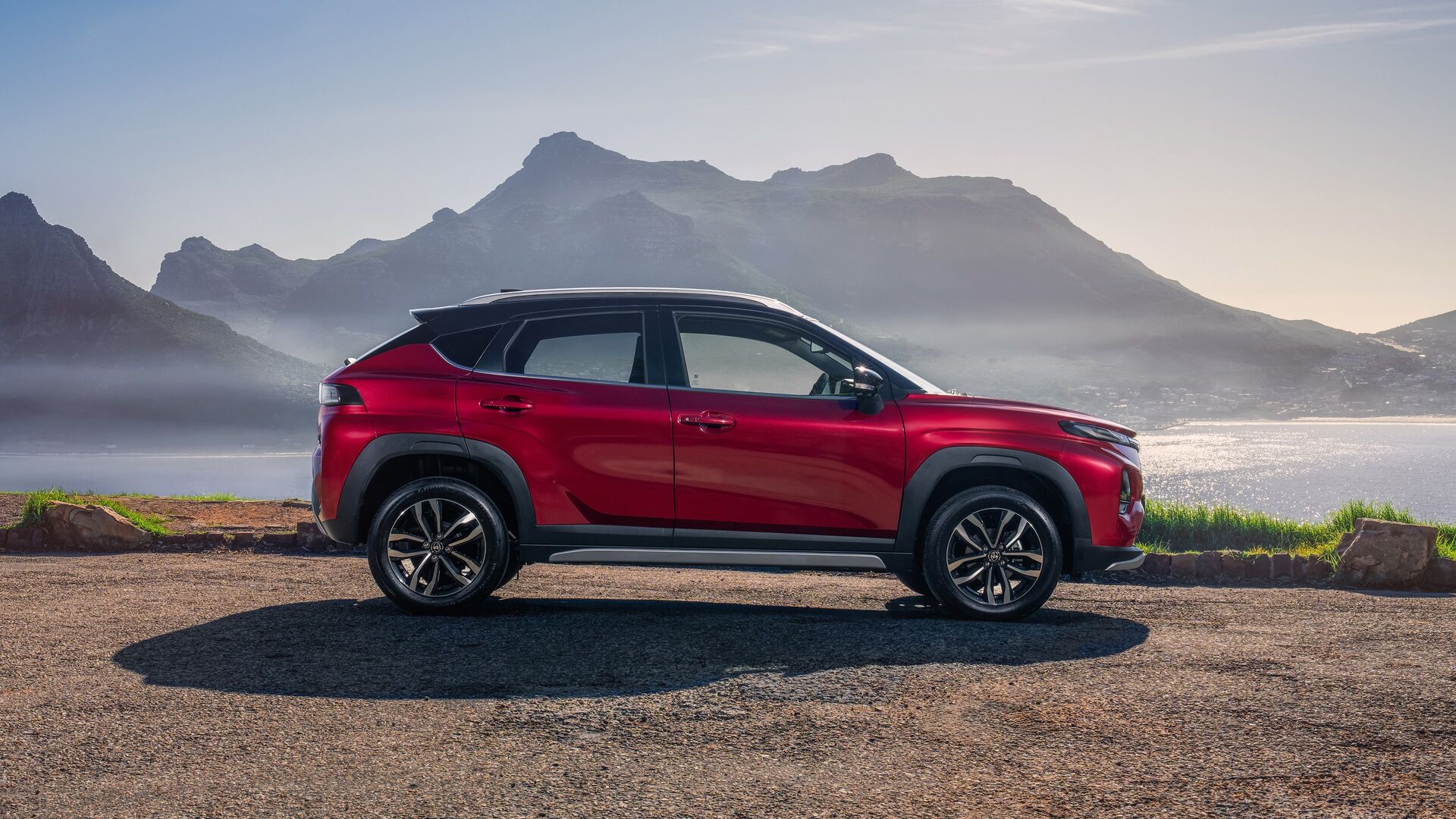
FROM compact city cars to hybrid SUVs and a workhorse bakkie, these Toyota models offer motorists different ways to balance mobility, performance and fuel costs.
When fuel starts feeling like a luxury, every trip becomes a calculation. Do you make that extra stop? Take the longer route? Or leave the car at home and hope public transport cooperates?
With rising living costs putting pressure on household budgets and businesses alike, owning a vehicle remains a practical necessity for many emaSwati. The trick is finding one that meets your daily needs without turning every visit to the filling station into a financial crisis.
This week, Motoring visits NTT Toyota Mbabane to explore five vehicles worth considering for motorists who want to be more fuel-conscious, whether buying their first car, upgrading the family vehicle or expanding a business fleet. From compact hatchbacks to hybrid SUVs and a double-cab pickup, here is what prospective buyers should know.
1. TOYOTA VITZ: SMALL CAR, SMALLER FUEL BILL
The Vitz is a practical option for first-time buyers, young professionals and motorists who spend much of their time navigating town traffic. Its 1.0-litre, three-cylinder petrol engine produces 49kW of power and 89Nm of torque, paired with either a manual gearbox or an automated manual transmission (AMT).
Its lightweight, compact body and small engine help keep fuel requirements down, while five seats and a 295-litre boot provide everyday practicality. It is a sensible choice for commuting and running errands without paying for more vehicle than necessary.
2. TOYOTA STARLET CROSS: CROSSOVER STYLE WITHOUT THE THIRST
For drivers who want the raised stance of an SUV without moving into a much larger vehicle, the Starlet Cross offers a middle ground. It features a 1.5-litre, four-cylinder petrol engine producing 77kW and 138Nm, with a five-speed manual or four-speed automatic transmission.
Published combined fuel consumption is approximately 5.6 litres per 100km for the manual and 5.8 litres per 100km for the automatic. Its front-wheel-drive layout and compact dimensions make it suitable for everyday commuting, family trips and navigating the country’s urban roads.
3. COROLLA CROSS HYBRID: FAMILY SPACE, SMARTER FUEL USE
The Corolla Cross Hybrid combines the practicality of a family SUV with a petrol-electric hybrid system. The 1.8-litre hybrid version pairs a petrol engine with an electric motor and automatic CVT transmission, delivering a balance of smooth driving and fuel efficiency.
Unlike a conventional petrol vehicle, the hybrid can use electric power in suitable driving conditions and recover energy during deceleration and braking. This reduces the petrol engine’s workload, particularly in stop-start traffic. A published specification for a 1.8-litre hybrid variant lists consumption at approximately 4.3 litres per 100km, although figures vary by market and specification.
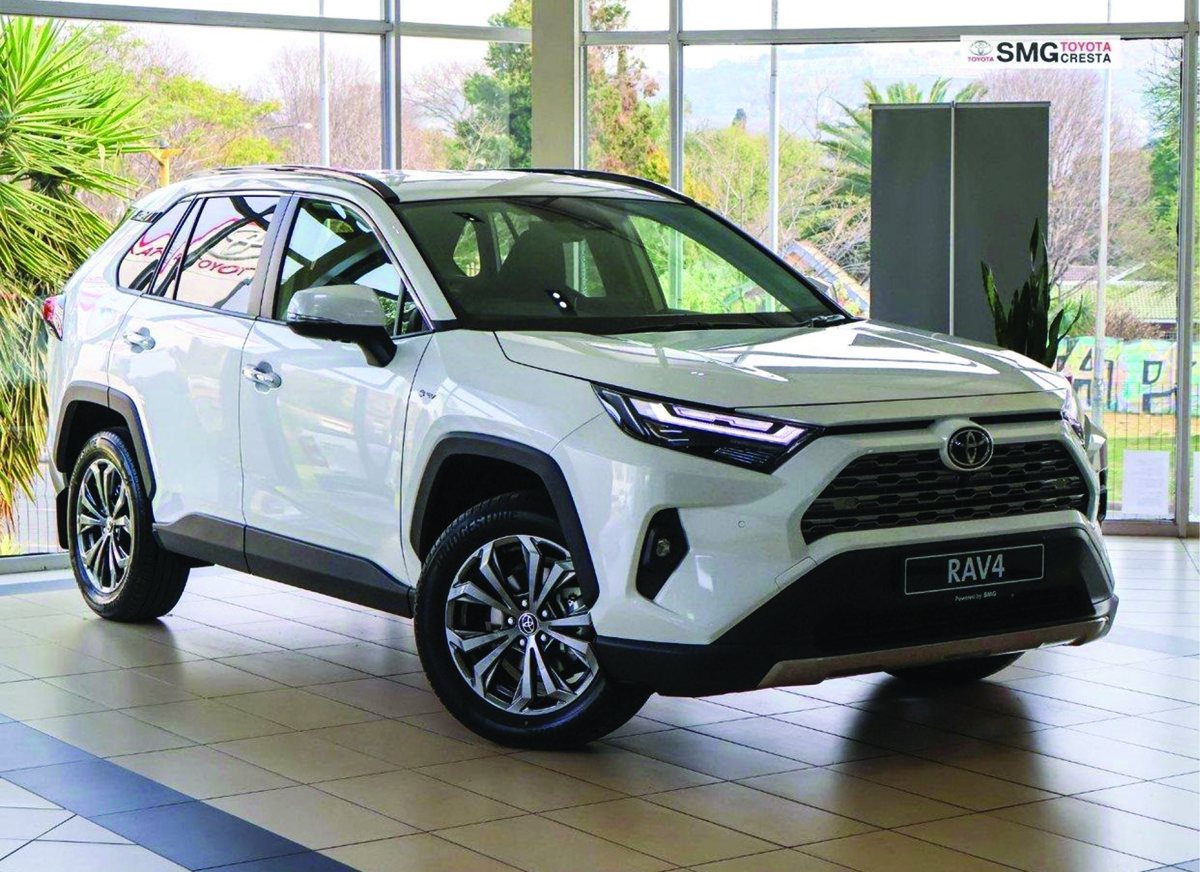
4. TOYOTA RAV4 HYBRID: BIGGER JOURNEYS, BETTER EFFICIENCY
For motorists who need more room, comfort and versatility, the RAV4 Hybrid offers a larger SUV package. Its 2.5-litre petrol-electric hybrid powertrain delivers a combined system output of around 163kW, depending on the generation and market specification, with automatic transmission and all-wheel-drive capability on the E-Four version.
The hybrid system assists the petrol engine when accelerating and captures energy during braking. This helps reduce fuel use compared with a similarly sized conventional petrol SUV. Published figures for some 2.5-litre RAV4 Hybrid versions are around 4.8 litres per 100km, though local specifications and actual consumption may differ.
5. HILUX DOUBLE CAB MILD HYBRID: WORK HARD, USE FUEL SMARTER
Fuel efficiency is not just a concern for small cars.
Businesses, farmers and families who need a dependable pickup can consider the Hilux 2.8 GD-6 Mild Hybrid, available in Legend grades.
Its 2.8-litre turbo-diesel engine delivers up to 150kW and 500Nm of torque in the automatic version. The 48-volt mild-hybrid system supports the engine during acceleration and recovers energy during deceleration, helping improve efficiency and driving refinement without requiring external charging.
It retains the load-carrying ability and rugged character expected of a Hilux, making it relevant to businesses that need a vehicle for both staff and equipment. However, its fuel savings will depend on the load carried, driving conditions and whether the vehicle is used mainly in town or on longer routes.
BEFORE YOU BUY: LOOK BEYOND THE FUEL GAUGE
A fuel-efficient vehicle can help reduce running costs, but the smartest purchase is one that fits both your budget and your lifestyle. Compare the purchase price, monthly instalments, insurance, servicing costs and warranty alongside fuel consumption.
Remember, published fuel figures are laboratory or standardised estimates, not guarantees of what you will achieve on the country’s roads. Traffic, hills, tyre pressure, driving habits and vehicle maintenance all influence consumption.
IT’S NOT A BAKKIE, IT’S A HILUX!
IF you have driven around Eswatini long enough, you have probably encountered a sticker with these words on the back of a Toyota Hilux.
It is less of a vehicle description and more of a public service announcement from an owner who apparently believes the rest of us needs reminding.
To some, it is harmless humour. To others, it is automotive arrogance with a registration number. If you happen to be driving another brand of bakkie, you might wonder whether you have just been insulted without a single word being exchanged.
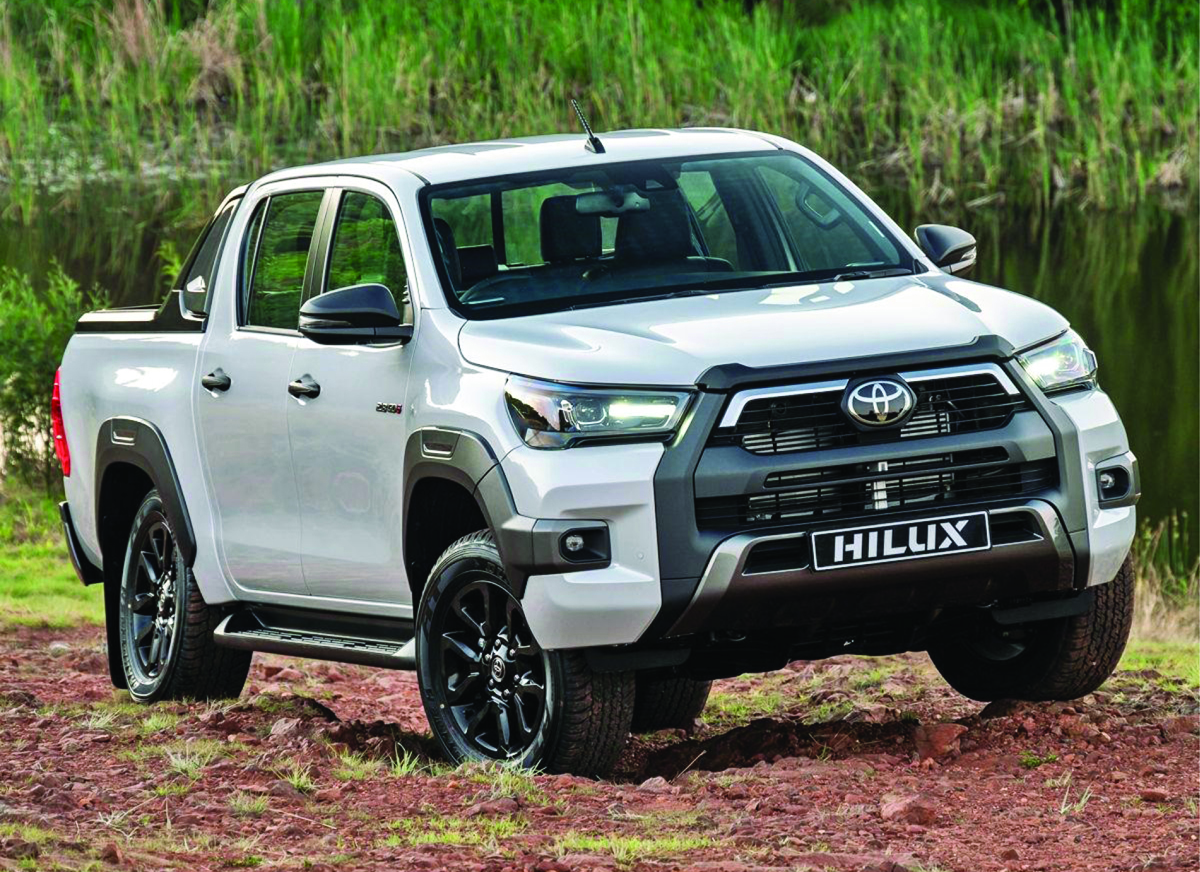
But the Hilux has earned its swagger. Known for its toughness, versatility and ability to handle demanding terrain, it has become a familiar sight everywhere from construction sites and farms to school runs and weekend getaways.
It is a workhorse that can carry building materials on Friday and arrive at a family gathering on Sunday looking like it owns the place.
Still, let us be honest: a Hilux badge does not come with a free licence to hog the road, tailgate smaller cars or park across two bays. And no sticker, however confident, can convince the fuel gauge to stop moving.
Yet, for devoted Hilux owners, the argument is settled before it even begins. Ask them what they drive and ‘a bakkie’ simply will not do. It is a Hilux, apparently, a completely different species of motoring excellence.
The rest of the bakkie-driving population may disagree, but that is the beauty of motoring: everyone has their favourite machine, and some owners have stickers to make sure you know about theirs.
| Model | Powertrain & Output | Est. Fuel Consumption | Best Suited For |
|---|---|---|---|
| Toyota Vitz | 1.0L 3-cylinder Petrol (49kW / 89Nm); Manual or AMT | Ultra-low urban consumption | First-time buyers, young professionals, city errands |
| Toyota Starlet Cross | 1.5L 4-cylinder Petrol (77kW / 138Nm); 5-spd Manual or 4-spd Auto | ~5.6L/100km (M) / ~5.8L/100km (AT) | Crossover ground clearance, daily urban commuting, small families |
| Toyota Corolla Cross Hybrid | 1.8L Petrol + Electric Motor; e-CVT automatic | ~4.3L / 100km (published variant spec) | Family space, school runs, heavy stop-start town traffic |
| Toyota RAV4 Hybrid | 2.5L Petrol-Electric (~163kW combined); Automatic E-Four AWD | ~4.8L / 100km (published variant spec) | Long-distance travel, executive comfort, rougher all-weather roads |
| Toyota Hilux 2.8 GD-6 Mild Hybrid | 2.8L Turbo-Diesel + 48V system (150kW / 500Nm); Automatic | Optimized diesel efficiency via deceleration regeneration | Farming, construction fleets, rugged utility with lower fuel burn |
Note: Stated consumption figures represent manufacturer laboratory baselines; driving styles, topography, loads, and vehicle health affect real-world economy.