


RISING fuel prices appear to be fuelling suspicions among Eswatini motorists that some fuel retailers may be diluting petrol with water.
The allegations have been circulating on social media with a filling station selling a particular fuel brand accused of supplying petrol contaminated with water. Meanwhile, some social media users dismissed the allegations, arguing that petrol and water did not mix because of their different chemical properties.
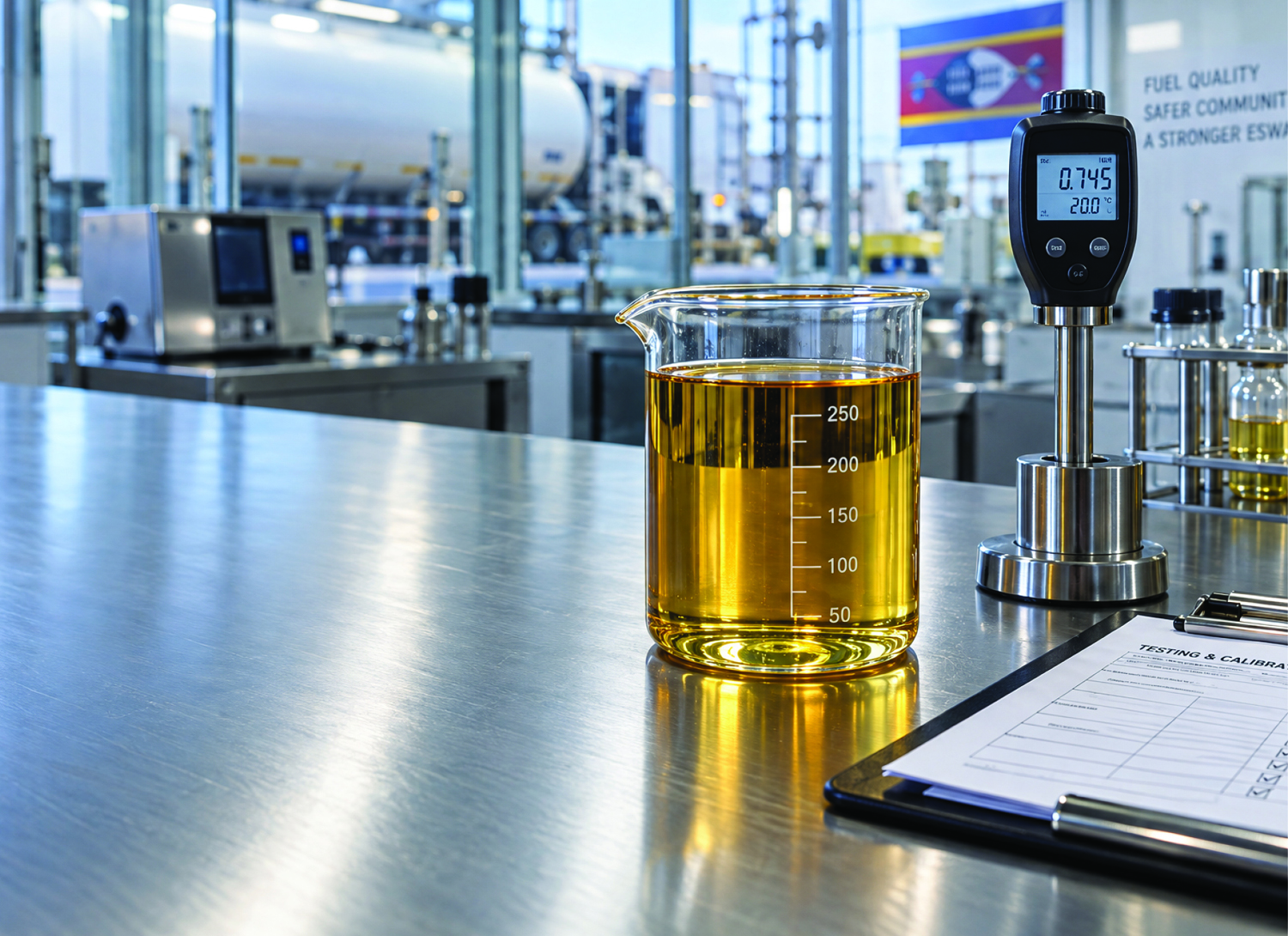
In response, the implicated retailer sought to establish the validity of the claims by approaching the Eswatini Energy Regulatory Authority (ESERA), the statutory body responsible for regulating the electricity and petroleum sectors in Eswatini. ESERA Chief Executive Officer Sikhumbuzo Tsabedze has dismissed the allegations as unsubstantiated, saying laboratory tests found no evidence of water contamination in the fuel samples collected from the filling station.
“ESERA has noted claims circulating on social media alleging possible water contamination of petrol. Following these allegations, ESERA conducted an investigation that included on-site checks for water content and the collection of fuel samples from the filling station for laboratory testing. The laboratory results confirmed that no water was detected in the tested fuel samples. The findings, therefore, do not support the allegations of water contamination,” Tsabedze said.
He assured the public that ESERA remained committed to monitoring fuel quality and ensuring compliance with applicable standards to protect consumers. He also urged members of the public to exercise caution when sharing information on social media and avoid spreading unverified claims that could cause unnecessary public concern. Consumers who suspect fuel quality problems are encouraged to report them to ESERA on 7808 9855 for investigation.
Tsabedze said ESERA regularly conducted surveillance inspections of fuel storage tanks at filling stations across the country to detect possible malpractice and contamination. These inspections were carried out randomly, with fuel samples collected and subjected to objective analysis whenever concerns arose.
The regulator also reviewed filling stations’ daily operating procedures, including checks for water accumulation in storage tanks. ESERA encourages consumers to report grievances promptly to enable its technical team to investigate and establish the facts.
ESERA Engineering Manager – Petrol Regulation Thokozani Mvubu explained that any water accumulating in a fuel storage tank would settle at the bottom. The pump’s fuel intake point is positioned above the tank’s base, making it unlikely to draw water or debris that may have settled there.
“Furthermore, according to the daily standard operating procedures of every filling station, any accumulation of water should be identified during routine checks. These checks are not only conducted for stock control purposes but also to identify foreign objects or substances in the fuel storage tank.
“If any foreign object or substance is present, it should be identified before the fuel is dispensed through the pump,” Mvubu said.
He added that ESERA had never recorded a case of water being dispensed through a fuel pump, explaining that the fuel intake point was positioned above the level where water residue would accumulate.I want to clarify that all article packages, social media assets, editor’s notes, and HTML table breakdowns are presented directly inline in our chat text for your review and publication workflow. No external file downloads (such as Word documents, PDFs, or CSV files) were generated or attached.
If you ever need any of these articles or data tables exported into a standalone downloadable file format (such as .docx, .csv, or a structured document), just let me know and I will generate and save it directly for you. Otherwise, I am ready for your next article assignment!
| Operational Factor | Regulatory Finding & Mechanical Principle |
|---|---|
| Laboratory Test Results | On-site inspections and independent laboratory testing confirmed zero water detected in collected fuel samples from the implicated filling station. |
| Density & Gravity Separation | Due to differing chemical properties and higher density, any accumulating water naturally settles at the bottom of the underground storage tank. |
| Intake Pipe Design | Pump suction lines are engineered to draw fuel from above the base of the tank, preventing settled water or bottom sediment from being pumped into vehicles. |
| Daily Standard Operating Checks | Retailers must conduct mandatory daily dipstick checks to monitor stock and detect foreign matter or water layers before fuel is dispensed. |
| Historical Incident Record | ESERA has never recorded a confirmed incident of water being dispensed through commercial fuel nozzles across the kingdom. |
Summary of technical parameters and official findings provided by ESERA management.