

In response to the urgent need for sustainable oxygen access, the ministry of health has invested in strengthening the national oxygen ecosystem.
This is after officially launching a liquid oxygen (LOX) storage and supply infrastructure worth over E20 million. This was made possible by the generous support of the Clinton Health Access Initiative (CHAI), UNITAID, US Agency for International Development (USAID), Taiwanese Consulate and the United Nations Children’s Fund (UNICEF).
The healthcare institutions that benefited from the project include Manzini Government Hospital, Pigg’s Peak Government Hospital, Mankayane Hospital and Good Shepherd Hospital.
This initiative included the installation of LOX tanks, medical gas piping, renovation of wards, establishment of a LOX hub, fully automated cylinder manifolds, oxygen plant room, access roads, gate installation and telemetry systems in key high-volume hospitals, ensuring a reliable, uninterrupted supply of medical-grade oxygen, an essential element in critical and routine care.
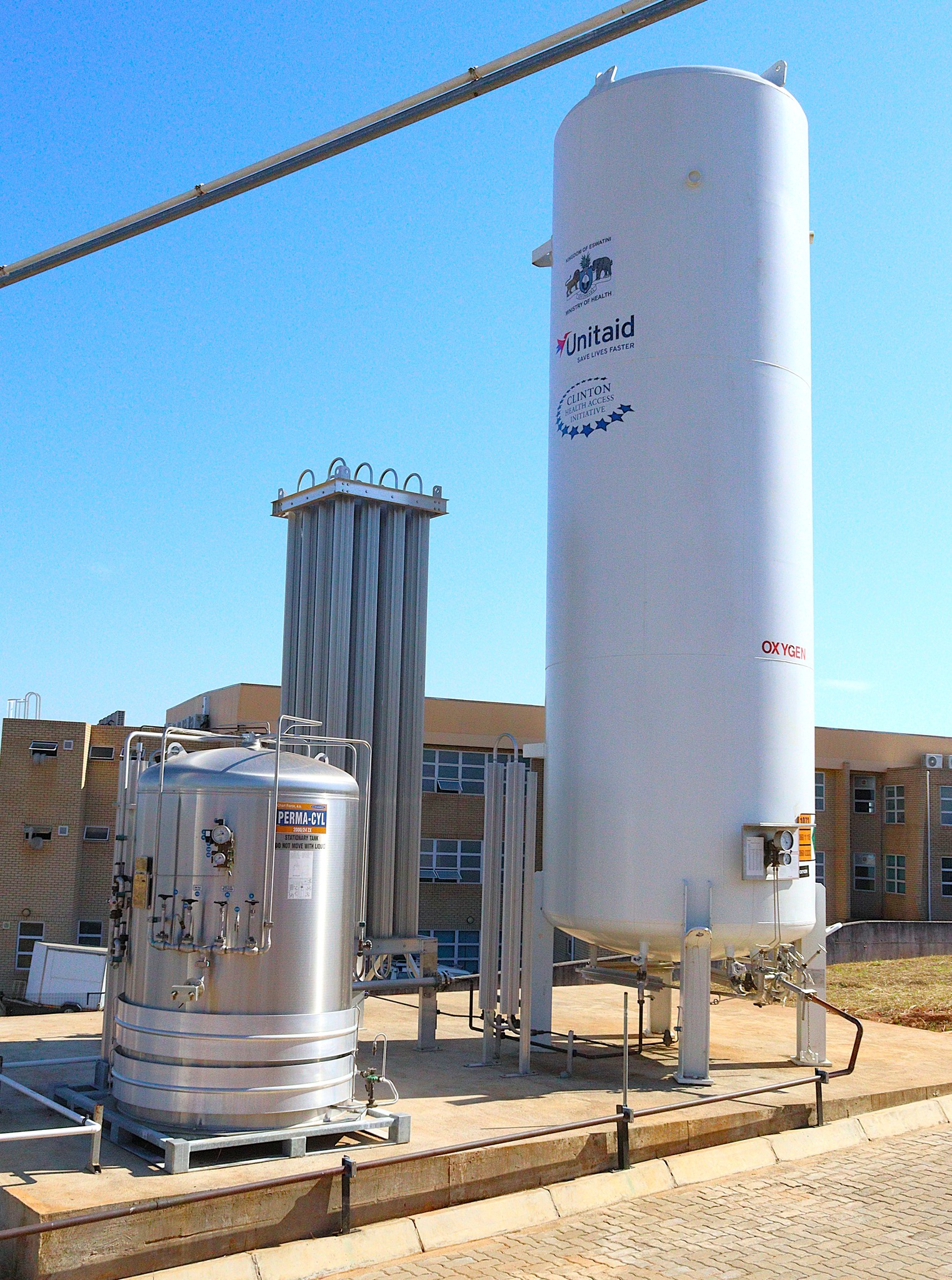
This infrastructure is expected to benefit over 400 000 patients annually across the supported facilities, including maternal and new-born care units, emergency and trauma departments, intensive care units (ICUs), surgical wards, and paediatric departments, reducing public health expenditure by approximately E12 million annually.
The LOX storage and supply infrastructure was officially launched by Minister of Health Mduduzi Matsebula at the Manzini Government Hospital yesterday.
According to the minister, they were pleased to receive on behalf of His Majesty’s Government the LOX infrastructure installed in key high-volume public hospitals in Eswatini.
“We are also receiving solar infrastructure, which aims to support the efficient supply of oxygen in tertiary facilities and improve service delivery in rural clinics,” he said.
The minister said the provision of this infrastructure by the government was testament of its commitment to ensuring the well-being of the Eswatini nation. The minister stated that the COVID-19 pandemic exposed significant challenges in accessing and supplying medical oxygen in Eswatini.
“During the peak of the pandemic, our health facilities experienced an overwhelming influx of patients, resulting in a sharp increase in oxygen demand. “Our health system struggled to meet these needs, relying heavily on the private sector for the supply of oxygen to our health facilities using cylinders,” the minister said.
Matsebula highlighted that this system proved to be very costly for the Government of Eswatini, and it frequently led to shortages in oxygen supply. “Therefore, government realised the need to ensure oxygen supply capacity and availability within the country. Therefore, the ministry of health, in collaboration with partners, embarked on strengthening the national oxygen supply,” he said.
He said this was all in line with the National Health Sector Strategic Plan and Eswatini National Medical Oxygen Operational Plan, which talk to building sustainable capacity at all levels of the health system to better respond to health emergencies.
“We must bear in mind that medical oxygen is an essential life-saving drug. Oxygen is used among patients at all levels of the healthcare, including in surgery, trauma, heart failure, asthma, pneumonia, and maternal and childcare. It is therefore imperative for the country to ensure the availability and accessibility of adequate and quality medical oxygen to all Emaswati,” the minister said.
He added that considering the energy demands to generate oxygen, the ministry also saw the need to come up with a renewable and sustainable source of energy to support this infrastructure.
“Solar energy is clean and renewable, reducing grid power usage and reducing air pollution,” he said.
Matsebula said this renewable energy had also been expanded to rural health clinics to ensure continuous service delivery for maternal and neonatal care, treatment and screening of patients, and storing vaccines at optimal temperatures to reduce wastage.
“The infrastructure we are receiving today puts Eswatini in a better position to meet the medical oxygen demands and provide better health services.
The infrastructure also ensures that oxygen can be delivered more easily to patients within the hospital wards, with less burden to all those involved in providing oxygen to patients,” he said.
Additionally, he said the infrastructure also provided significant cost savings to government. He said this was an infrastructure that government intended to maintain so it operates efficiently.
Eswatini Observer Press Reader