


Deputy Prime Minister Thuli Dladla has challenged stakeholders in the country’s HIV response to look beyond the availability of health facilities and free treatment, questioning whether every citizen who needs HIV services can actually access them.
She said the country could not claim to be winning the fight against HIV and AIDS while some people continued to face transport costs, long distances, stigma, discrimination and fear of having their HIV status disclosed when seeking healthcare.
“The availability of services does not necessarily mean that people have access to them,” she said.
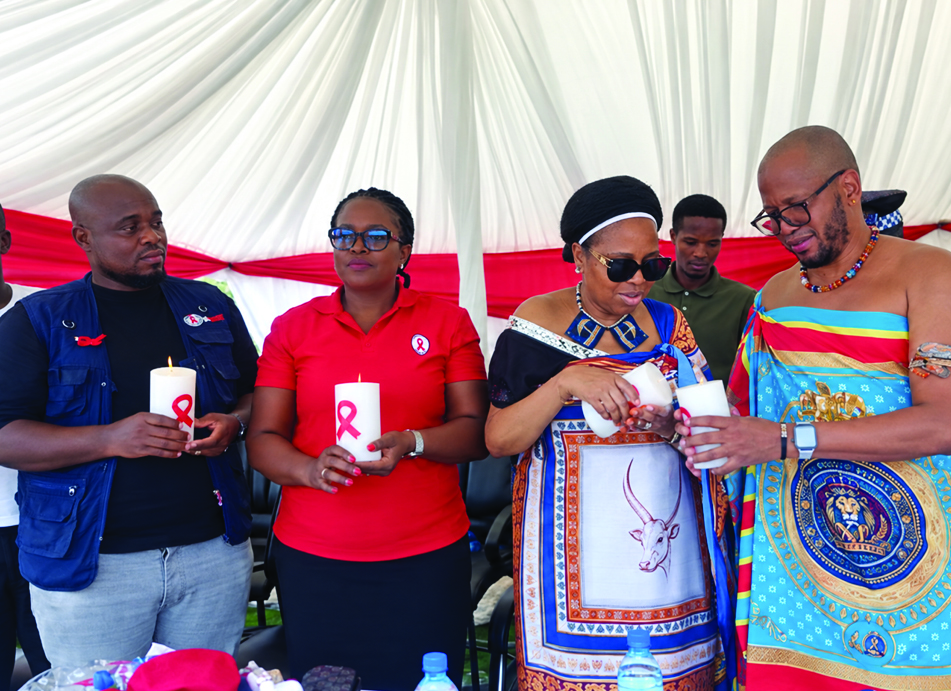
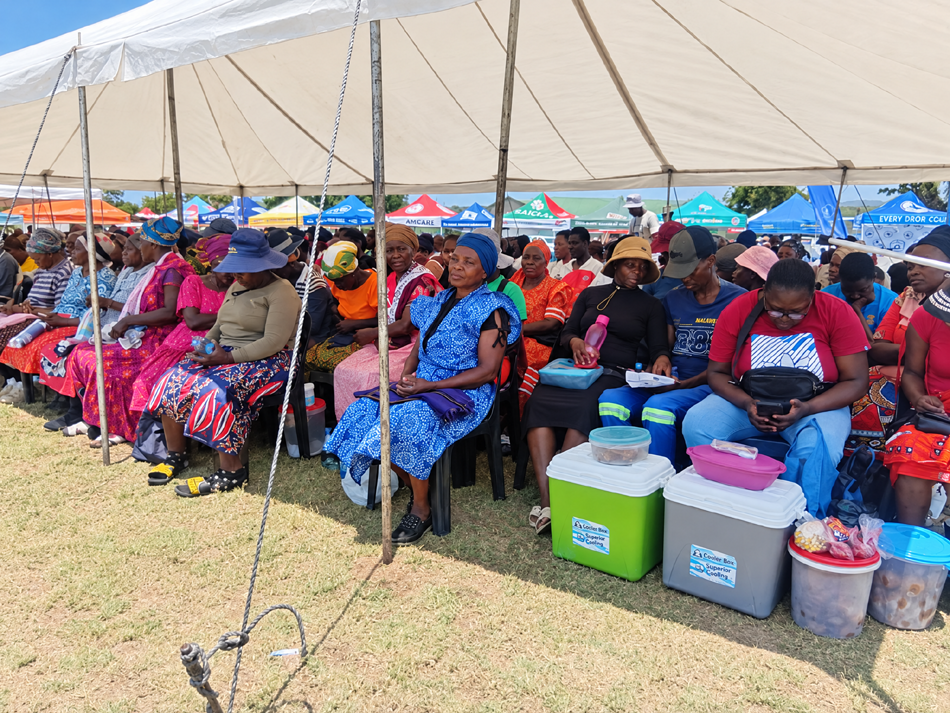
Dladla was represented by Principal Secretary in the Deputy Prime Minister’s Office Siboniso Nkambule during the Hhohho Regional World AIDS Day build-up commemoration held at Mpofu under Mhlangatane Inkhundla yesterday.
The commemoration, held under the theme, ‘Ending AIDS in Eswatini starts with Access’, was led by the National Emergency Response Council on HIV and AIDS (NERCHA), in collaboration with the ministry of health.
The deputy prime minister said although the country had made significant progress in its HIV response, including achieving the global 95–95–95 HIV treatment targets, it was important to establish whether services were reaching everyone who needed them.
She challenged stakeholders to consider whether a young girl could afford transport to a health facility, whether a young woman could request HIV prevention medication without being judged and whether a person living with HIV could collect treatment without fearing that their status would be disclosed.
She said the existence of a clinic did not automatically translate into access, particularly for people who could not afford transport or feared humiliation when seeking services.
“A young woman who fears humiliation at a health facility does not have meaningful access, even when that facility is within a walking distance,” she said.
The concerns raised during community dialogues conducted across Mhlangatane Inkhundla ahead of the commemoration reinforced her position.
According to Dladla, some young women reported that transport costs prevented them from seeking services, while others cited long distances, shortages of certain medicines and HIV prevention commodities, as well as the loss of mobile outreach services that had previously brought healthcare closer to communities.
She said these experiences demonstrated that access was not only about the distance to a health facility, but also affordability, dignity, confidentiality, availability and trust.
Dladla described these as matters of social justice, equality and human dignity, saying people who could not afford transport to access essential healthcare remained disadvantaged even when treatment was free.
She also expressed concern over reports that some young women feared seeking HIV prevention services because they could be questioned, judged or exposed.
She said the country needed to address these barriers while strengthening the provision of quality healthcare, protecting people’s rights and ensuring that essential services remained sustainable despite declining external funding.
Dladla identified four important dimensions of access: quality services, rights and dignity, sustainable resources and political leadership.
She called for strengthened outreach programmes to bring services closer to communities and ensure that essential medicines and prevention commodities were available when needed.
On resources, she said government needed to strengthen domestic financing, improve coordination and protect essential community services as external funding declined.
She also challenged leaders to move beyond making commitments and demonstrate their leadership through tangible improvements in people’s lives.
“Political leadership must be measured not only by the commitments we make, but by the improvements people experience in their daily lives,” she said.
Meanwhile, the commemoration came as the country marks 40 years since the first HIV case was recorded in the country in 1986.
Dladla said the four decades had been marked by tremendous suffering, but also extraordinary courage, resilience and progress.
She paid tribute to local citizens who had lost their lives to AIDS-related illnesses, families who cared for their loved ones, healthcare workers who served under difficult circumstances and communities that stood together during the epidemic.
She said achieving the global 95–95–95 treatment targets demonstrated what could be accomplished when government, communities, civil society and development partners worked together.
She, however, cautioned that despite this milestone, new HIV infections continued to occur, particularly among adolescent girls and young women.
“Our 40-year journey has demonstrated that we can successfully treat HIV. Our challenge now is to apply the same determination to preventing new infections and ensuring that no one is left behind,” she said.
The deputy prime minister also highlighted the social and economic factors that continued to expose young people to HIV, including teenage pregnancy, poverty, gender-based violence, alcohol and substance abuse, and limited communication between parents and their children.
She explained that economically vulnerable girls could find themselves in relationships in which they had limited power to negotiate safer sex, while young women experiencing violence could be afraid to report abuse because they depended financially on perpetrators.
She said ending AIDS required more than providing medication. It also meant creating an environment where young people were protected, informed, empowered and supported to make healthy decisions.
Dladla called for stronger links between HIV prevention, social protection, education, gender equality, youth empowerment and community development.
She also urged parents to create homes where children could openly discuss their health and wellbeing, while traditional and faith leaders were encouraged to challenge stigma and harmful practices.
NERCHA promises action on concerns
NERCHA Executive Director Dr Nondumiso Ncube says community engagements are intended to ensure that residents are not merely informed about HIV programmes, but actively participate in identifying challenges affecting access to services.
She said NERCHA, working with its partners and local leadership, had facilitated dialogues across Mhlangatane Inkhundla to understand what access meant to different population groups, the barriers they faced and the solutions they proposed.
Ncube said adolescent girls and young women had raised concerns about transport costs, confidentiality, limited access to prevention information and the reduction of community outreach services.
Men had also highlighted long distances to health facilities, transport challenges, lengthy waiting times and the need to bring healthcare services closer to their communities.
She said poverty, unemployment and gender-based violence, were among the broader social challenges influencing vulnerability to HIV, adding that these required a coordinated multisectoral response.
“Today’s commemoration is deliberately different.
“Rather than simply delivering speeches about the HIV response, we have created a platform for communities to present their experiences directly to those responsible for policies, programmes and services,” she said.
Ncube acknowledged that communities should not repeatedly raise the same concerns without seeing improvements.
“As NERCHA, we recognise that communities should not repeatedly tell us about the same challenges without seeing meaningful improvements,” she said.
She committed that NERCHA would work with the ministry of health, relevant government sectors, development partners and community leadership to document the concerns and commitments emerging from the engagement.
She said the organisation would facilitate follow-up through existing coordination structures and promote accountability for agreed actions.
Ncube urged stakeholders to ensure that community voices remained central to decisions and interventions as the country prepares for World AIDS Day on December 1.
“Let Mhlangatane mark the beginning of renewed action to remove the barriers that continue to prevent our communities from accessing HIV services,” she said.
The event was attended by Hhohho Regional Administrator Princess Tsandzile, representatives from the deputy prime minister’s office, government ministries, traditional authorities, development partners, civil society organisations, people living with HIV and members of the Mhlangatane community.