


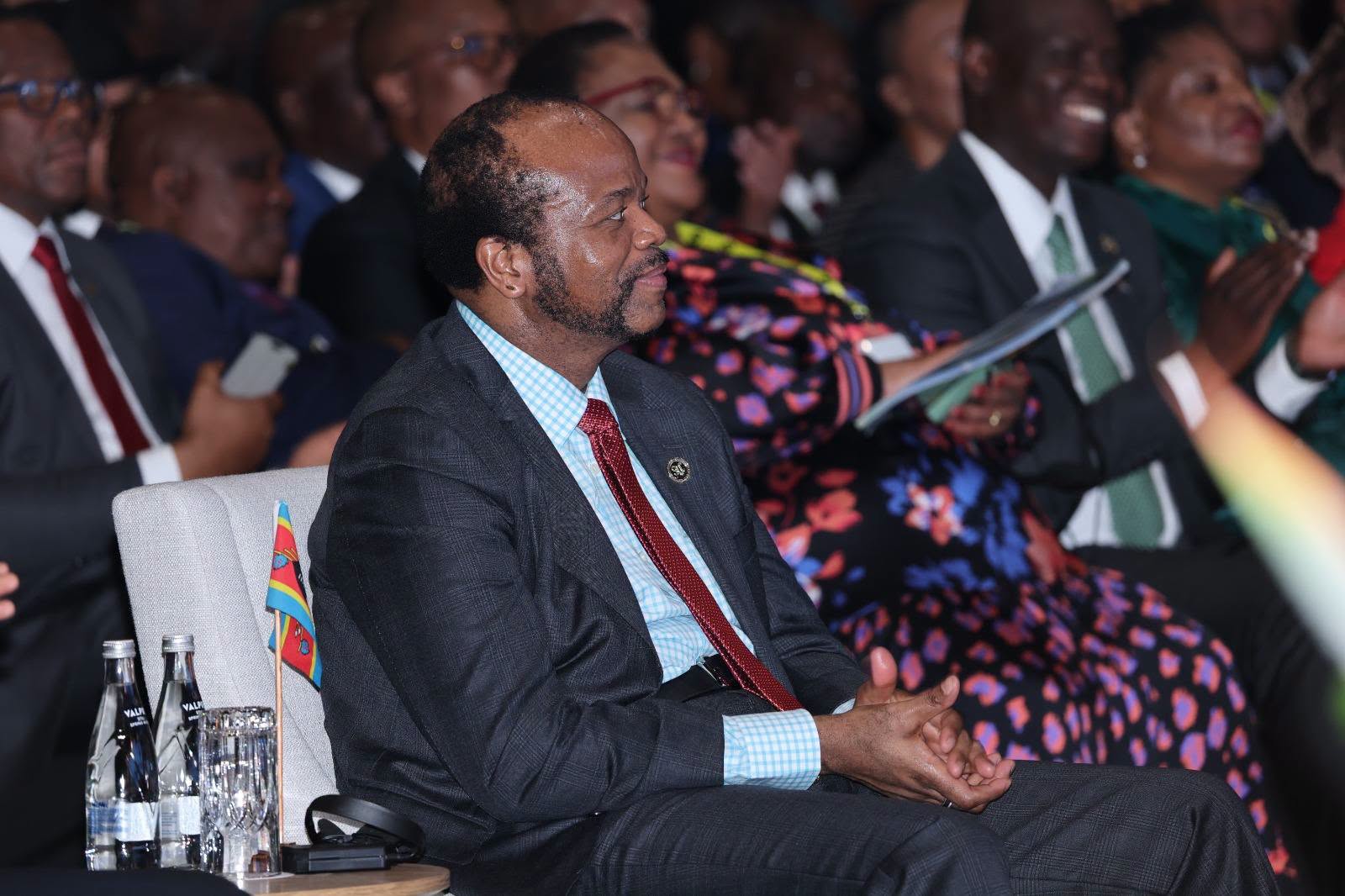
His Majesty King Mswati III has officially assumed the chairmanship of the SADC Organ on Politics, Defence and Security Cooperation Troika.
Accepting the role during the 46th SADC Summit in Durban, the king committed Eswatini to working closely with outgoing and incoming leadership, the SADC Secretariat and all Member States to ensure continuity and effective implementation of regional commitments.
It is anticipated that during Eswatini’s tenure it will focus on strengthening the organ’s capacity to anticipate, prevent and respond decisively to emerging political and security challenges, guided by the SADC Treaty, the Protocol on Politics, Defence and Security Cooperation, the Mutual Defence Pact and relevant regional instruments.
Critical areas of focus are, among others, the conflicts in the Democratic Republic of Congo and restoration of political order in Madagascar.
Outgoing chairperson Malawi’s Second Vice President, Enoch Chihana, expressed confidence in Eswatini’s leadership, praising the kingdom for its readiness to step in when needed, including leading electoral observation missions.
SADC Executive Secretary Elias Magosi noted that the region remains generally stable, while diplomatic efforts continue to address political and security challenges in some areas.
The 46th SADC Summit was held under the theme ‘Translating SADC Vision 2050 into Action: Pathways Towards Solidarity, Equality and Shared Prosperity.’
KING URGES INTEGRATION OF SMALLER STATES INTO ECONOMIC CORRIDOR
Meanwhile, His Majesty has urged SADC leaders to ensure that smaller landlocked Member States are fully integrated into the North–South Economic Corridor.
Speaking during discussion of Agenda Item 5 on the implementation of the Regional Indicative Strategic Development Plan (RISDP) at the 46th SADC Summit in Durban, His Majesty supported the prioritisation of the corridor as a pilot for transforming regional transport routes into fully integrated economic corridors.
He stressed that the corridor must extend beyond its principal geographical spine through strategic feeder routes connecting Eswatini and Lesotho. This would prevent smaller landlocked countries from remaining on the periphery of regional infrastructure, trade and industrial development.
His Majesty highlighted the Ngwenya–Oshoek Border Post as Eswatini’s principal commercial gateway to South Africa and the wider regional market. It handles a significant share of the kingdom’s imports and exports and serves as a critical link for businesses, commuters, tourism and regional supply chains.
Its efficiency, he said, directly affects the cost and competitiveness of trade in Eswatini.
The border post is also strategically important to the south-eastern part of the SADC subregion. Together with the Carolina–Oshoek/Ngwenya road and connecting routes through Eswatini to Mozambique, it links South Africa’s industrial and commercial centres with Eswatini’s productive sectors and the ports and markets of Mozambique.
Strengthening this route would improve east–west connectivity while complementing the main north–south transport spine.
He proposed that the relevant decision direct the SADC Secretariat to consult Eswatini and Lesotho and incorporate these extensions into the corridor’s governance arrangements, detailed investment plan and resource-mobilisation programme.
This should include the upgrading of the Carolina–Oshoek/Ngwenya road, modernisation and expansion of the Ngwenya–Oshoek Border Post, improved border-management systems, stronger road and rail connections through Eswatini to Mozambique, adding that comparable strategic connections should be identified for Lesotho.
The king also addressed the importance of rail infrastructure and the Strategic Oil reserve currently under construction in Eswatini, emphasising their role in enhancing the kingdom’s contribution to regional energy security, trade facilitation and economic resilience within the broader corridor framework.