


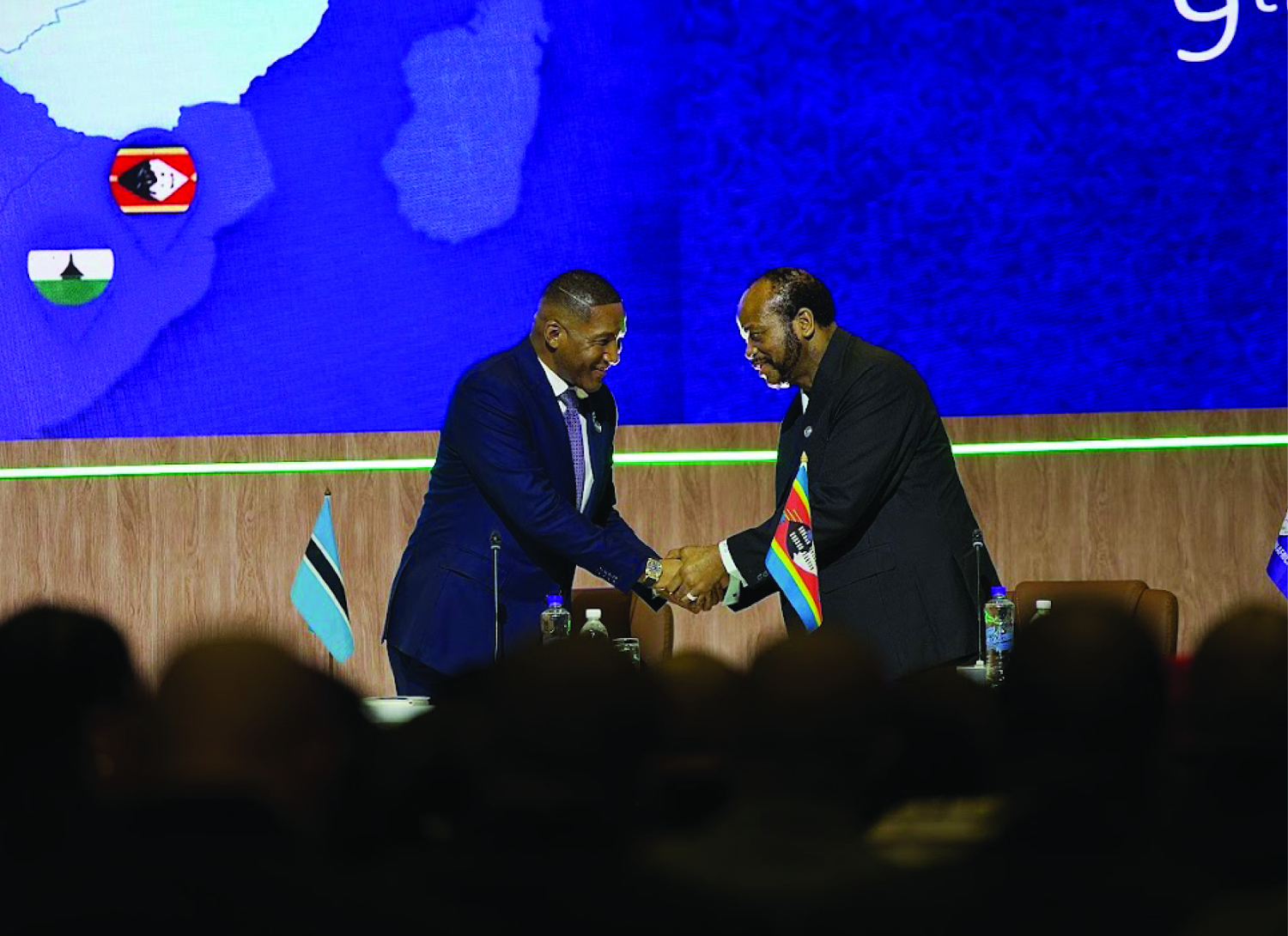
Botswana President Advocate Duma Gideon Boko drew attention for his reflective remarks on leadership, describing the role of Eswatini’s monarch as “one of the most difficult jobs in the world.”
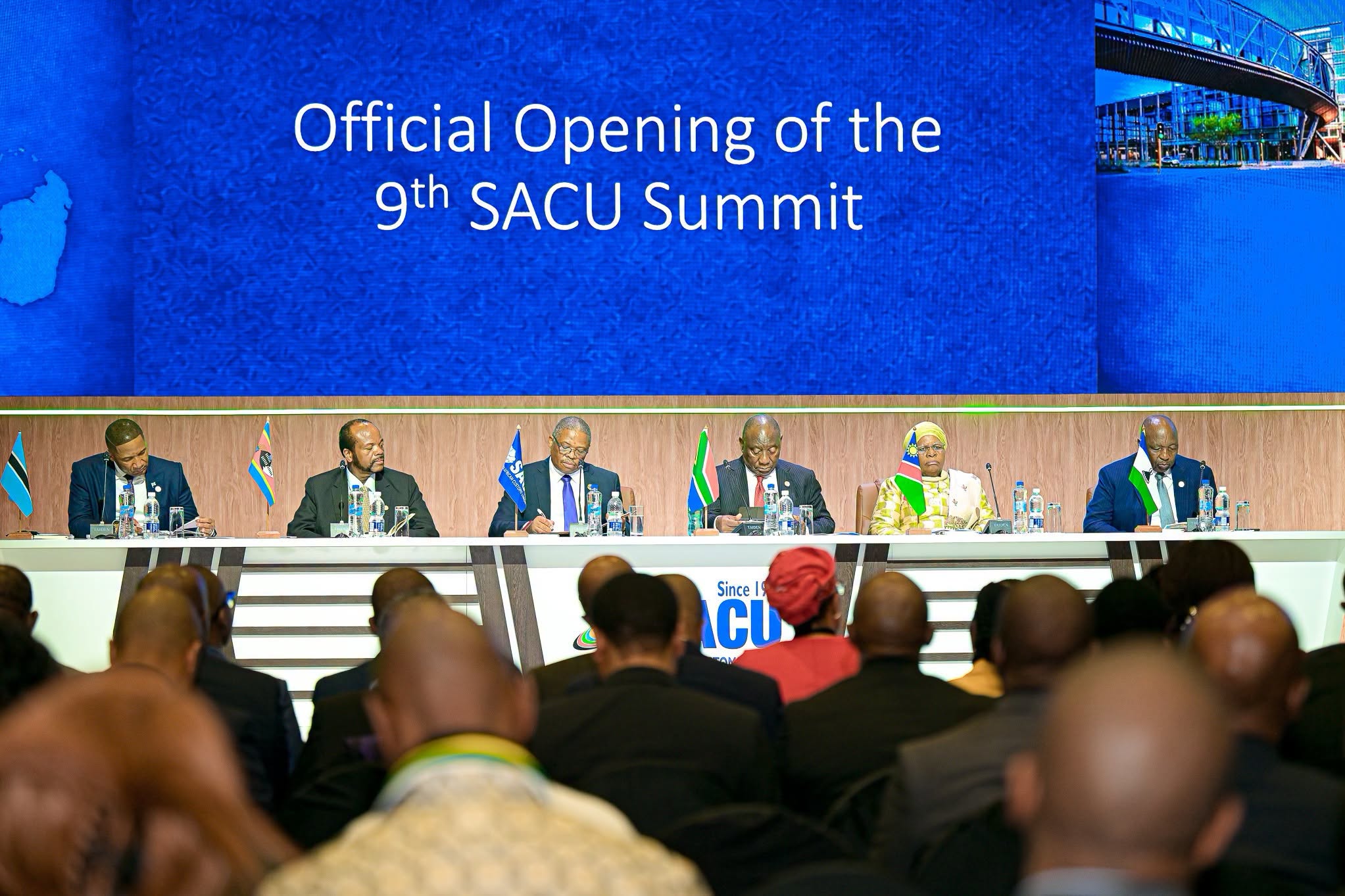
This was during the ninth Summit of the Southern African Customs Union (SACU) Heads of State and Government held in Cape Town, South Africa, on Friday, where Boko was announced as the incoming SACU Chairperson.
Boko said he had once believed the saying in his culture that “the one who eats last is king” was purely metaphorical. However, he noted that at the summit, the phrase seemed to apply in a more literal sense as he deliberately greeted His Majesty last out of respect.
He singled out His Majesty King Mswati III, warmly addressing him in traditional praise, “Bayethe, wena Waphakathi,” and thanking him for gracing the summit.
Boko revealed that he had recently visited Eswatini and spent time with the monarch, describing the interactions as eye-opening regarding the demands of royal life.
“The more time I spend with His Majesty, the more I realise I am grateful I am not a king,” Boko remarked, prompting visible amusement from attendees, including the monarch himself.
He went on to say that kingship is not as easy as it appears; it seems to be a difficult, painfully onerous responsibility.
He said His Majesty, for instance, had told him that he is prohibited by culture from attending any funeral, even if it were the funeral of his closest relative.
The president went on to say that the King cannot even interact closely with any person who is in mourning, something which he saw as a difficult and painful life.
“I wouldn’t survive in that role,” said Boko.
Still not done, he also pointed out that the King cannot attend the birth of his own children, nor see them immediately after they are born.
He can only see them after a customary period of at least three months.
And then one may look from afar with wonder and wish they were a king. These practices, he suggested, illustrate the personal sacrifices embedded within traditional leadership roles.
“No, no, no. I know it’s one of the most difficult jobs and it takes a great deal of fortitude, strength and character to occupy that station and discharge those functions and do so with the kind of poise, elegance and equanimity that His Majesty shows,” said Boko.
The Botswana leader also extended his reflections to the monarchy of Lesotho, referencing King Letsie III, whom he has met during visits to the mountainous kingdom often referred to as the “Kingdom in the Sky.”
ALSO READ | SACU Summit gives Masilela bold mandate
Boko recalled attending birthday celebrations for the monarch and experiencing Basotho cultural performances, including traditional dances that he described as deeply symbolic of national identity.
In a more anecdotal moment, he referenced a particular community he encountered in Lesotho, which he said was known historically for horse theft.
According to Boko, people of this community bear scars and bruises on their bodies and they are not the result of perhaps taking anybody’s wife, but purely from stealing horses.
“It’s a community in Lesotho that takes pride in the fact that rather than participating in other vices, they have their own specialisation, which is stealing horses. On every occasion when they are mentioned they take great pleasure in having this stated upfront,” said Boko.
The president added that he does not know whether they still steal horses or whether it is something that happened in the past, but nonetheless he found it an interesting part of their culture.
Beyond the humour and storytelling, the summit itself carried significant regional importance.
The Southern African Customs Union is the world’s oldest customs union, with roots tracing back to arrangements established in 1910 between the then British colonial territories in southern Africa.
It was later formalised through a revised agreement in 1969 and again updated in 2002 to reflect the post-colonial political landscape and modern trade realities.
Today, SACU comprises Botswana, Eswatini, Lesotho, Namibia and South Africa.
The bloc operates a common external tariff system and revenue-sharing formula, which remains a cornerstone of fiscal stability for smaller member states.
Its secretariat is based in Windhoek, Namibia, and SACU is often described as a key pillar of Southern African economic integration.
Recent SACU summits have focused on accelerating industrial development, improving regional value chains and reducing reliance on imported finished goods.
Leaders have also emphasised the need to diversify exports, enhance intra-regional trade and modernise customs systems to facilitate smoother cross-border commerce.
While no binding new agreement was publicly announced at this particular summit, discussions centred on strengthening cooperation amid global economic uncertainty and shifting trade patterns.
The outgoing SACU Chairperson, South African President Cyril Ramaphosa, in particular, closed the summit by calling for continued momentum in implementing decisions that will strengthen the region’s economy.
The summit endorsed measures to advance industrialisation, improve trade and mobilise investment, priorities that will help create opportunities for businesses, support employment and contribute to sustainable growth for South Africans and the wider region.