
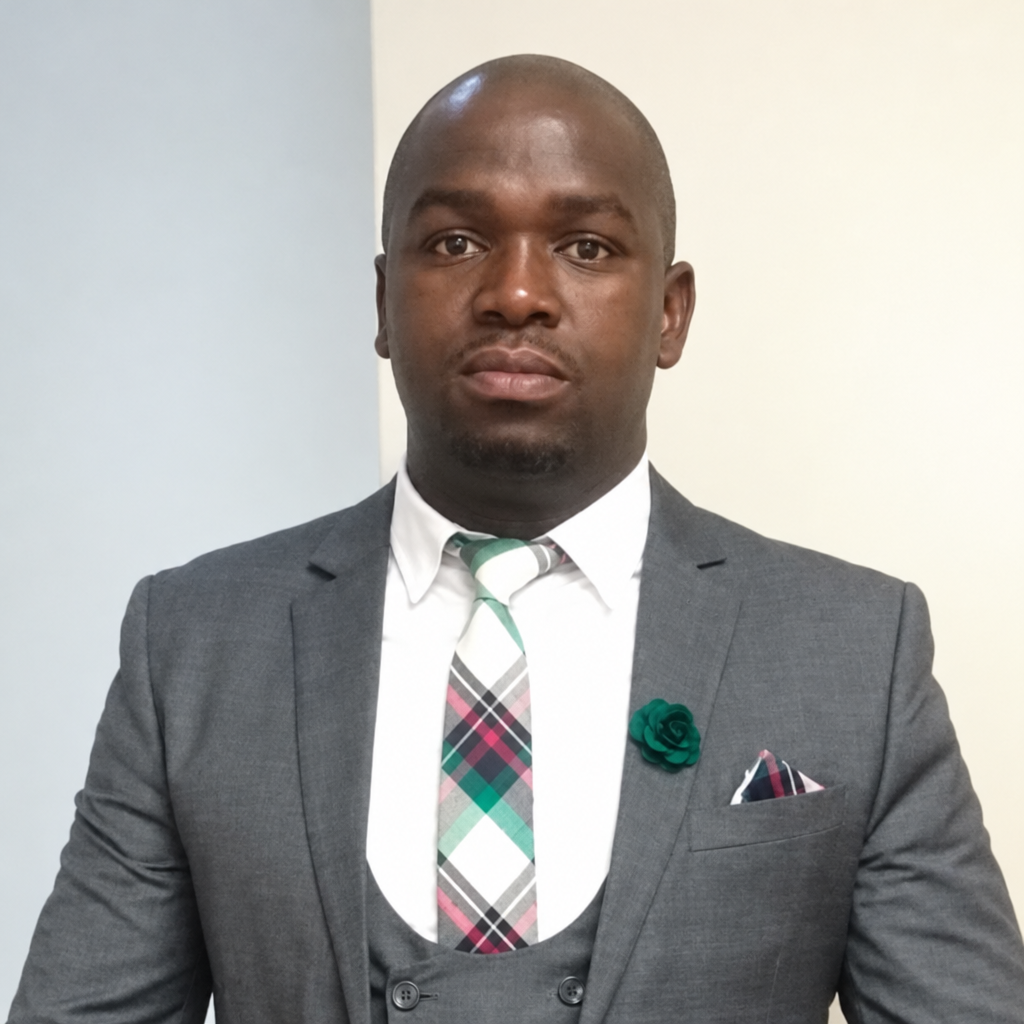
An attorney who misappropriated E268 000 belonging to three clients, used trust funds to pay law firm salaries and lied to obtain money from an estate, has been struck off the roll of legal practitioners.
The High Court removed Innocent Motsa from the roll after finding that his repeated dishonesty and failure to account for clients’ money had destroyed the trust required of a legal practitioner.
The judgment was delivered by Judge Maxine Langwenya, who said the public had to be protected from him.
Motsa was also ordered to pay the Law Society of Eswatini’s (LSE) legal costs on an attorney-and-client scale.
The application arose from complaints involving the estate of the late Arthur Mpapane, Penelope Magagula and Geotech Swaziland (Pty) Ltd. In the Mpapane estate matter, Motsa sold a residential property at Lot 1729, Extension 13, Sidwashini North, Mbabane, for E170 000 without the executrix’s consent. The executrix, Gugu Mpapane, had withdrawn her consent to the sale because she intended to purchase the property, subject to approval from the other beneficiaries.
Despite this, Motsa proceeded with the sale to Mathatha Dlamini and signed the deed of sale as the seller. He claimed to have authority through a power of attorney, but failed to produce the document before the LSE disciplinary tribunal.
The court established that his authority was limited to representing the executrix in matters before the Master’s office and did not permit him to sell the property.
The court further found that Motsa misled conveyancing attorneys, Ntshangase Attorneys, into advancing money from the estate’s proceeds.
On June 17, 2021, he requested E15 000, claiming the family needed it for funeral expenses scheduled for June 19. He later requested another E10 000. However, the family had neither requested the money nor experienced a bereavement at the time. Neither amount reached the beneficiaries.
Although E129 743 was eventually remitted to Motsa after deductions, the remaining proceeds were never paid to the estate. In another complaint, Magagula was awarded E345 080 in compensation following litigation against her employer, Cashbuild, while the company was ordered to pay E110 000 in legal costs.
Despite an agreement allowing him to deduct legal fees, Motsa failed to account for E75 000 owed to his client. He admitted liability and promised repayment but made only sporadic payments, leaving more than E70 000 outstanding.
Geotech Swaziland also accused him of failing to account for E68 534.52 received following a settlement. Although he undertook to repay the amount through monthly instalments, he failed to honour the commitment.
The court also heard that Motsa had used clients’ trust money to pay salaries at Mkhwanazi Attorneys following the death of the firm’s managing partner. Judge Langwenya condemned the practice, emphasising that trust money belonged to clients and could not be used to finance law firm operations.
“Misappropriating client money to pay office staff salaries or any other law firm’s operational expenses is a serious form of professional misconduct in Eswatini,” she said.
Opposing the application, Motsa argued that he had never intended to permanently steal the money and was remorseful. He asked the court to consider suspension instead, citing financial difficulties after his contract as an acting magistrate ended in December, 2024. However, the judge rejected his arguments, noting that he had been given an opportunity to make submissions during disciplinary proceedings and had neither appealed nor sought a review of the tribunal’s findings.
“Motsa is anything but honest, reliable and a man of integrity in the manner he handled the complaints which are the subject of this application,” the judgment states.
The court concluded that suspension would not adequately address the seriousness of his misconduct, particularly because he had failed to demonstrate that he could be rehabilitated.
“Dishonesty strikes at the heart of an attorney’s fitness to practise,” the court ruled. Motsa was admitted as an attorney of the High Court on July 15, 2016. He initially worked at Mkhwanazi Attorneys before establishing I. Motsa Attorneys. He was practising in Manzini, according to submissions before the court.