
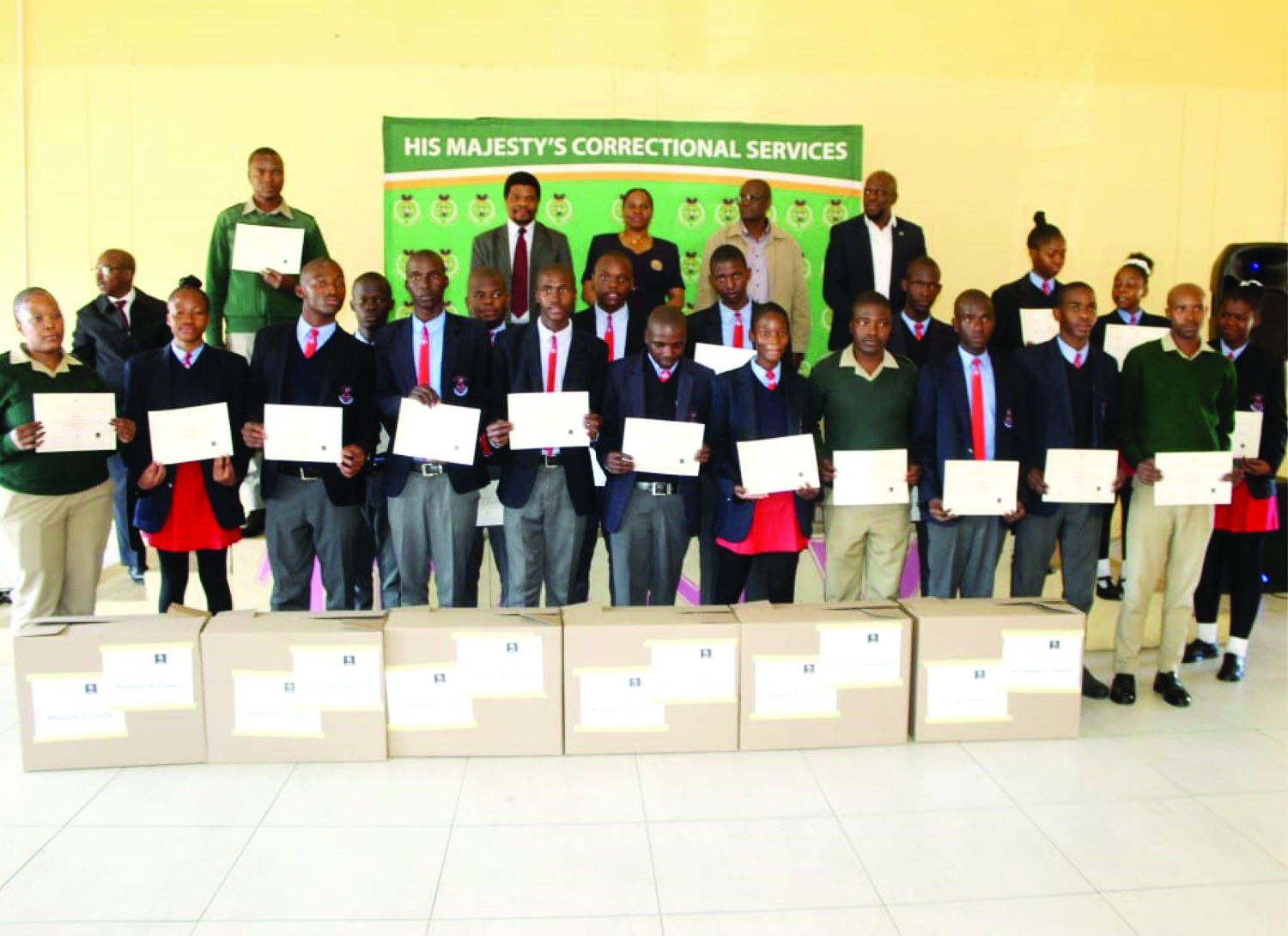
A cellphone repair programme launched at Vulamasango School could soon be rolled out to community ICT hubs across the country.
This is part of government’s move to equip young people with practical digital skills and entrepreneurship training.
The programme was launched during a graduation ceremony of an inaugural class comprising 16 students and four correctional officers who have now acquired cellphone repair skills.
The event was held at Vulamasango School yesterday and attended by partners including UNDP, ESCCOM, SEDCO, Mpowerment and CANGO, among others.
Minister of Information, Communications and Technology Savannah Maziya said the success of the programme had demonstrated a model worth replicating beyond correctional institutions.
Speaking through ICT Principal Secretary Andreas Dlamini, the minister said the next step was to integrate cellphone repair and entrepreneurship training into community iHubs, particularly in rural areas.
“The Eswatini Communications Commission (ESCCOM) has demonstrated a model that works. Our next aspiration is to extend this model beyond correctional services by integrating mobile phone repair and entrepreneurship training into community iHubs across the Kingdom,” she said.
The minister said the centres had potential to evolve into hubs for innovation, technical training and enterprise development, especially for unemployed and out-of-school youth.
She appealed to government institutions, development partners, youth organisations, financial institutions and the private sector to support the initiative.
Ministry of Justice and Constitutional Affairs Under Secretary Gugu Nsibande said, “As we have witnessed the excellent work carried out by the Ministry of ICT together with ESCCOM, it is encouraging to know that this initiative is the first of its kind in Eswatini and this laboratory will equip learners with the skills needed in today’s world.”
She said skills in cellphone repair would open opportunities for self-employment, formal employment and entrepreneurship.
“This will help learners become self-reliant in life even after completing their studies.”
The programme is being implemented through ESCCOM’s Universal Access and Service Fund. The training was conducted by Mpowerment Eswatini, an NGO that helps youth and women turn their potential into strategic assets and create real impact in communities.
During the event, ESCCOM officially handed over two renovated laboratories fitted with 35 desktop computers, two laptops, two projectors and desks.
Receiving these was Ministry of Justice and Constitutional Affairs Under Secretary Gugu Nsibande, who said, “These resources will greatly improve the quality of teaching and learning here at Vulamasango. This laboratory will equip learners with the skills needed in today’s world.”
Nsibande said while they were grateful for the excellent work that has been done by the Ministry of ICT, there was also a need for an additional ICT classroom.
“This is especially important because ICT studies now begin at primary school level, which means that the current classroom cannot accommodate all learners,” she added.
She highlighted challenges caused by the lack of an ICT classroom, saying this created challenges because the learners were at different stages of learning, hence it was important to have a separate classroom dedicated to the lower grades.