
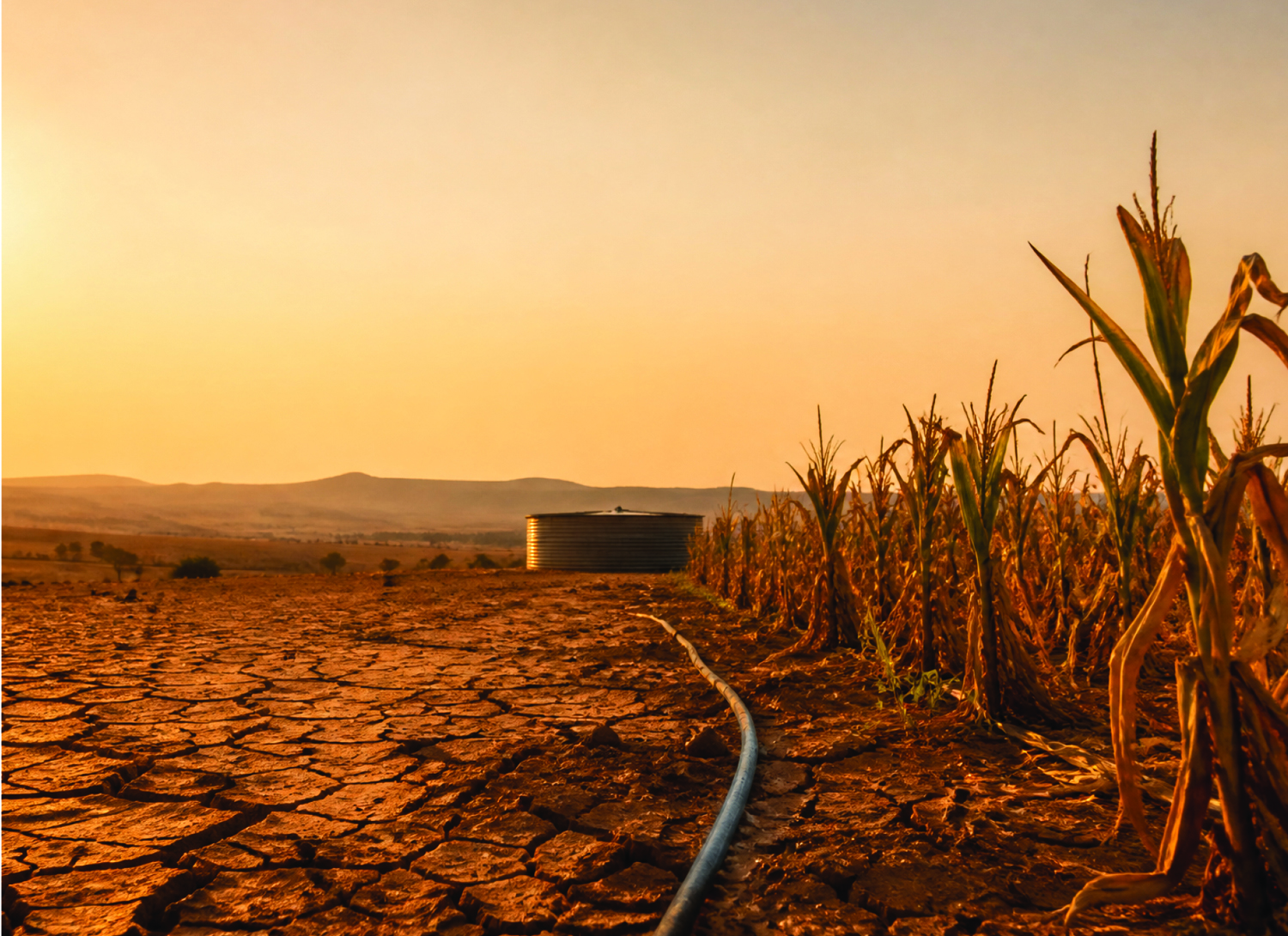
The National Disaster Risk Management Authority (NDRMA) has warned that the latest El Niño forecast indicates a greater than 90% chance of a very strong event developing, marking a significant escalation in global climate risk projections and prompting renewed calls for intensified national preparedness.
According to an update shared by the authority, the El Niño forecast has evolved steadily over recent months, with successive assessments showing a strengthening climate signal.
NDRMA Communications Manager Magman Mahlalela said earlier projections in March indicated a 62% likelihood of El Niño conditions emerging between June and August.
He said this probability increased in June when the World Meteorological Organization (WMO) reported that El Niño conditions were developing at around 80%.
By July, the WMO indicated that El Niño was expected to strengthen further through August and October, signalling a more sustained and potentially impactful climate event.
He said the latest update from the United States National Oceanic and Atmospheric Administration (NOAA) now places the probability of a very strong El Niño at more than 90%, with a 62% chance of reaching historically strong levels between October and December.
“This shows a clear strengthening of the El Niño signal over time, and it is important that we respond with equal seriousness in our preparedness efforts,” Mahlalela said.
Despite the rising probabilities, he cautioned against interpreting the forecast as a direct prediction of drought conditions, stressing that El Niño does not automatically translate into specific local impacts.
NDRMA in a statement said the country must treat the latest forecast as a call for intensified preparedness rather than alarm.
“We note that the strengthening El Niño outlook provides an important window for early action, allowing government, communities, farmers and businesses to review and reinforce existing contingency plans before any potential climate-related impacts are felt.”
NDRMA further emphasised that while El Niño conditions do not automatically result in drought locally, historical experience shows that the country remains highly vulnerable to rainfall variability, particularly in agriculture, water resources and food security.
According to the NDRMA, national preparedness efforts are already underway, including the ongoing implementation of the National Drought Plan 2030. The plan focuses on strengthening early warning systems, promoting climate-smart agriculture, improving water management and enhancing coordinated drought response mechanisms across sectors.
“We are therefore urging all sectors to remain alert, use official seasonal forecasts, and take practical preparedness measures early, stressing that timely action significantly reduces the social and economic impacts of climate shocks,” NDRMA said.
The authority reiterated that preparedness should not be driven by panic, but by informed decision-making based on credible climate information.
“We emphasise that preparedness must be guided by science and early warning information, not fear. The goal is to reduce risk before it becomes impact.”
The authority added that El Niño is a naturally occurring climate phenomenon associated with the warming of sea surface temperatures in the central and eastern Pacific Ocean, which can influence weather patterns across different parts of the world, including Southern Africa.
In Eswatini, they said past El Niño events have been linked to periods of below-normal rainfall, affecting crop production, water availability and rural livelihoods. They stated that the 2015/16 El Niño event, for example, contributed to a severe drought that significantly reduced maize production and placed pressure on national food security systems.
NDRMA stated that the current strengthening forecast should therefore be viewed as an opportunity to act early, strengthen resilience and reduce potential future losses across key sectors of the economy.