Vulnerable pupils could soon find it easier to access government support when they transition from primary to high school with the introduction of certificates confirming their vulnerability while they are still in Grade VII.
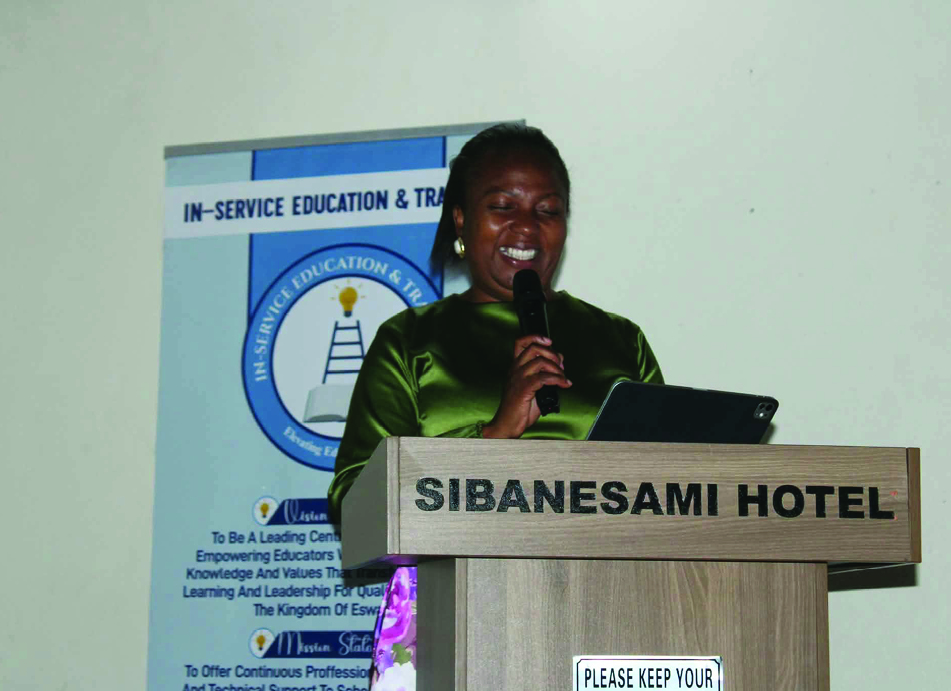
Ministry of Education and Training Principal Secretary (PS) Naniki Mnisi said the proposed certificates would help vulnerable children avoid having to start the application process afresh when they enrol in high school.
The initiative is intended to ease the administrative and financial burden faced by children who depend on government assistance, particularly orphans and vulnerable children (OVCs).
Under the proposed arrangement, qualifying pupils would receive certificates in Grade VII that could be presented when they enrol in high school to facilitate consideration for government support.
Mnisi described the difficulties children face when seeking assistance, including the need to obtain affidavits and stamped letters confirming their circumstances.
She said these requirements can force vulnerable children and their caregivers to move between different offices and community structures to collect the necessary documents.
“Living in poverty is a very painful situation.
The process of applying for OVC funding may also involve transport costs, placing additional pressure on families that are already struggling financially,” she said.
The proposed certificates are intended to reduce the need for children to repeat these steps when moving from primary to secondary education.
The proposal comes amid concerns previously reported about the costs associated with obtaining stamps and supporting documents from royal kraals.
The proposed system could therefore reduce the burden on pupils if the certificate is accepted by the relevant authorities and eliminates unnecessary duplication of documentation.
Mnisi said this was one of the various issues they looked into during the recent Education Joint Sector Review Indaba which was held in Ezulwini earlier in the week.
The education sector is in the process of examining ways of improving access, retention and progression, particularly for learners whose family circumstances make them vulnerable to dropping out.
Currently, there are over 67 400 children benefitting from the OVC education grant, following an increase of 4 761 beneficiaries.
Additionally, government data shows that 17 238 new OVC beneficiaries were registered during the recent intake cycle across the country’s regions.
The Free Primary Education (FPE) on the other hand caters for over 200 000 children annually across the country’s primary schools.
204 learners with disabilities drop out of school
A total of 204 learners left school because of disability, with most of the recorded cases occurring at primary level.
Figures presented during the 2026 Education Joint Sector Review and Indaba show that 139 learners left primary school while 65 left secondary school because of disability.
These statistics were drawn from Ministry of Education and Training’s Special Educational Needs (SEN) Unit presentation.
In the presentation, the ministry acknowledges that the country does not yet have sufficient data to establish the proportion of learners with disabilities who are dropping out of school.
The ministry also noted that the education system cannot currently provide a complete picture of how many learners with disabilities are enrolled, where they are studying, how they are progressing or how many children with disabilities remain out of school.
The presentation listed several barriers that can prevent learners with disabilities from accessing and completing their education. These include inaccessible school infrastructure, limited finances, difficulties identifying learners who need support, shortages of specialist personnel and negative attitudes towards disability.
Physical access was highlighted as a concern, with 29% of schools that have ramps and 45% have accessible toilets.
It was also said that the presence of a ramp or an accessible toilet does not necessarily mean that the facility is usable to every learner with a disability. The ministry’s presentation also identified the transition from primary to secondary school as a point at which learners with disabilities may face particular challenges.
Government has introduced policies and standards intended to improve access to education for learners with special educational needs. These include the 2019 Standards for Inclusive Education, the Education and Training Sector Policy and the Education Sector Strategic Plan 2022–2034 among the instruments guiding the country’s approach. The standards for inclusive education were rolled out to 986 schools, according to the ministry. The rollout initially reached headteachers, while broader orientation of classroom teachers was planned for the 2026/27 financial year.
The ministry also reported that 1 010 teachers had attended in-service workshops on supporting learners with special educational needs.