




The usually steady rhythm of the Ngwenya Border Post transformed into a vibrant gateway of colour, anticipation and movement yesterday.
This was caused by the waves of travellers pouring into the country for the 2026 MTN Bushfire Festival. By early afternoon, long queues had formed, snaking through the immigration lanes as passport stamping counters worked at full capacity.
Vehicles, ranging from compact cars to packed mini-buses, rolled steadily into the kingdom, carrying festivalgoers from across South Africa and beyond. Immigration officials, police officers and support staff moved briskly between lanes, maintaining order amid the surging crowds.
It was a scene of organised intensity, but underlined by an unmistakable sense of excitement. The festival, held annually in Malkerns (House on Fire), is widely regarded as one of Africa’s leading cultural and music events, drawing thousands of visitors for a three-day celebration of live music, art, food and social consciousness.
With the Bushfire festivities running through today and tomorrow, the border post became the first stage of the experience, where journeys converged and expectations began to build. Among those arriving were first-time visitors Nozi, Tiamo, Tsekgo and Kekgo, who had travelled from Johannesburg. Their energy was infectious as they spoke about finally experiencing what they had long followed online.
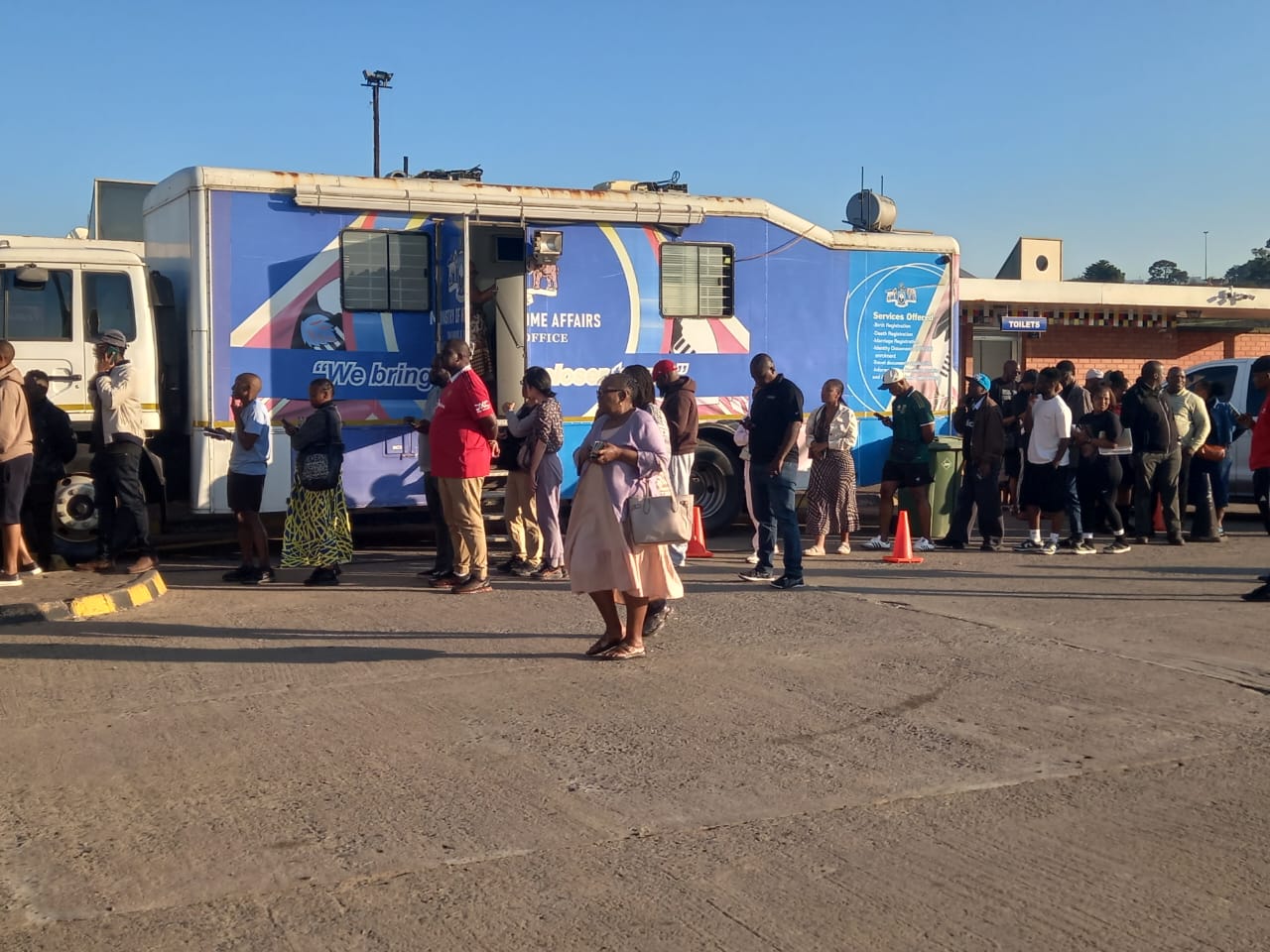
“We have seen so much about Bushfire on social media and heard about it from friends,” said Tiamo. “We are looking forward to the vibe. We just want to have a good time here and have fun watching Uncle Waffles perform.”
Their sentiments echoed a common thread among newcomers: curiosity mixed with excitement about the festival’s famed atmosphere, often described as a fusion of music, culture and global unity.
Nearby, Sidibe from Qwaqwa in the Free State stood patiently in line with her husband. A seasoned attendee, she said this was her third visit, having deliberately left their children at home to fully immerse themselves in the experience.
“We love the friendly and warm nature of Emaswati,” she said, smiling. “That’s one of the reasons we keep coming back.”
Repeat visitors Lind and his two friends, also from Johannesburg, shared similar enthusiasm. For them, Bushfire has become a tradition.
“This is our fourth time. It’s not just about the entertainment, it’s also about how professionally the festival is organised. The Bushfire Festival is a clean event.”
One of his friends added a light-hearted suggestion, saying extending the sale of heavier alcoholic beverages to Sunday, the final day, could enhance the experience even further. For Khaya, another visitor, making his second trip to the festival, the motivation was more personal.
“Honestly, it’s just getting away from home. There are too many issues,” he said candidly. “I just want to meet people and socialise.”
His words reflected another layer of the Bushfire appeal: a temporary escape into a space defined by music, openness and connection. Not far from him stood Dakaru and Sihle, a couple from Midrand dressed in matching football shirts. First-time attendees, they said they had been persuaded by friends to finally make the journey.
“Sihle has wanted to come here for a long time,” Dakaru said. “We’re just going to follow the vibe and experience the culture of Emaswati. We don’t know exactly what to expect,” he added, “but we believe it’s going to be a great time.”
For others, the experience extends beyond music into lifestyle choices, particularly the festival’s popular camping culture. Tebogo and Nomshado, attending for the third time, came fully equipped.
“The hype is something you can’t miss,” Tebogo said. “We brought our camping equipment. It’s exciting to be away from our usual beds.”
Their enthusiasm highlights one of Bushfire’s defining features: its immersive environment, where attendees often camp on-site, creating a temporary community bound by shared experience. Meanwhile, Aviwe and Mthunzi, accompanied by their wives, opted for a more relaxed approach. First-time visitors from Johannesburg, they chose to lodge near the festival venue rather than camp.
“We’ve heard so many positive things,” said Aviwe.