



Easter Sunday is a powerful call for renewal, healing, and intentional parenting is reshaping how families grow, connect and begin again.
There is a quiet, almost sacred moment that comes with Easter Sunday. It is not always found in churches or in the rituals that mark the day, but in the stillness that invites reflection. It is a moment that asks difficult questions: What needs to be restored? What must be let go? Where does one begin again? For many families in Eswatini, these are not abstract reflections but lived realities, shaped by economic strain, shifting social dynamics, and the evolving demands of raising children in a complex world.
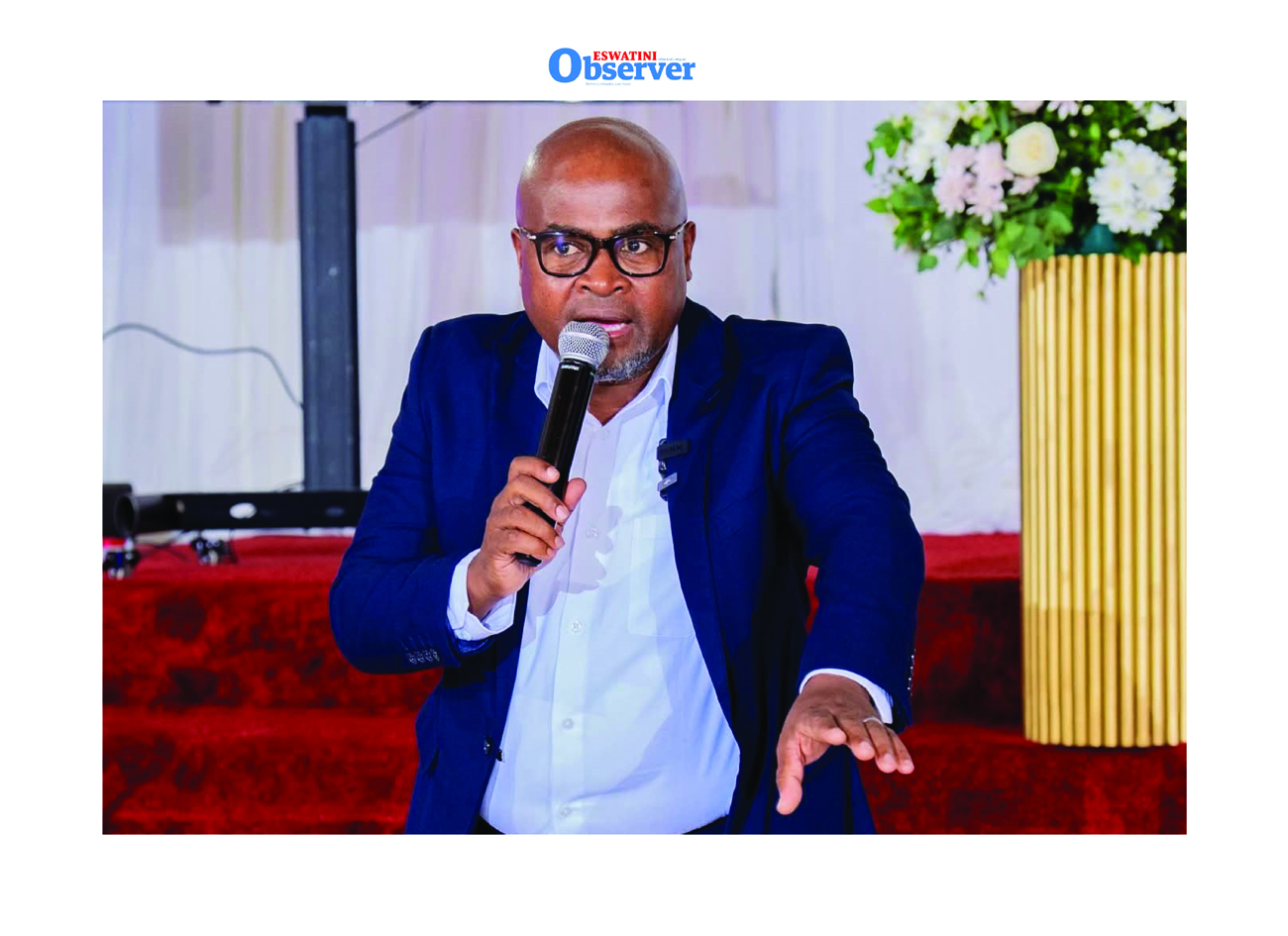
It is within this space that Dr Clement Dlamini’s ‘Parenting With Purpose’ initiative is finding resonance, not as a prescriptive programme, but as a necessary conversation. The February session, by all accounts, struck a chord with parents navigating the often-unspoken pressures of modern parenting.
Now, as families mark Easter Sunday, that conversation deepens, taking on the profound symbolism of renewal, rebirth, and hope.
At its core, the idea of renewal is both simple and confronting. It challenges parents to acknowledge that while perfection may be unattainable, growth is always within reach. Dlamini speaks to this with a clarity that avoids both sentimentality and judgement. Parenting, he suggests, is not about flawless execution but about the willingness to reset. In a country where many households are balancing limited resources with rising expectations, the notion of starting over is not a luxury; it is a necessity.
There is a quiet honesty in recognising that many parents are overwhelmed. Between work commitments, financial pressures, and the responsibility of nurturing emotionally grounded children, it is easy to slip into what Dlamini describes as reactive parenting. Decisions are made in the moment, often driven by stress rather than intention.
Easter, with its emphasis on reflection, offers a rare pause. Today, it becomes an opportunity to reassess not with harsh self-criticism, but with deliberate awareness.
What does it mean, then, to reset as a parent? It is not found in grand gestures or sweeping declarations. Rather, it lies in the small, consistent acts that shape a home environment. It is choosing to listen without interruption, to create space for dialogue, and to establish values that guide everyday interactions. It is, perhaps most importantly, the willingness to be present not just physically, but emotionally.
One of the most striking insights from the February session was the shared realisation among parents that they are not alone. Beneath the surface of individual households lies a collective experience of uncertainty, frustration, and, at times, self-doubt.
Communication gaps between parents and children remain a recurring challenge, often widened by generational differences and the rapidly changing social landscape. Children today are exposed to influences that many parents did not encounter in their own upbringing, creating a disconnect that can be difficult to bridge.
Yet, within this challenge lies an opportunity.
Dlamini recounts a particularly powerful moment when parents were encouraged to see life through the eyes of their children. It is a deceptively simple exercise, but one that reveals a deeper truth: understanding begins with perspective.
In many traditional settings, the voice of the child has often been secondary, overshadowed by authority and expectation. The cultural norm has been one where children are told, rather than heard.
This is not an indictment of tradition, but a call for evolution.
To hear a child is not to relinquish authority, but to strengthen it through empathy. It is to recognise that respect is not only commanded but cultivated.
Parents are being invited to ask themselves difficult questions: Am I truly listening, or am I merely waiting to respond? Do I seek to understand, or simply to instruct?
These are not comfortable reflections, but they are necessary ones.
They form the foundation of what Dlamini describes as intentional parenting a conscious shift from instinctive reactions to deliberate engagement.
Central to this shift is the role of hope.
In many ways, hope is the quiet force that sustains families through uncertainty. In Eswatini, where economic challenges are a daily reality for many, hope becomes more than a philosophical concept; it is a practical tool for endurance.

It allows parents to invest in their children’s future even when immediate outcomes are not visible.
There is a well-known Siswati saying, litsemba alibulali, hope does not kill. It is a phrase that carries both cultural and emotional weight, reinforcing the belief that perseverance, grounded in hope, yields results over time.
Whether framed within spiritual faith or everyday resilience, hope shifts the narrative from limitation to possibility.
It encourages patience in moments of frustration and fosters belief in the unseen progress that unfolds within families.
Yet, hope alone is not enough.
It must be accompanied by the equally powerful principles of forgiveness and grace.
These are not concepts often associated with parenting in practical terms, but they are essential in creating healthy family dynamics.
Many parents carry a quiet burden of guilt, regret over moments of anger, missed opportunities, or decisions made under pressure.
Similarly, children may carry their own hurt, shaped by misunderstandings or disciplinary approaches that, while well-intentioned, may have caused emotional strain.
The introduction of forgiveness into the parenting conversation is both radical and necessary.
It requires parents to acknowledge their imperfections without being defined by them. It also calls for the humility to apologise when necessary, a gesture that, far from undermining authority, strengthens trust.
Grace, in this context, becomes the space that allows both parents and children to grow without the weight of past mistakes.
In practical terms, this means creating environments where open expression is encouraged.
It means allowing children to articulate their feelings without fear of dismissal.
It also means recognising that growth within a family is not a singular event but a continuous process, marked by both progress and setbacks.
Looking beyond Easter, the next edition of ‘Parenting With Purpose’, scheduled for May 16, is expected to delve deeper into the realities shaping modern families.
One of the most pressing areas identified by parents themselves is the complexity of blended family structures.
Issues of single parenting and co-parenting are no longer peripheral concerns; they are central to the lived experiences of many households.
Blended families bring with them unique challenges navigating relationships between step-siblings, establishing new roles, and managing expectations from previous family structures.
These are not issues that can be addressed through generic advice.
They require nuanced, context-specific conversations that acknowledge the emotional layers involved.
Dlamini’s approach, as he describes it, is to ‘scratch where it itches’.
It is a phrase that captures the essence of responsive engagement addressing real concerns rather than theoretical ones.
Future sessions are also expected to explore areas such as emotional intelligence in children, the influence of digital spaces, and the need to break harmful generational patterns.
The inclusion of these topics reflects a broader understanding of the environment in which children are being raised.
The digital age has introduced new variables into parenting, from social media exposure to shifting definitions of identity and belonging.
Parents are increasingly required to guide their children through landscapes they themselves are still navigating.
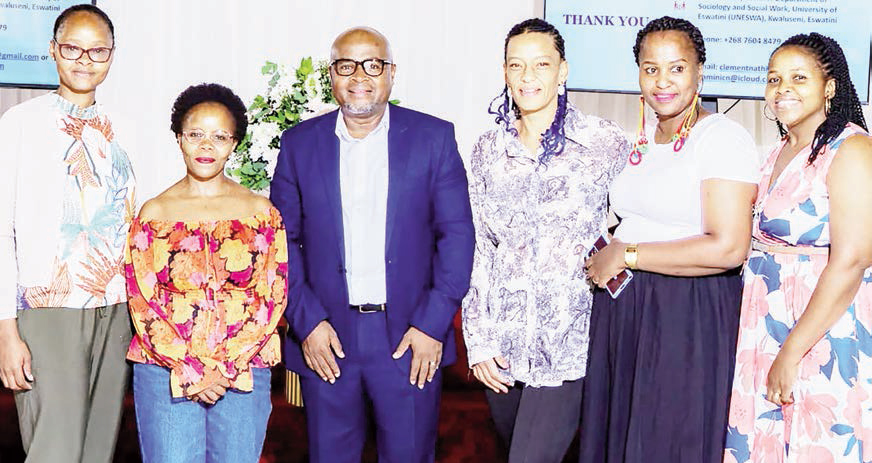
This is where the importance of community becomes evident.
The notion that it takes a village to raise a child is not merely a proverb; it is a practical framework that continues to hold relevance.
In Eswatini, the concept of extended family remains deeply rooted, providing a support system that extends beyond the nuclear household.
Community, however, is not only about shared responsibility; it is also about shared learning.
When parents come together, they create spaces for dialogue, for the exchange of experiences, and for collective problem-solving.
This sense of togetherness reduces isolation and reinforces the understanding that parenting challenges are not individual failures, but shared human experiences.
There is also a cultural richness in this communal approach, one that blends traditional values with contemporary insights.
On a day like Easter Sunday, this sense of community is further amplified, creating opportunities for encouragement, accountability, and growth.
At the heart of all these conversations lies a fundamental truth: children learn more from what they observe than from what they are told.
The values often associated with Easter: compassion, sacrifice and love are not abstract ideals, but lived behaviours.
They are demonstrated in the way parents listen, in the time they invest, and in the consistency of their presence.
Compassion is found in the willingness to understand a child’s perspective, even when it challenges one’s own.
Sacrifice is reflected in the choices parents make, often placing their children’s needs above their own comfort.
Love, perhaps the most complex of these values, is expressed not only through words, but through reliability, patience, and unwavering support.
There is a growing recognition that the long-held notion of “do as I say, not as I do” is no longer sustainable.
Children are perceptive; they notice inconsistencies between words and actions.
Authenticity, therefore, becomes the cornerstone of effective parenting.
It is not about projecting an idealised image, but about embodying the values one seeks to instil.
As Parenting With Purpose evolves, there is also a deliberate effort to make future engagements more interactive and inclusive.
The recognition that parenting cannot be addressed in isolation from children has prompted a shift towards creating shared spaces for engagement.
This may involve guided conversations between parents and children, as well as collaborations with other practitioners working within similar spaces.
The intention is clear: to move beyond instruction and towards participation.
Strong families, after all, are not built through lectures, but through shared experiences.
They are shaped in moments of connection, in conversations that may be difficult but necessary, and in the willingness to grow together.
Ultimately, the message that emerges from these engagements is both simple and profound.
Growth is always possible.
It is a message that resonates deeply on Easter Sunday, but extends far beyond the day itself.
It speaks to the resilience of families, to the capacity for change, and to the enduring hope that underpins the parenting journey.
For parents carrying the weight of past mistakes or present uncertainties, this message offers a form of release.
It shifts the focus from perfection to progress, from fear to possibility.
It encourages a continued commitment to learning, to adapting, and to showing up—day after day—with intention.
In the end, the true essence of renewal is not found in dramatic transformation, but in the quiet, consistent decision to begin again.
For families across the country, that decision may very well be the most powerful act of all.