



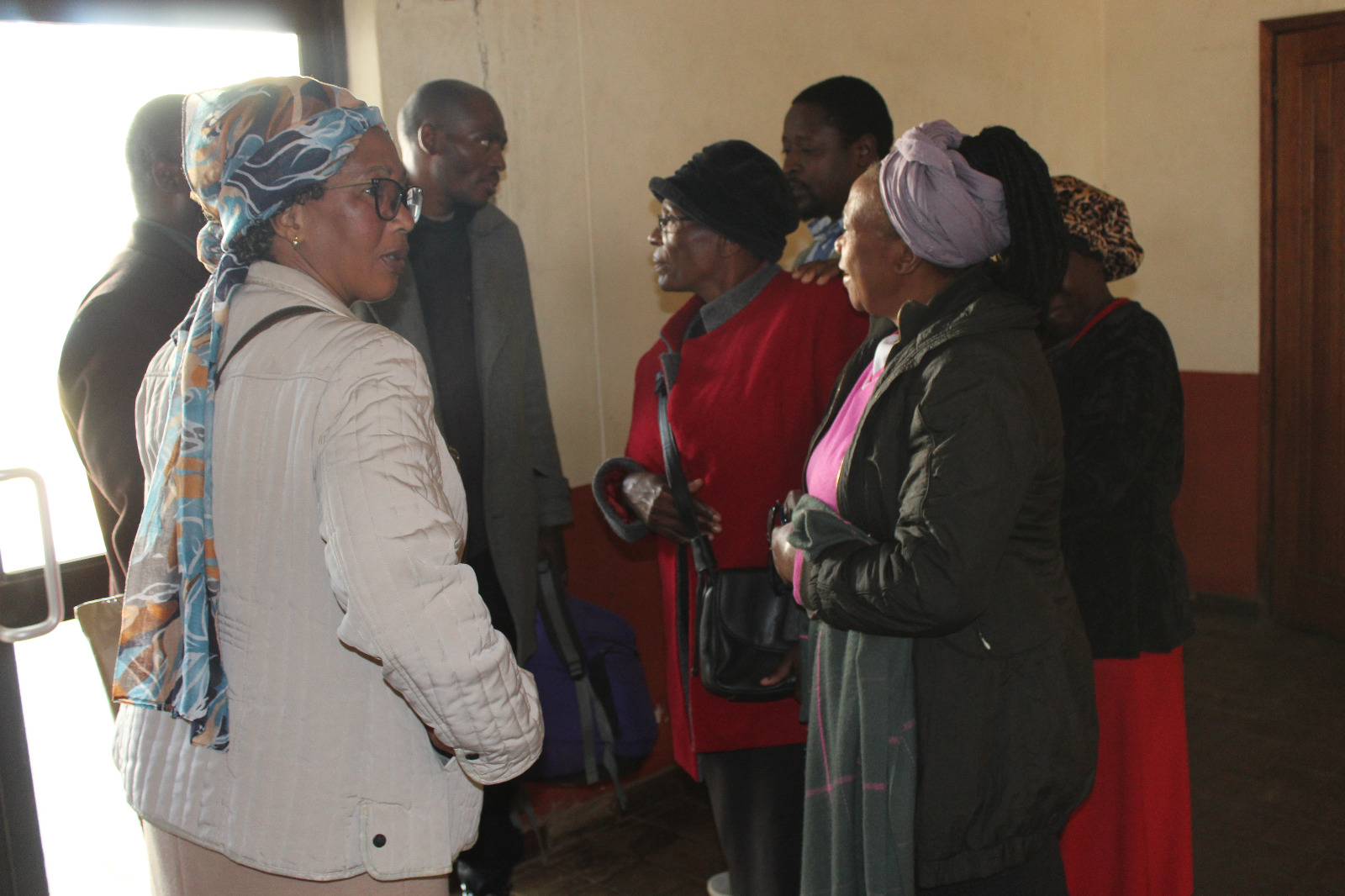
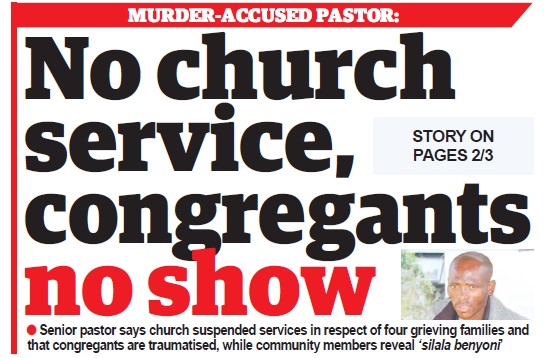
The Eswatini Observer reported on Monday that no church service was held at the Mfabantfu church where Nkosingiphile Zwane preached after congregants failed to show up for worship.
The absence of worshippers was perhaps the strongest confirmation yet of the shock, pain and disappointment that has followed the arrest of their pastor and the allegations linking him to the deaths of four women.
For a congregation that once gathered in that same place to pray, worship and listen to the word of God, the empty church represented far more than a building without people. It represented a crisis of trust, a painful sense of betrayal and a wound inflicted on an institution that remains one of the most influential pillars of our society.
The pulpit, traditionally regarded as a place of spiritual guidance, has suddenly become associated with allegations of unimaginable wrongdoing. A man expected to provide moral direction and comfort to his congregation now stands at the centre of a case that has shaken the country.
Zwane’s matter is before the courts, and due process must be respected. The allegations against him must be tested through the judicial process, and he, like every other member of society, remains innocent until proven guilty, despite reports that he has made statements to investigators and assisted police in gathering evidence.
But beyond the court proceedings lies a much bigger conversation—one that concerns the church, society and the institutions responsible for protecting public trust.
What happens when someone who stands behind the pulpit, preaching about righteousness, becomes accused of acts that appear to contradict the very values they represent?
This is the wound that the Zwane case has inflicted on confidence in the church.
THE WOUND TO THE BODY OF CHRIST
Christian scripture describes the church as the Body of Christ. For believers, the church is not merely a building where people gather every Sunday. It is a place where people seek God, find hope, receive guidance and look for support during some of life’s most difficult moments.
The church, therefore, carries a responsibility that extends beyond preaching. It is expected to protect the vulnerable, defend the weak, promote justice and provide moral leadership within society. That is why allegations involving a pastor carry a different weight.
A pastor is not simply another professional. A pastor is entrusted with people’s lives in deeply personal ways. Congregants share their fears, struggles, family challenges and vulnerabilities with church leaders because they believe they are approaching someone who represents God.
When that trust is allegedly abused, the damage extends far beyond the individual involved. It affects confidence in the church as a major institution in society.
The challenge facing the church is that the conduct of those who occupy positions of spiritual authority inevitably influences public perceptions of Christianity as a whole.
This is why the response cannot only be about condemning one individual after allegations emerge.
The bigger question is whether the institutions around religious leadership have systems strong enough to prevent abuse of authority and protect those who place their trust in the church.
ZWANE CASE NOT AN ISOLATED CHALLENGE FOR THE CHURCH
The Zwane case is not the first in the country to involve serious allegations against a religious leader. In 2024, Pastor Themba Masimula was sentenced to 60 years’ imprisonment after being convicted of murdering his wife, Funekile Mdluli. The High Court found that her death was not accidental and that her body had been burnt inside a vehicle.
The case shocked the country because it raised similar concerns about the relationship between religious leadership, public trust and personal conduct.
The circumstances surrounding the Masimula case and the Zwane matter are different, and each must be judged on its own facts. However, these cases cannot continue being treated as isolated tragedies that generate public outrage before fading from memory.
If society does not learn from these moments, the painful reality is that similar cases may arise again.
The issue is not whether churches are responsible for the actions of every individual who claims to serve God. They are not. The issue is whether churches, as institutions that influence millions of lives, are doing enough to ensure that those placed in positions of authority are properly prepared, accountable and held to ethical standards.
THE CALL FOR ACCOUNTABILITY, OVERSIGHT AND REFORM
This is where major religious bodies must take a leading role. Silence cannot be the response. While this may appear to be Zwane’s church issue, it is in reality a religious issue affecting the whole nation.
Church organisations must openly confront these challenges and lead difficult conversations about leadership, accountability, safeguarding and the protection of vulnerable members of congregations. They must move beyond expressing disappointment after tragedy strikes and begin building systems that reduce the possibility of such harm occurring.
A lacklustre response to this crisis threatens the credibility and true purpose of the gospel of Jesus Christ.
The same responsibility applies to Parliament and government. The debate about oversight and regulation of churches cannot continue as a theoretical discussion that only resurfaces whenever controversy emerges. It requires serious national reflection.
Freedom of religion is a fundamental right, and government should not interfere with people’s beliefs or dictate matters of faith. However, protecting freedom of religion does not mean ignoring accountability or failing to create safeguards that protect members of the public.
When institutions hold enormous influence over people’s lives, society has a legitimate interest in ensuring minimum standards of responsibility exist.
The question is not whether government should control churches. It is whether stronger frameworks should exist to encourage transparency, ethical leadership and protection of vulnerable people. Pastors are human too and are susceptible to weaknesses that can leave society vulnerable.
The writer questions whether reports of sexual misconduct, domestic abuse and misappropriation of church funds involving some pastors point to the need for greater oversight. He argues Parliament, government, civil society organisations, women’s rights groups and community leaders all have a role to play in ensuring these issues are addressed beyond moments of national tragedy.
THE RESPONSIBILITY OF CONGREGANTS AND THE DANGER OF SILENCE
The church itself must also look inward. The responsibility does not only belong to pastors, bishops and religious leaders. Congregants are also custodians of the institutions they belong to.
A culture where leaders are treated as untouchable, where questions are discouraged and where authority is accepted without accountability creates an environment in which wrongdoing can remain hidden.
The writer compares this to passengers remaining silent while a reckless driver continues down a dangerous road, arguing that silence can contribute to greater harm.
He concludes that attending church, preaching sermons or quoting scripture does not guarantee integrity. Rather, true faith is reflected in how people live beyond the church walls.
HEALING THE WOUND THROUGH ACTION
The writer argues that the wounds created by cases such as Zwane’s will not heal through silence, denial or temporary outrage. Instead, healing requires honesty from religious leaders, decisive government action, parliamentary oversight, civil society participation and responsibility from church members.
He says the relevance of the Body of Christ is measured not only by attendance, but by whether both leaders and congregants live according to the values they profess.
FINAL THOUGHTS
The writer concludes that any church that fails to uphold accountability, transparency and the protection of vulnerable people risks becoming a danger to the very community it seeks to serve.
He argues that if meaningful reforms do not follow this moment, Eswatini will have missed an opportunity to strengthen one of its most important institutions—the church.