HIS Majesty King Mswati III has warned that late payments to businesses threaten jobs and livelihoods, urging government entities and corporations to meet their payment obligations.
Speaking at the 2026 Entrepreneur of the Year Awards (EYA) gala dinner at Ezulwini Palazzo on Wednesday, the king highlighted the impact of delayed payments on micro, small and medium enterprises (MSMEs), which remain important drivers of Eswatini’s economic growth.
“A late invoice means unpaid wages and ventures that quietly close,” His Majesty said, stressing that payment delays can undermine business operations and threaten the livelihoods of people who depend on small enterprises.
He noted that entrepreneurs carry significant responsibilities, including supporting families, employing young people and contributing to the national economy. Delayed payments, therefore, place pressure not only on businesses but also on workers and households that rely on them.
The king said entrepreneurs experiencing late or non-payment by government, public enterprises and corporations could report such cases through a newly-available reporting line at the Small Enterprises Development Company (SEDCO).
His Majesty also called for stronger support for local businesses through improved access to finance and procurement opportunities.
He urged large companies to integrate smaller enterprises into their supply chains as suppliers and business partners.
“We encourage prioritising indigenous businesses openly and urge large companies to welcome smaller firms as suppliers or partners,” he said.
The king emphasised that supporting local enterprises was essential to expanding economic participation and creating opportunities for Emaswati.
He pointed to the Citizens Economic Empowerment Act and the National Micro, Small and Medium Enterprise Policy 2024–2029 as important frameworks for improving access to finance, markets and digital opportunities.
He further encouraged entrepreneurs to expand beyond the domestic market by taking advantage of opportunities under the Southern African Customs Union (SACU), Southern African Development Community (SADC), Common Market for Eastern and Southern Africa (COMESA) and the African Continental Free Trade Area (AfCFTA).
Businesses were also urged to embrace digital platforms, e-commerce, social media and artificial intelligence while taking precautions against fraud.
The 2026 awards attracted 362 entrepreneurs from across Eswatini’s four regions, with women accounting for 64% of participants. According to figures cited in the speech, businesses recognised through the awards over the years now generate a combined annual turnover exceeding E167 million.

award.
His Majesty commended SEDCO for organising the awards over the past 20 years and thanked sponsors, particularly First National Bank Eswatini and the FNB Foundation. Total sponsorship for this year’s event reached E2.241 million, including E2 million from FNB Eswatini.
He also challenged entrepreneurs to expand their operations, create employment, pay suppliers on time and contribute to the country’s economic development, calling for the next 20 years of entrepreneurship in Eswatini to be even more ambitious.
His Majesty’s notable quotes:
-
On the impact of late payments: “A late invoice means unpaid wages and ventures that quietly close.”
-
On supporting local businesses: “We encourage prioritising indigenous businesses openly and urge large companies to welcome smaller firms as suppliers or partners.”
-
On the importance of entrepreneurship: “The strength of a country is measured by how many of its people can earn a living with dignity.”
Notsa Eswatini boss bags EYA2026 crown
WANDILE Dlamini of Notsa Eswatini Traditional Attire has been crowned the 2026 Entrepreneur of the Year, earning national recognition for his growing traditional clothing business.
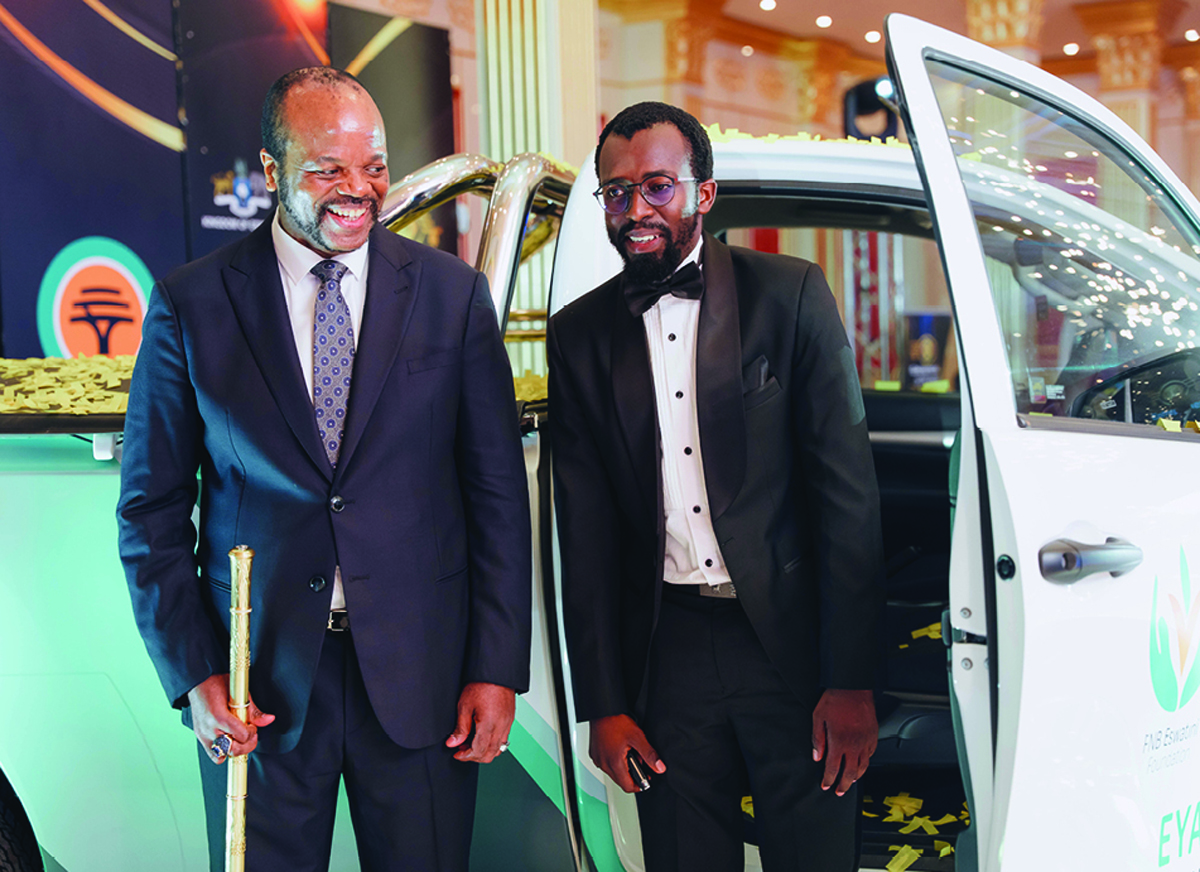
Dlamini was announced the overall winner during the Entrepreneur of the Year Awards gala dinner at Ezulwini Palazzo, taking home a single-cab Toyota Hilux bakkie valued at E586 591. Reflecting on his achievement, Dlamini said the recognition had strengthened his determination to grow the business.
“I feel calm and collected. It was an honour for me to be even a Manzini EYA regional winner, and now to become the main winner fills me with more gratitude. I’m more inspired to excel in the business,” he said.
He emphasised that the business’s impact on employees mattered more to him than just winning the award.
Notsa Eswatini Traditional Attire employs 23 people and continues to expand its operations, amid growing demand for locally produced traditional clothing. Following the win, the company thanked its customers, supporters and partners for contributing to its growth. It described the achievement as a milestone in its mission to showcase Eswatini’s cultural heritage through traditional attire. The business reaffirmed its commitment to quality, creativity and preserving the country’s cultural identity, with ambitions to showcase locally made attire to wider markets.