
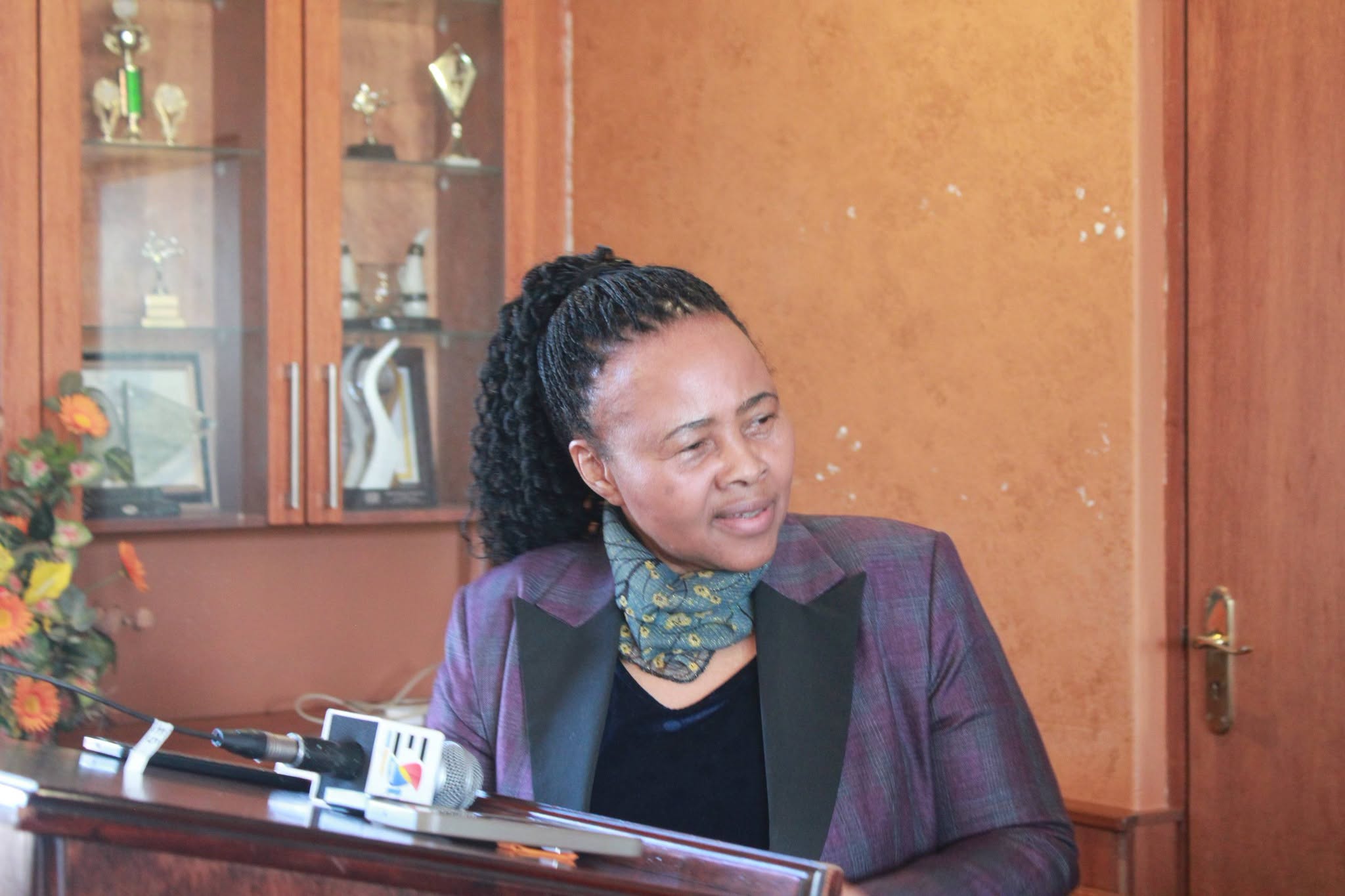
The newly established University of Eswatini (UNESWA) Reforms Implementation Committee will be chaired by Professor Zodwa Motsa.
Motsa is a higher education transformation expert who says revitalising universities is a responsibility she has successfully undertaken before and is prepared to deliver again. Professor Motsa was officially introduced as chairperson of the committee during its launch at the UNESWA Kwaluseni Campus yesterday.
Minister of Education and Training Owen Nxumalo tasked the body with implementing recommendations from the UNESWA Task Team report and the World Bank review aimed at restoring the institution’s academic excellence, governance and financial sustainability. She will be deputised by Mboni Dlamini, and former Minister of Finance Majozi Sithole has been named as a member.
UNESWA has in recent years grappled with governance, financial and operational challenges that prompted government to commission a comprehensive review of the institution. The resulting reports identified reforms needed to strengthen governance, improve academic quality, enhance institutional efficiency and place the university on a sustainable footing.
Addressing the gathering after her appointment, Professor Motsa said university transformation was neither unfamiliar nor unprecedented, noting that institutions across the world had periodically undergone major reforms to remain relevant and competitive. Drawing on her extensive career in higher education, she said this would be the third time she had participated in reviving a university.
She recalled working under former South African ministers of Higher Education Naledi Pandor and Blade Nzimande during major higher education reforms in South Africa.
Professor Motsa said she had led transformation at the University of South Africa (UNISA), where she oversaw nine divisions responsible for institutional transformation. Her work included curriculum reform, student support, staff equity and development, information and communications technology upgrades and advancing social justice within the university.
She said the experience had equipped her with a practical understanding of the complexities involved in institutional renewal. Professor Motsa further noted that even some of the world’s oldest and most prestigious universities, including Cambridge and Oxford, had embarked on transformation programmes, reassessing the knowledge systems they had passed on to former colonies.
She said this demonstrated that reform was a natural process in the life of universities and not unique to UNESWA. Using the metaphor of childbirth, Professor Motsa described the committee as ‘midwives’ entrusted with ensuring that the university’s transformation succeeds.
“We are mandated to ensure that the child comes out alive. It is our responsibility,” she said.
Professor Motsa also reflected on her personal connection with UNESWA, saying she had studied at the institution under former principals Guma and Professor Makhubu before later serving as a member of staff.
She described the country’s education system as a globally recognised mark of excellence and said the committee was determined to help restore that reputation. Professor Motsa stressed that the reform process was not about assigning blame but about working collectively to rebuild the institution.