


FOLLOWING South Africa’s much anticipated June 30 deadline for undocumented immigrants to leave that country, travellers crossing the Oshoek Border Post from Eswatini have found themselves at the centre of mounting tension, facing unusually strict questioning, shortened stays and long queues.
Tourists who previously received the standard 30-day entry are now being granted as little as seven days, with others capped at two weeks, though some still manage to secure the full month.
Immigration officers at Oshoek Border Post have been pressing visitors on their destination, purpose of travel and exact duration of stay before stamping passports, a sharp departure from the routine process of past years.
On the Eswatini side of the border, processing remains swift, with fewer questions asked and no significant delays. Travellers claimed that the new system began last week.
One woman visiting relatives in Badplaas explained that she was initially granted only seven days, forcing her to return to the border to extend her stay since she had planned to remain until July.
Another traveller, accompanying his father to the mines, was limited to two weeks after what he described as difficult questioning.
He warned that the restrictions were creating an influx of people returning to the border simply to stamp their passports again.
Ministry of Home Affairs Principal Secretary Mlandvo Dlamini said there were systems put in place to ensure that people do not go to the border simply to stamp their passports.
He said initially, people have to go to their own countries before their passports could be stamped at the border.
“Some people are granted fewer days stay because they travel frequently and also have some days remaining from their last travel,” he said.
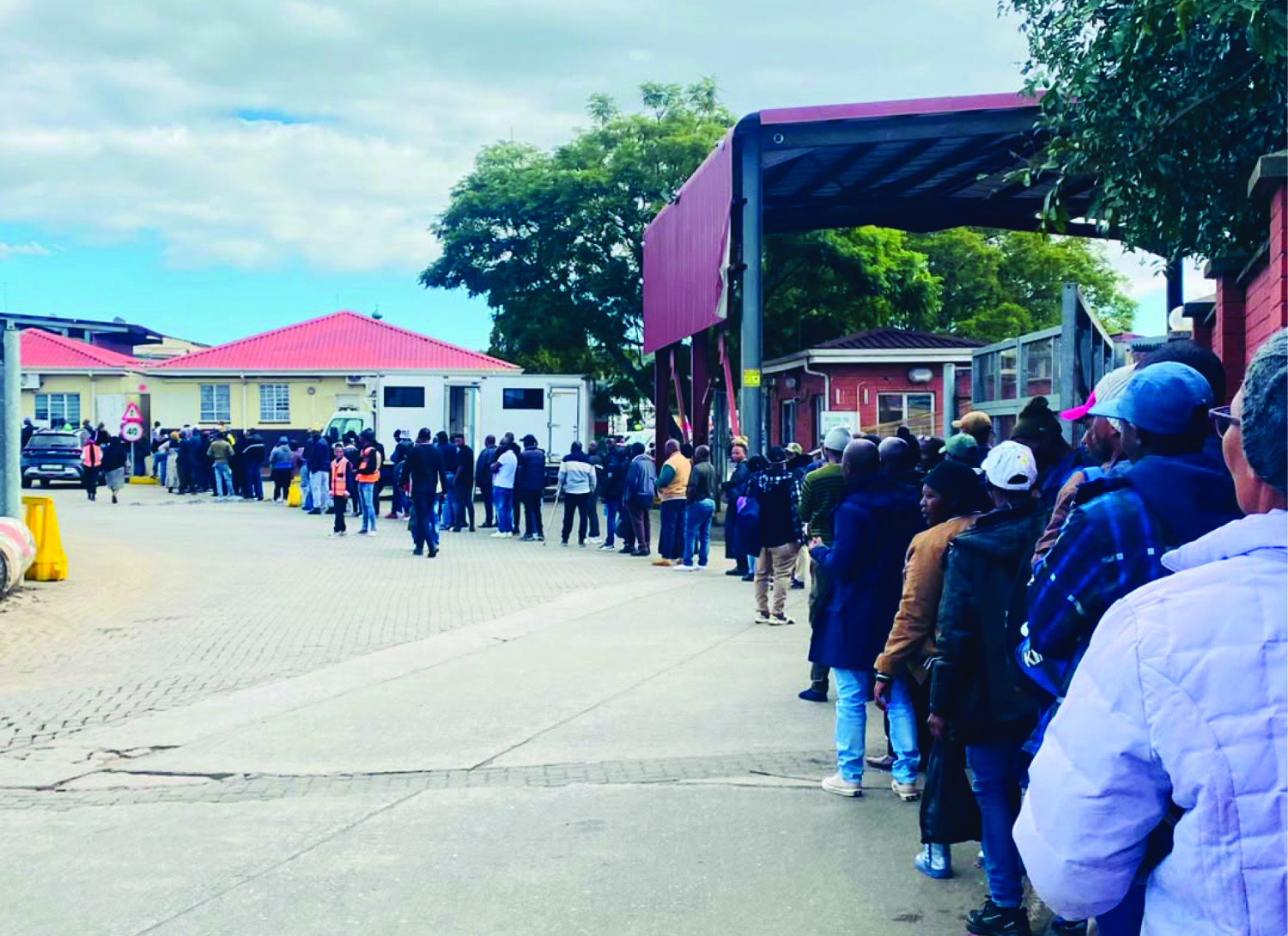
Yesterday, unusually heavy movement of foreign nationals back into South Africa was observed at Oshoek, with queues stretching across the border facility.
The overwhelming majority of travellers carried passports from African countries other than South Africa and Eswatini.
Many said they had spent only a few days in Eswatini and were now returning “home” to South Africa.
Some speculated that foreign nationals temporarily crossed into Eswatini to refresh their visitor status before re-entering South Africa, hoping their passports would reflect a new legal period of stay ahead of planned anti-illegal immigration marches.
One traveller noted that when he arrived in Eswatini on Friday, there were long queues of people entering, suggesting many were now returning to their homes in South Africa.
Processing delays on the South African side have added to the frustration, with waits of nearly two hours reported.
Experiences varied depending on the immigration officer: some travellers were questioned extensively, while others passed through with minimal questioning.
This inconsistency sparked complaints among travellers, several of whom said they were being granted only seven days when they had planned longer visits.
The queues have become a visible sign of the pressure, with travellers caught between routine family visits and the looming national crackdown.
Oshoek Port Manager Commandant Life Mokoena declined to discuss border operations, referring all questions to the Border Management Authority (BMA), which did not respond to questions sent to it.
Meanwhile, South African authorities are bracing for demonstrations expected to focus on illegal immigration and border management.
The surge in crossings, shortened stays and inconsistent screening procedures underscore the mounting anxiety at one of the busiest border posts between Eswatini and South Africa.
For ordinary travellers, the border has become a flashpoint where every passport stamp now carries the weight of political tension, and routine journeys are entangled in the wider battle over immigration.