


The anti-illegal immigration protests sweeping across South Africa have taken a devastating turn, with some foreign nationals, including Emaswati, reportedly being forced onto the streets after landlords evicted them for fear that their properties would be targeted by protesters.
The protests, organised by the anti-illegal immigration movement March and March, intensified yesterday across several parts of South Africa as demonstrators demanded that undocumented migrants leave the country.
Businesses closed, public transport was disrupted and thousands of police officers were deployed, amid fears of violence.
While organisers insist their campaign is directed at undocumented migrants and government immigration policies, the unrest has created widespread fear among foreign nationals, regardless of their immigration status.
A Liswati living in KwaZulu-Natal told this publication that she was recently evicted by her landlord, who feared that protesters could attack or burn down the property if it was known to be housing foreign nationals.
When asked if there has been any reports of Emaswati who have been affected in the ongoing illegal immigration protests in South Africa, Ministry of Foreign Affairs and International Cooperation Principal Secretary Sizwe Ntshangase said he was currently out of the country on official business and his responses may not be representative and helpful due to his circumstances of being away.
“I do not want to mislead the public, this matter cannot be taken lightly. Emotions are high and fragile with this matter,” he said.
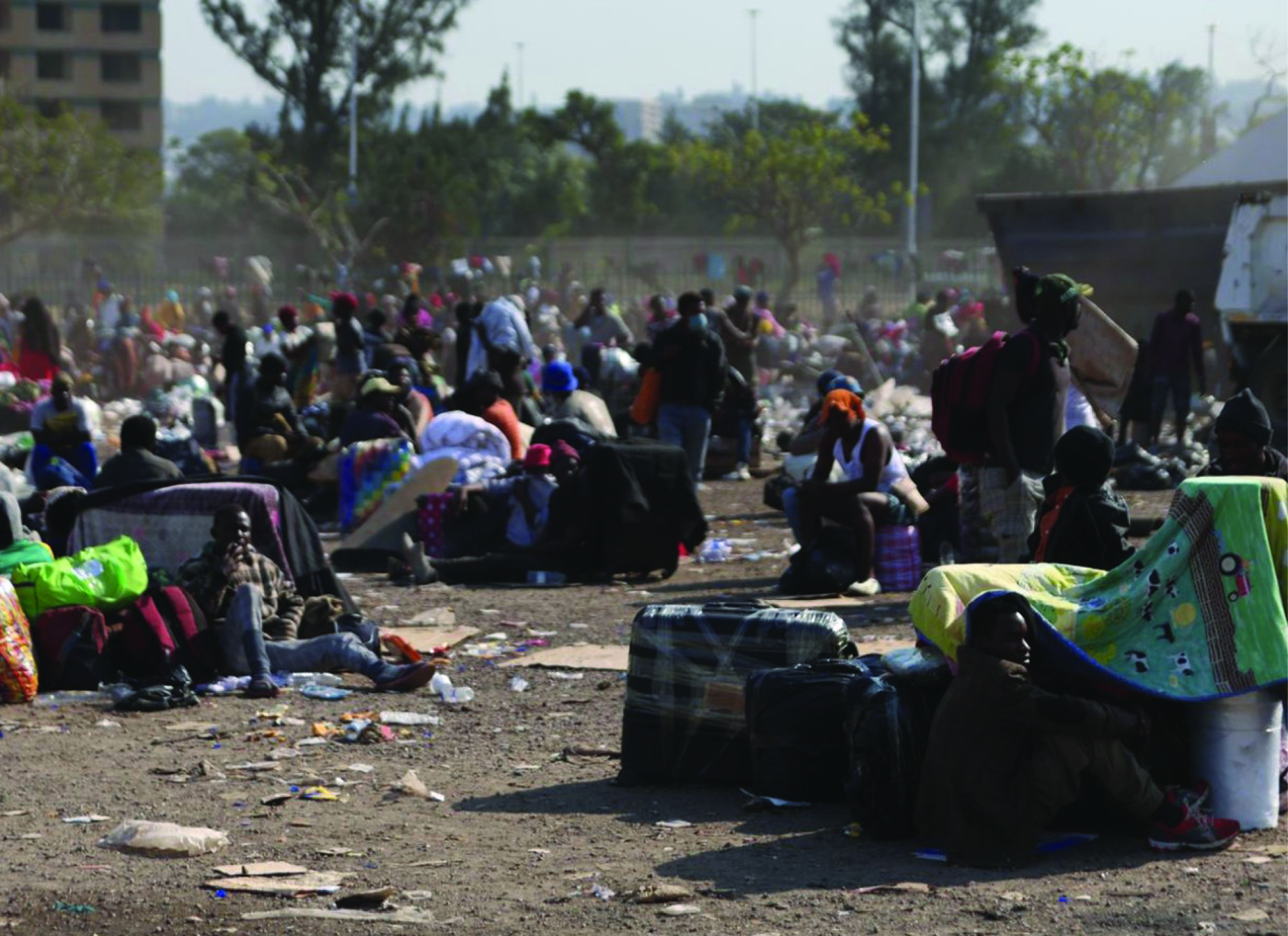
The development mirrors reports emerging from Durban and Johannesburg, where witnesses said landlords were forcing foreign tenants out of rented accommodation to protect their buildings from possible attacks by anti-immigrant protesters.
According to Reuters, community leaders in Durban said dozens of foreign nationals, including legally documented migrants, were left sleeping in the streets after being chased away by landlords.
“All these people were chased out by their landlords. All these people are legal migrants. They have documents,” Congolese community leader Mabako Majole told Reuters while standing alongside 100 displaced migrants in central Durban.
This publication previously reported that Emaswati working in Chinese-owned textile factories in Newcastle, KwaZulu-Natal, had been living in constant fear following increased immigration enforcement operations and mounting hostility towards undocumented foreign workers.
One of the workers, Gcinile Motsa, said police raids had become so frequent that employees were forced to abandon work and hide to avoid arrest.
“We are not having it easy and are losing our hourly earnings in the process. The situation has been worse lately and we spend more time hiding than working,” she said.
She added that because workers are paid by the hour, the frequent interruptions have significantly reduced their earnings.
Her fears followed a late-night multidisciplinary operation by South African authorities, during which a Chinese employer and 26 undocumented workers from Eswatini, Malawi and Lesotho were arrested at two Chinese-owned textile factories in Newcastle.
The operation was led by South Africa’s Deputy Minister of Employment and Labour Jomo Sibiya, accompanied by Deputy Minister of Home Affairs Njabulo Nzuza and Deputy Minister of Police Polly Boshielo.
According to South Africa’s Department of Employment and Labour, authorities discovered undocumented workers from Eswatini, Malawi and Lesotho during inspections at the factories, while the Chinese employer was arrested for allegedly contravening several labour laws, including the Occupational Health and Safety Act, the Basic Conditions of Employment Act and Unemployment Insurance Fund regulations.
Meanwhile, Reuters reported that workers stayed home, shops remained closed and buses stood idle across parts of South Africa yesterday as thousands joined demonstrations against illegal immigration.
The protests have fuelled widespread anxiety among foreign nationals, many of whom reportedly avoided going to work while others fled areas they believed could become flashpoints for violence.
South African authorities deployed thousands of police and placed the military on standby to maintain law and order.
Although the March and March movement has denied encouraging violence, five people have reportedly been killed since the protests began in April, while thousands of foreign nationals have been displaced from their homes or seen their businesses vandalised.
President Cyril Ramaphosa acknowledged that many South Africans have genuine concerns about illegal immigration but warned that protests must not be used to intimidate or attack others.
“The right to protest does not allow people to threaten or intimidate others, or to engage in acts of vandalism or violence,” he said.