
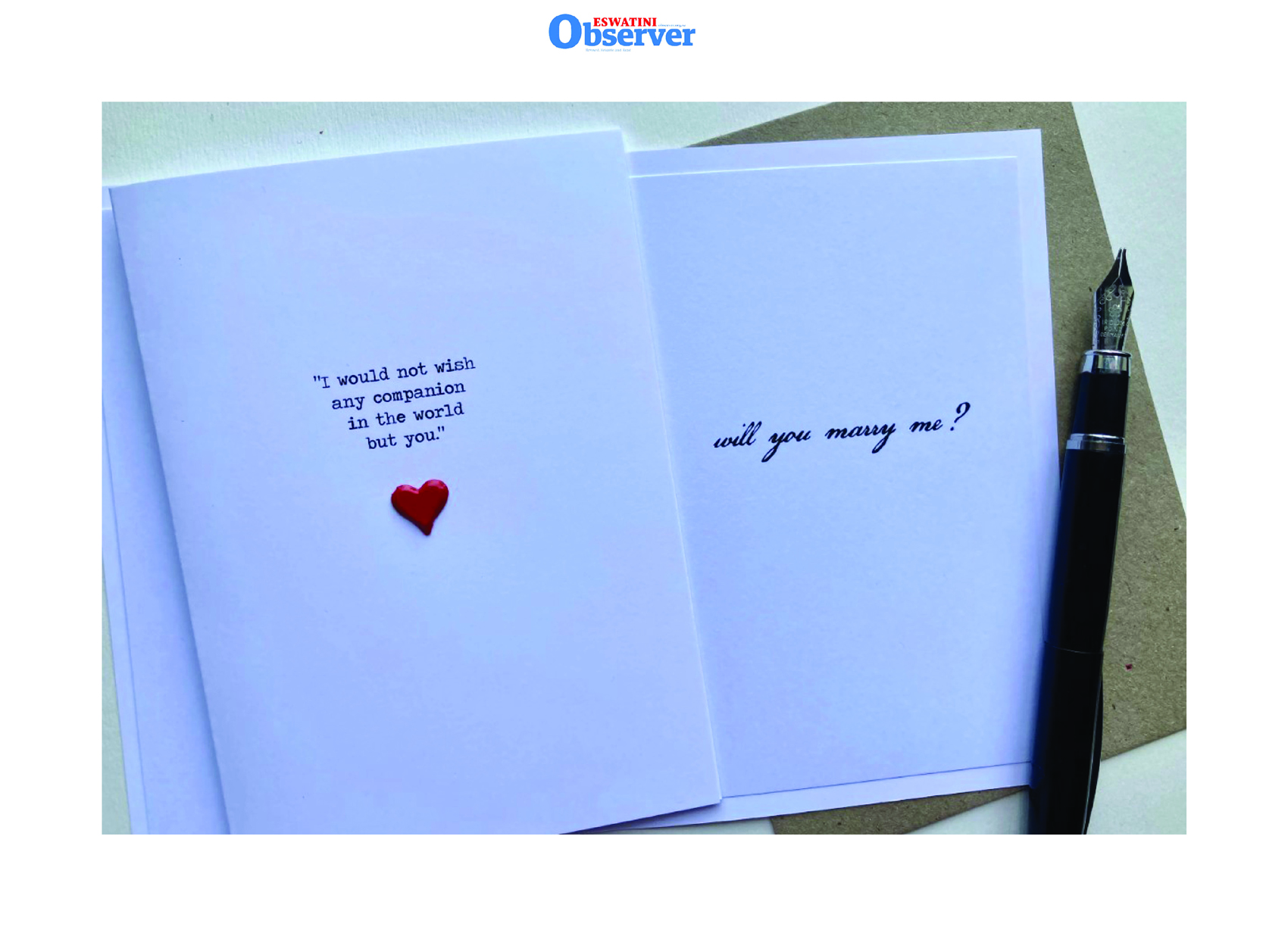
In this information age, our ideas concerning love and relationships are markedly different from our grandparents’.
In fact, these ideas are quickly evolving as movies, television, the internet, songs and romantic novels impress specific ideas of what love is, love is about romantic feelings.
What was the norm five years ago may not be so popular in another 10. Relationship culture may be going through an evolution but the definition of what love is remains constant.
Clinical psychologist Dr Saliha Afridi, in a 2023 Bazzar magazine article ‘What Is Love?’ describes love as “accepting another person exactly as they are, and the experience of love is the safety that comes from that deep acceptance. Love is the opposite of fear. Acceptance does not mean tolerating the other person but actually having total positive regard and unconditional acceptance for who they are, as they are”.
In Dr Afridi’s opinion, loving another person – whether a romantic relationship, a parent-child relationship, a friendship, or even a sibling relationship – means relating with them without trying to change their personality. Her definition of love resonates with the Swati culture of Buntfu, which values humility, respect, compassion, generosity and developing fruitful social bonds.
Respect and humility are stand out values that embody Swati culture and are treasured as the main ingredients that bind two people in a healthy romantic relationship. These values are the foundation of a happy home, as illustrated by a study by Allison Ruark (with other coauthors) that revealed that Emaswati place a premium on love, respect, honesty, trust, and communication.
Sexual satisfaction and sexual faithfulness are the other ingredients for a good relationship. However, the emphasis is on love and respect (as quoted from the study published in 2019 in National Library of Medicine titled ‘Navigating Intimate Sexual Partnerships in an Era of HIV: Dimensions of Couple Relationship Quality and Satisfaction Among Adults in Eswatini and Linkages to HIV Risk’).
Indeed, romantic love is very popular because we are bombarded with ideas in movies, entertainment and social conversations that position it as the ultimate key to happiness and living a satisfied life. Leil Lowndes, in her book ‘How to Make Anyone Fall in Love With You’, packages romantic love as a “definable and calculable blend of chemistry, biology, and psychology” that can be “induced after… understanding people’s basic needs and motivations, then by employing the right … skills to modify their behaviour.”
In this context, a romantic connection between two people first sprouts as a “special feeling” bubbling inside a person before it is expressed as respect, trust and honesty. It is observed in kind acts (the thoughtful text), life-long commitment (getting married), or establishing social institutions (a community of individual families). Thus, romantic love is more popular than the idea of loving yourself, parent-child relations or sibling interrelationship.
Lowndes describes romantic love as an emotional response to a stimulated experience. The brain chemical phenylethylamine is that emotional response that makes the heart beat faster, hands sweat, and “butterflies” flutter in the stomach whenever you see or think about that special person. What may be called love or infatuation is but a chemical by-product of positive thoughts about a significant other. However, romantic love is notorious as a flash in the pan, something that does not last long, hence a lot of couples want to progress beyond the chemical stimulus and desire long-term significant relationships.
FALLING DEEPER INTO LOVE
Unfortunately, long-term relationships sometimes end. A combination of factors such as poor conflict management and unmet expectations can cause irreconcilable differences that gradually erode the connection. Likewise, parent-child as well as sibling relationships can end after prolonged conflicts and bad blood. There is only one type of relationship that if well cultured cannot end.

Loving yourself is considered the most prized possession by many thought leaders, psychologists and personal development practitioners. Self-love is giving yourself what you would usually give a loved one. As charity beings at home so does love and it starts with you: love your neighbour as you love yourself (Matthew 22:39).
Philosophers like Aristotle described self-love as becoming your own good friend and “accepting all of (your) attributes, positive or negative (and that) includes body acceptance, self-protection from negative criticism, and believing in one’s capacities” (quoted in Harvard Health Publishing 2016).
In fact, Dr Saliha Afridi (in the previously mentioned article) argues that loving another person is impossible unless you first show up with that same unconditional love for yourself.
“You need care, love, kindness and compassion for yourself when you make a mistake or act out of line with your values. You need understanding. That does not mean you accept all behaviours, but it does mean that you accept yourself through all behaviours and hold the position that you are a good and decent human being, acting in a way that is consistent with your highest values”.
Practicing self-cherishing (caring for one’s health and life), self-acceptance (embracing one’s reality), self-restraint (following societal norms with integrity), self-responsibility, and self-respect (maintaining one’s boundaries and dignity) improves emotional well-being and mental state.
Caring, loving and being kind to yourself is not just a philosophical principle but is valued as the best thing you can do to yourself.
It requires a deliberate restructuring of one’s intentions and internal dialogue. Self-love boosts your physical well-being, mental health and increases self-worth for personal development.
First self-love has medical benefits. According to Dr Node Smith’s study; Self-Love Lowers Cardiovascular Disease (published in 2021 issue of Naturopathic News), self-love lowers the risk of cardiovascular diseases.
The study revealed that middle-aged research participants who practiced self-compassion had lower risk of developing cardiovascular disease despite other traditional risk factors such as high blood pressure, insulin resistance and cholesterol levels.
Secondly, self-compassion helps to improve mental prosperity and reduces depression, according to the American Psychiatric Association article, Practicing Self-Compassion, that was published in 2025. In comparison, a 2023 Cambridge study (The Interplay of Self-Acceptance, Social Comparison and Attributional Style in Adolescent Mental Health: Cross-Sectional Study) found lower self-acceptance was associated with higher depression and anxiety in adolescents, with social comparison acting as a key mechanism. Both studies indicate that loving yourself improves your mental health.
Thirdly, self-love does not make you selfish but improves the quality of personal relationships such as parenting and romantic relationships. It also cements social bonds and improves social cohesion. Self-compassion also promotes personal confidence, enables you to know your worth and allows the authentic expression of ideas without the need for validation from others (which reduces insecurity).
Lastly, cherishing yourself causes positive feelings, improves personal growth and leads to better self-care in all aspects.
Loving yourself increases oxytocin and dopamine (feel-good hormones) and reduces the production of cortisol (the stress hormone). This creates more positive feelings and emotional stability.
THE ARCHITECTURE OF SELF-LOVE
There are many ways to cherish yourself, one of which is to be patient with yourself and possess the ability to wait for personal goals to manifest without getting upset or frustrated. Patience breeds an intense attitude of resilience and perseverance that allows one to navigate delays and setbacks and preserve the nervous system from unnecessary stress.
Being kind to yourself is another way to practice self-love, which is a form of self-protection and self-preservation.
A kind of internal diplomacy. It is reflected in accepting yourself for who you are and speaking nice, kind words to yourself, even when you make a mistake.
Another means of loving yourself is to celebrate other people’s victories instead of envying them (a sign that you feel insufficient). Envy is a subtle expression of low self-worth just as boasting about your skills and worth indicates low self-esteem.
The evidence is clear: loving yourself is not self-indulgent — it’s foundational. As the research shows, self-compassion predicts better physical health, emotional well-being, relationships, and personal growth. It’s a skill that can be learned and strengthened, making it one of the most powerful investments you can make in your overall health and happiness.
The simple, profound truth is that the love we give to ourselves becomes the blueprint for every other love we will ever know. It is the only love story that truly begins and ends with us.