



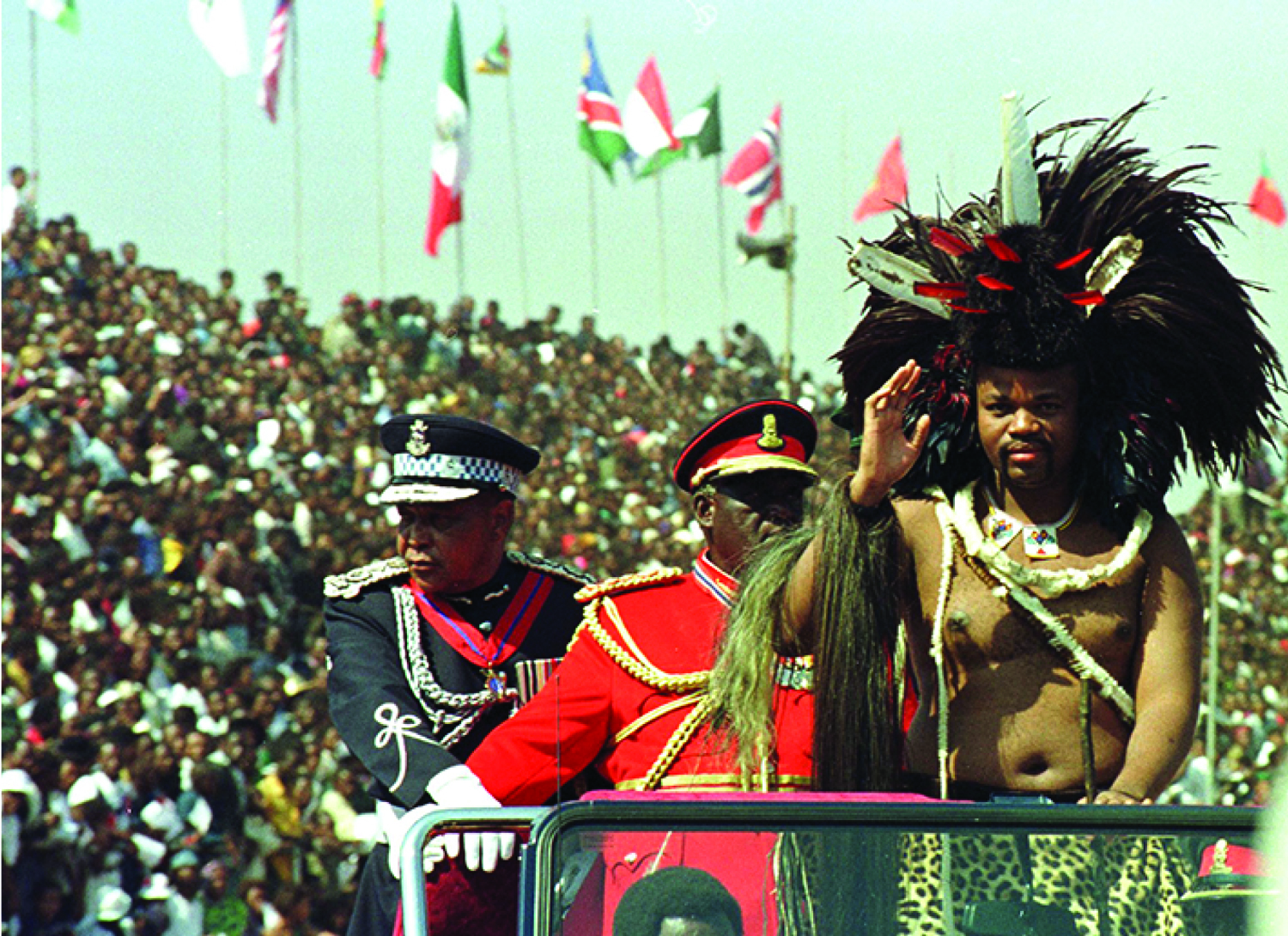
On the morning of September 6 1968, the sun rose over Embo State House as it had countless times before.
But that Friday was different.
For nearly seven decades, the life of King Sobhuza II had been intertwined with the fate of his country. He had been an infant when his father, King Ngwane V, died. He had grown into a child-king under the formidable guardianship of his grandmother, Queen Regent Labotsibeni.
He had watched his country navigate colonial rule, seen land and authority contested, and spent decades negotiating, petitioning and patiently waiting for the moment when Eswatini (formerly Swaziland) could determine its own future.
At 69 years old, King Sobhuza II was preparing to receive the instruments of government of an independent nation. Independence had not arrived as a sudden gift. It was the flowering of a much older seed, planted by generations who refused to allow their land, identity and institutions to disappear.
Before the flag, there was a grandmother
When King Ngwane V died in 1899, the future king was still an infant.
The responsibility of guiding the kingdom during his minority fell to Queen Regent Labotsibeni Gwamile Mdluli, the Indlovukazi whose long regency would become one of the defining chapters in the story of modern Eswatini.
She inherited a kingdom facing enormous pressure.
Foreign interests, land concessions and colonial arrangements were reshaping the country. Swati authority was increasingly being challenged, while questions surrounding land threatened the material foundation of the nation.
Queen Labotsibeni’s response was not surrender. She understood that protecting a nation was about more than holding political authority in the present. It was about preparing those who would inherit it.
She worked to secure education for the young King Sobhuza II and encouraged the education of the sons of chiefs. She helped establish financial support for education and participated in efforts to recover land for the Swati people, including through the Lifa Fund.
The boy she protected would one day become the king who carried these concerns into a new era.
Queen Labotsibeni would not live to witness independence. But she left behind something more enduring than a crown: a generation prepared to continue the work.
The boy becomes the king
King Sobhuza II assumed the kingship in 1921.
He inherited a kingdom where traditional authority existed alongside a colonial administration whose officials retained considerable influence over the country’s affairs.
The decades that followed would test the young king’s patience and political skill.
Questions of land, customary authority, courts and the powers of traditional institutions repeatedly brought the Swati leadership into difficult negotiations with the colonial administration.
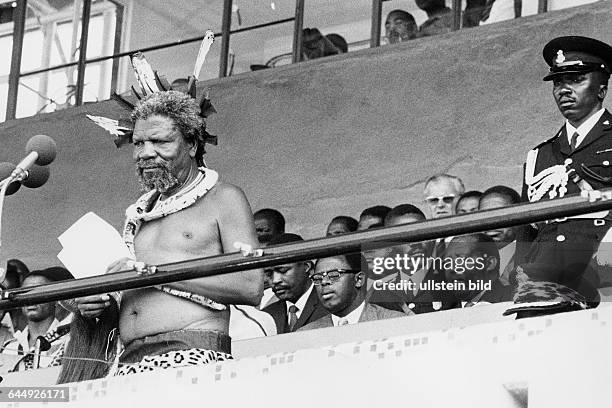
King Sobhuza II’s response was largely one of persistence. The struggle was not always dramatic. There were no great battlefields on which independence was won.
Instead, there were petitions, council meetings, delegations, letters, negotiations, and years of waiting.
King Sobhuza II also continued the struggle over land. What had been lost could not always be immediately restored, but the effort to recover what could be recovered continued. The King’s challenge was therefore not simply to preserve the past.
It was to carry the past into a changing future without allowing Swati identity to be swallowed by it. For decades, there were also concerns about the possibility of Eswatini being incorporated into neighbouring South Africa.
The response from King Sobhuza II and the Eswatini National Council remained consistent: the kingdom’s identity, customs and political future had to be preserved.
The petitions continued. The negotiations continued. The Kingdom endured.
When the winds of Africa changed
By the 1960s, Africa was changing.
Across the continent, colonial governments were giving way to new nations. The question was no longer whether political change was coming, but what form it would take.
King Sobhuza II understood that Eswatini needed to enter that conversation on its own terms. On April 23, 1960, he addressed senior councillors, colonial officials and European residents at Masundvwini.
His message reflected an important principle: political progress did not have to require the destruction of identity. Swati and European communities could participate in the country’s future while retaining their distinct traditions and institutions.
The constitutional negotiations that followed were lengthy.
In 1963, a new constitution established a Legislative Council and Executive Council. But important disagreements remained, particularly over the place of traditional Swati institutions in the new political order.
The constitutional question eventually reached London. Then came the elections of 1964.
The Imbokodvo National Movement, associated with the traditional leadership, won all 24 elective seats. In 1967, it again won all 24 elective seats, securing a commanding share of the vote. The machinery of self-government was beginning to turn. The road ahead was becoming clear.
In November 1967, the Eswatini Government formally sought independence, proposing September 6, 1968 as the date on which the country would become a sovereign state. The request was supported by Parliament, and Britain agreed.
After generations of uncertainty, the date was finally set.
Before the Celebration, a Warning
On August 2, 1968, just over a month before independence, Lobamba became the gathering place for the final annual meeting of the Swazi National Council before the country entered a new chapter.
At the Sibaya, King Sobhuza II spoke of two emotions that would define the coming moment: the joy of national rebirth and the struggle that lay ahead to make independence meaningful.
His instructions carried a symbolism that would have been immediately understood by emaSwati.
He directed his regiments to wear the umqhele, sigeja and ingwe, regalia traditionally associated with the Incwala and, in this context, symbolising a time of war.
But the King was speaking of a different kind of war.
He instructed that mourning clothes be put away and that there should be no public display of personal bereavement during the period leading to independence. This was not a denial of grief, but a call for the nation to gather its strength for the struggle ahead. Freedom, he reminded emaSwati, would require sacrifice, discipline and hard work.
The official Independence programme captured the essence of his message:
“While my people celebrate this great moment in the history of our nation, I know they are thinking of the future, a future in which we must work hard if Swaziland is to become a prosperous country dependent on no one.”
It was a remarkable message on the eve of freedom. King Sobhuza II was telling the nation to celebrate, but not to become complacent. To rejoice, but to prepare. To honour what had been achieved, but to understand that independence itself was only the beginning.
The struggle was no longer simply to become free. It was to make freedom work.
Then came September 6
A culmination of a lifetime had arrived. On this very day, the British flag was lowered, and the national flag of Eswatini was raised, symbolizing the new era of self-governance.
A nation that had spent generations defending its identity was finally standing at the threshold of sovereignty. At Somhlolo Stadium, thousands gathered for the historic ceremony.
In his book titled The King’s Eye, King Sobhuza II’s Private Secretary Mkhulunyelwa Matsebula described Independence Day not merely as a formal ceremony, but as a day charged with an almost tangible sense of occasion.
“Somhlolo Stadium was alive with colour, movement and anticipation, with more than 90 per cent of those gathered dressed in traditional Swazi attire. Schoolchildren waved their small national flags as thousands waited for the historic moment. When King Sobhuza II arrived and stepped from the white Land-Rover, the atmosphere broke into spontaneous celebration, people rose, applauded and wept, overwhelmed by the significance of what they were witnessing.”
Then came the regiments, their voices and dancing carrying memories of generations past into a newly independent future. Through Matsebula’s eyes, it was a moment when ceremony became emotion: a king standing among his people, and a people finally celebrating a country that was, at last, their own.
For many in the crowd, this was not simply a constitutional ceremony. For older generations, it was the culmination of generations before them.
When the instruments of government were formally handed over to King Sobhuza II, the moment carried the weight of everything that had come before it.
A colonial chapter was closing. A new chapter was opening. The country’s flag, national symbols and institutions now belonged to an independent Eswatini.
Somewhere within that extraordinary moment was the memory of a grandmother who had prepared a child for a future she would never see. Queen Labotsibeni had planted the seed. King Sobhuza II had carried it. Now the nation could finally see it flower.
Hilda Kuper who authored the late King’s biography titled Sobhuza II Ngwenyama and King of Swaziland reiterated that King Sobhuza II thanked the British monarch and congratulated his people on the restoration of their sovereignty.
Yet even in triumph, King Sobhuza II understood something that remains relevant today: independence was not the finish line. It was a beginning. The celebrations continued.
Regiments danced. Songs filled the stadium. The atmosphere became a celebration not merely of political independence, but of identity, belonging and survival.
The King joined his people. For a moment, the formalities of state gave way to something older and more intimate, a king among his people, a people celebrating the country they had carried through generations.
Historical sources: Hilda Kuper, Sobhuza II, Ngwenyama and King of Swaziland; J.S.M. Matsebula, A History of Swaziland; J.S.M. Matsebula, The King’s Eye. Constitutional chronology cross-checked against contemporary parliamentary records.