
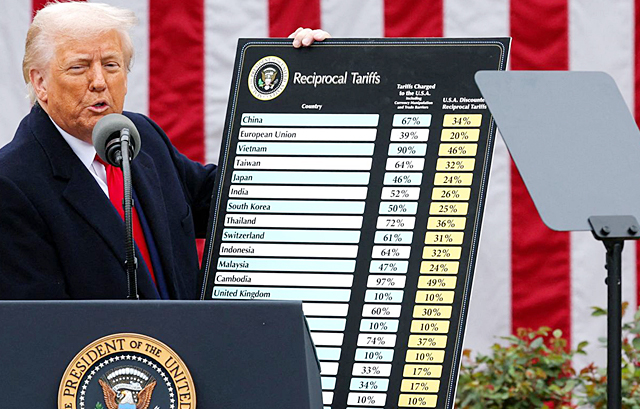
US President Donald Trump has unexpectedly put a hold on the worldwide tariffs he recently announced. This reversal comes after a week of considerable turbulence in international markets, triggered by the initial tariff pronouncements.
Read More: Art of the deal? How Trump backed down on tariffs
Despite an initial show of firm stance, the President conceded to the decision early Wednesday morning, a move seemingly prompted by mounting pressure and instability that even rippled through typically stable bond markets.
The announcement of this 90-day pause (with the notable exception of increased tariffs on China, set at 125 per cent) was made via the President’s social media platform, Truth Social. The US administration is framing this as a strategic maneuver to encourage nations to engage in negotiations aimed at reducing the American trade deficit. A White House spokesperson suggested that the pause is a calculated part of a broader “art of the deal” that some observers might have underestimated.
Global markets responded positively to this news, with significant surges in major indices like the Nasdaq, Dow Jones, and S&P 500. The President himself acknowledged the earlier market jitters, contrasting them with the confidence of other groups he addressed at the White House.
What Could This Mean for Eswatini?
Eswatini, as a small, open economy deeply intertwined with global trade, would likely experience a degree of relief from this pause in worldwide tariffs, according to a local economist.
They say if these tariffs had been implemented broadly, Eswatini’s exports to various markets could have faced increased costs, potentially impacting their competitiveness. “The pause offers a temporary reprieve from this direct threat. Key sectors like sugar, textiles, and any manufactured goods destined for countries that might have been subject to the tariffs could see continued access without immediate new levies,” they said.
The positive reaction in major global markets shows potential for increased stability in the international economic environment.
“This stability can indirectly benefit Eswatini by supporting demand in its key trading partners, such as South Africa, which is closely linked to the global economy. A less volatile global market can foster more predictable trade flows and investment sentiment,” they explained.
Global tariffs can sometimes influence commodity prices. While the direct impact on Eswatini’s commodity exports (like sugar) might be complex, “a more stable global trade environment could prevent sharp negative price fluctuations that could harm Eswatini’s revenue”.