



PERPETRATORS of gender-based violence (GBV) must be held accountable regardless of their social status, influence or position in society, SWAGAA Executive Director Nonhlanhla Dlamini has said.
Dlamini called for an end to impunity, urging communities to stop protecting perpetrators and instead stand with survivors by speaking out against abuse and ensuring that justice is served.
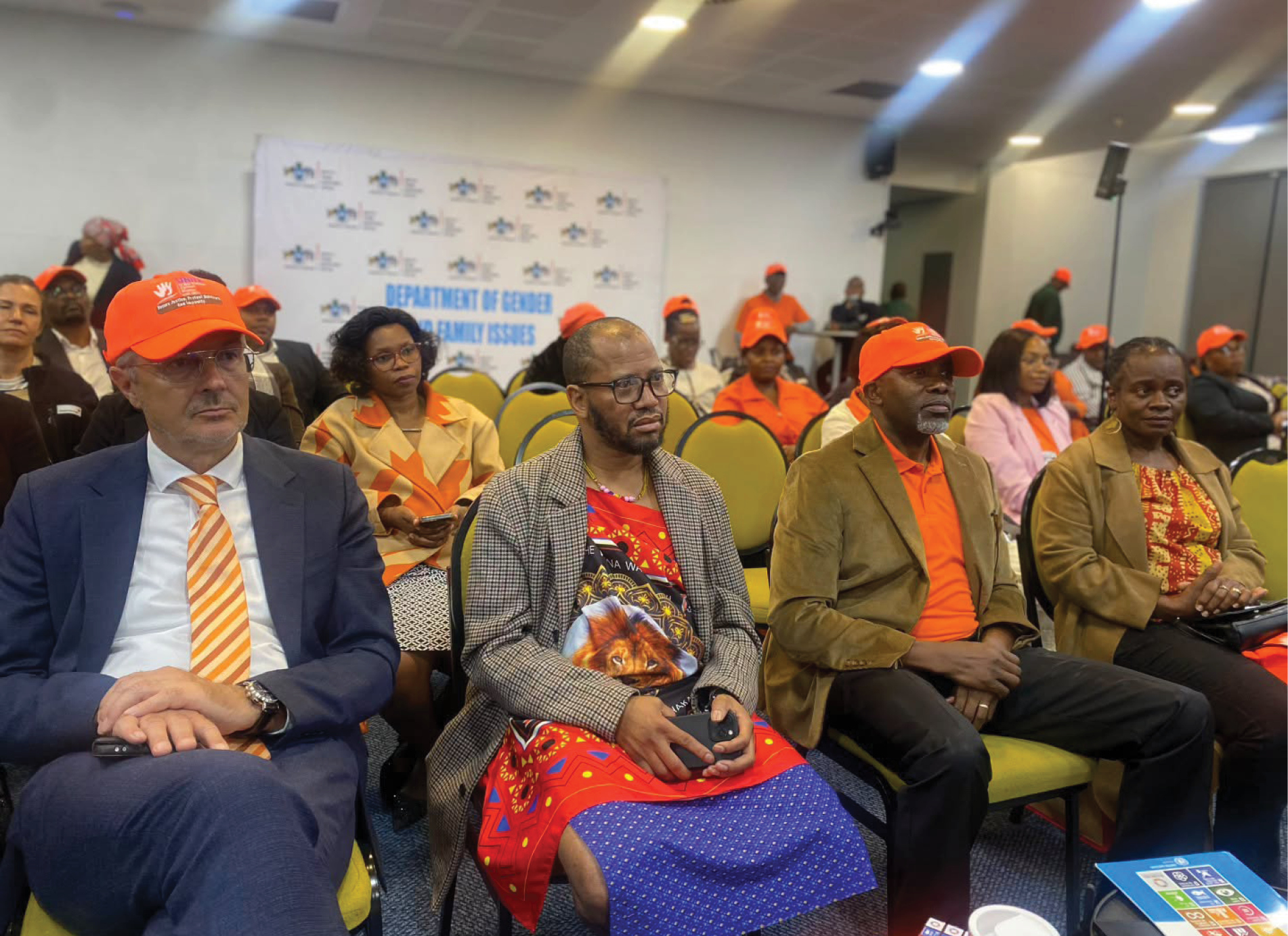
She was speaking during the launch of the 16 Days of Activism Against Gender-Based Violence, where the United Nations (UN), together with the deputy prime minister’s (DPM) Office, illuminated UN House orange on the evening of November 25, 2026.
The candle-lighting ceremony brought together representatives from government, civil society, development partners, survivors, young people and communities in a show of solidarity under this year’s global theme: ‘Unite to End Violence Against Women and Girls: Ensure Justice, Protect Survivors, End Impunity.’
Dlamini’s call comes amid growing efforts by stakeholders to create a society where survivors can report abuse without fear, perpetrators face the consequences of their actions and communities refuse to normalise violence.
United Nations Resident Coordinator George Wachira said the orange illumination symbolised solidarity with survivors and a shared commitment to preventing gender-based violence.
He called for a country where every woman and girl could live in safety, dignity and justice, emphasising that ending violence required collective responsibility from government, communities, institutions, families and individuals.
The ceremony also featured a survivor’s testimony, which highlighted the realities faced by women and girls experiencing GBV and reinforced the need for effective prevention, protection, access to justice and survivor-centred support.
The illumination of UN House formed part of the global ‘Orange the World’ initiative, which uses the colour orange as a symbol of hope and a future free from violence against women and girls.
The 16 Days of Activism campaign runs from November 25, the International Day for the Elimination of Violence Against Women, to December 10, Human Rights Day.
Throughout the campaign, the UN and its partners are expected to support advocacy, awareness-raising and community engagement activities aimed at challenging harmful social norms, supporting survivors and mobilising communities to prevent GBV.
Stakeholders further emphasised that eliminating violence against women and girls was not only a human rights imperative but also fundamental to achieving sustainable development goals and building inclusive, peaceful and resilient societies.