



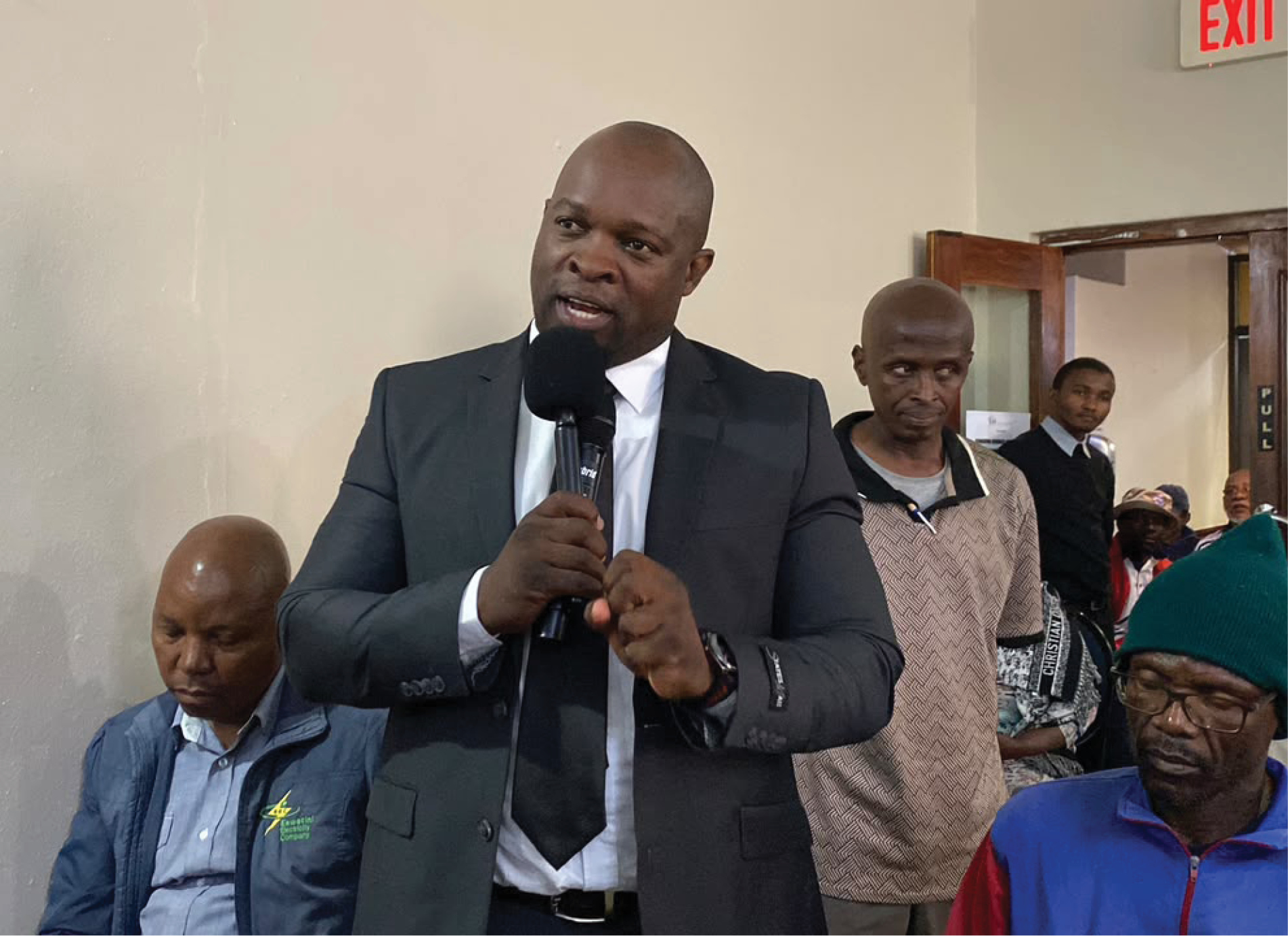
CIVIL society representatives and trade union leaders in the Manzini region have rejected proposed electricity tariff increases, saying households already struggling with low wages, unemployment and higher bus fares could not absorb two successive years of increases.
During the Eswatini Energy Regulatory Authority (ESERA) hearing at The George Hotel yesterday, the Swaziland National Association of Teachers (SNAT) called for a zero increase and warned that workers would take to the streets if the hikes went ahead. The union also urged government, as the owner of the Eswatini Electricity Company (EEC), to step in financially to ease the pressure on consumers.
EEC is seeking an average tariff increase of 18.38% for the 2027/28 financial year and a further 14.68% for 2028/29. The proposed increases exclude the 2.5% Electrification Access Fund levy and 15% VAT. The cost of purchasing bulk electricity, much of it imported, and the recovery of past revenue shortfalls are among the main reasons cited by the utility for its application.
SNAT President Sikelela Dlamini said he was speaking on behalf of teachers and about 40 000 civil servants. He said some workers earned as little as E2 000 a month and had little room in their budgets for another increase.
“We do not have that money,” Dlamini said. He warned that if the increases went ahead, “workers will now take to the roads in protest because, as it were, we cannot even breathe”. Dlamini said workers had submitted a position paper during the previous round of consultations and were still waiting for a response. He said one of their recommendations was for government to support EEC financially when the State-owned utility faced difficulties.
He re-called that the Minister of Natural Resources and Energy had indicated in February, 2025 that government would intervene and asked what had changed since then. The SNAT president also called for ESERA to report back to stakeholders on how it had dealt with their submissions. He questioned whether the regulator’s record of granting smaller increases than what EEC had requested offered much reassurance to consumers who were already struggling to pay for electricity.
SNAT Secretary General Lot Vilakati said civil servants had received a zero per cent cost-of-living adjustment while commuters were already paying higher bus fares. He said an electricity increase would also affect unemployed people and pensioners, whose budgets were already stretched. “Award these people zero tariff increments, just as government has awarded civil servants zero,” Vilakati said.
Vilakati also urged EEC to explore sourcing cheaper equipment from mainland China. Dlamini, meanwhile, raised concerns about relying on independent power producers, saying their need to make a profit could put further pressure on the prices consumers were paying.
Fire Ngwenya, another participant at the hearing, called for immediate government intervention alongside medium- and long-term measures to reduce the country’s reliance on imported electricity. He urged ESERA to engage government on funding, saying said households and businesses should be considered separately when tariff options were drawn up.
Ngwenya argued that comparisons between electricity prices in Eswatini and South Africa should take into account differences in household incomes and the social grants available to consumers in the two countries. He also pressed for more domestic generation.
“Why can we not generate our own electricity?” he asked.
ESERA has said EEC’s application would be subjected to independent scrutiny before it makes a decision. The regulator has also stated that claims to recover past revenue shortfalls must be backed by verified financial information and assessed against the regulatory framework.
Sakhile Nxumalo asked whether the Eswatini Electricity Company (EEC) had a turnaround plan and how much it would cost to implement without placing a further burden on consumers.
Citing the Palazzo development in Ezulwini as an example of a project for which a budget had been drawn up, he said the utility should spell out how much it needed and what the money would achieve.
Nxumalo said consumers had been given no assurance that the proposed increases over two years would resolve the utility’s financial difficulties. He warned that EEC could return with another tariff application once the two years were up if it failed to improve the efficiency of its own power generation.
‘Tariff hearings are not for kutihhamula’
THE Eswatini Energy Regulatory Authority (ESERA) has defended its public hearings on proposed electricity tariff increases after Manzini stakeholders questioned whether their submissions would influence the final decision.
Responding to submissions, ESERA Chief Executive Officer Sikhumbuzo Tsabedze said the regulator would independently scrutinise the Eswatini Electricity Company’s (EEC) application and consider public submissions before deciding how much the utility could recover from consumers.
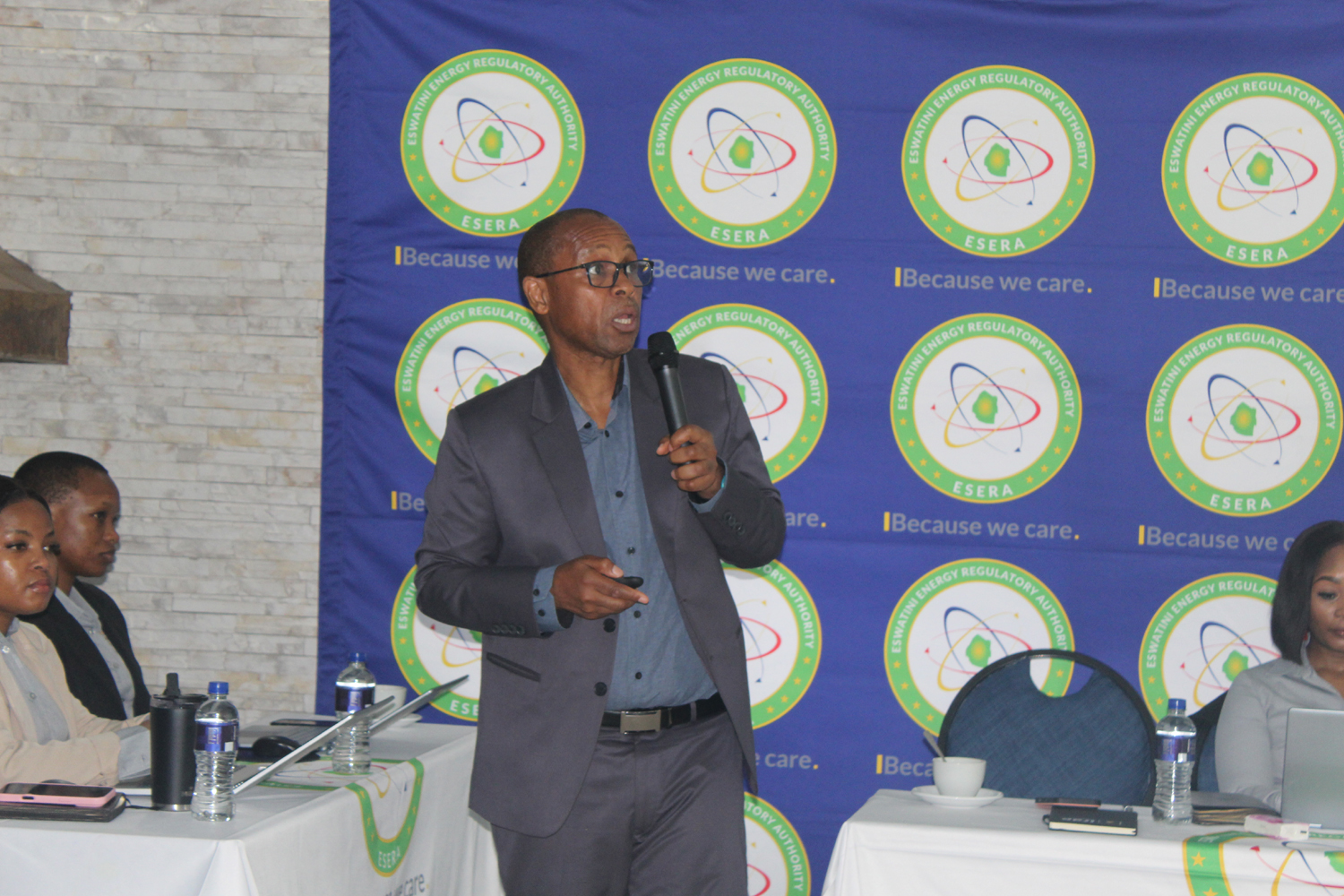
hearing at The George Hotel yesterday, saying the proposed electricity hikes will
face independent scrutiny.
His remarks followed criticism from political activist Mphandlana Shongwe, who dismissed the exercise as kutihhamula, or mere talk. Swaziland National Association of Teachers (SNAT) President Sikelela Dlamini said workers were still waiting for feedback on a position paper submitted during the previous round of consultations. Another participant, Sakhile Nxumalo, asked how much EEC needed to turn its finances around and what would prevent it from seeking further increases after the two years.
“We listen to both sides,” Tsabedze said. He said ESERA had to weigh what consumers could afford against the cost of maintaining a reliable electricity supply.
EEC is seeking average increases of 18.38% from April 1, 2027 and 14.68% from April 1, 2028. It says it requires E4.683 billion in revenue for 2027/28 and E4.939 billion for 2028/29. Electricity purchases account for about 61% of its revenue requirement, and the utility is seeking to recover E533.1 million in past revenue shortfalls. ESERA has said such claims must be backed by verified financial information and assessed against the regulatory framework.
…EEC’s E533m recovery claim faces scrutiny
THE Eswatini Energy Regulatory Authority (ESERA) says the Eswatini Electricity Company (EEC) must justify its claim to recover E533.1 million in past revenue shortfalls before any of the amount can be passed on to consumers through electricity tariffs.
ESERA Chief Executive Officer Sikhumbuzo Tsabedze said the regulator would verify the financial information and determine which costs were prudent, necessary and eligible for recovery.
He said the mechanism worked both ways. Where EEC collected more than its approved revenue, the excess could be taken into account in future tariff decisions. Where verified costs exceeded the revenue collected, ESERA could consider allowing the utility to recover the difference.
“The regulator must therefore ensure that only prudently incurred and verified costs find their way into the final tariff award,” Tsabedze said.
Affordability will also form part of the review. Although EEC proposes retaining the tiered pricing structure designed to protect lifeline customers who use less electricity, it is seeking a 33.59% increase for that category in 2027/28.
Tsabedze said the proposed increase required particularly careful consideration. ESERA is also examining EEC’s proposal to adjust fixed charges in line with inflation and is commissioning two studies to assess electricity affordability and how tariffs could evolve over time.
Tsabedze said tariffs had to support a reliable electricity supply while taking into account the pressure successive increases placed on households and businesses. He urged consumers to use the hearings to question the figures, seek explanations and submit evidence that could inform the final decision.
The review is being conducted under the Energy Regulatory Act and the Electricity Act, both of 2007, and ESERA’s approved tariff methodology. It covers the cost of buying electricity, operating expenses, depreciation, the value of regulated assets, the return on investment and adjustments for past revenue shortfalls or excess collections.
Written submissions close on December 18, with ESERA’s final decision expected by February 1, 2027.