


AFRICA must urgently move from agricultural commitments to investment and production to transform its food systems and achieve food security.
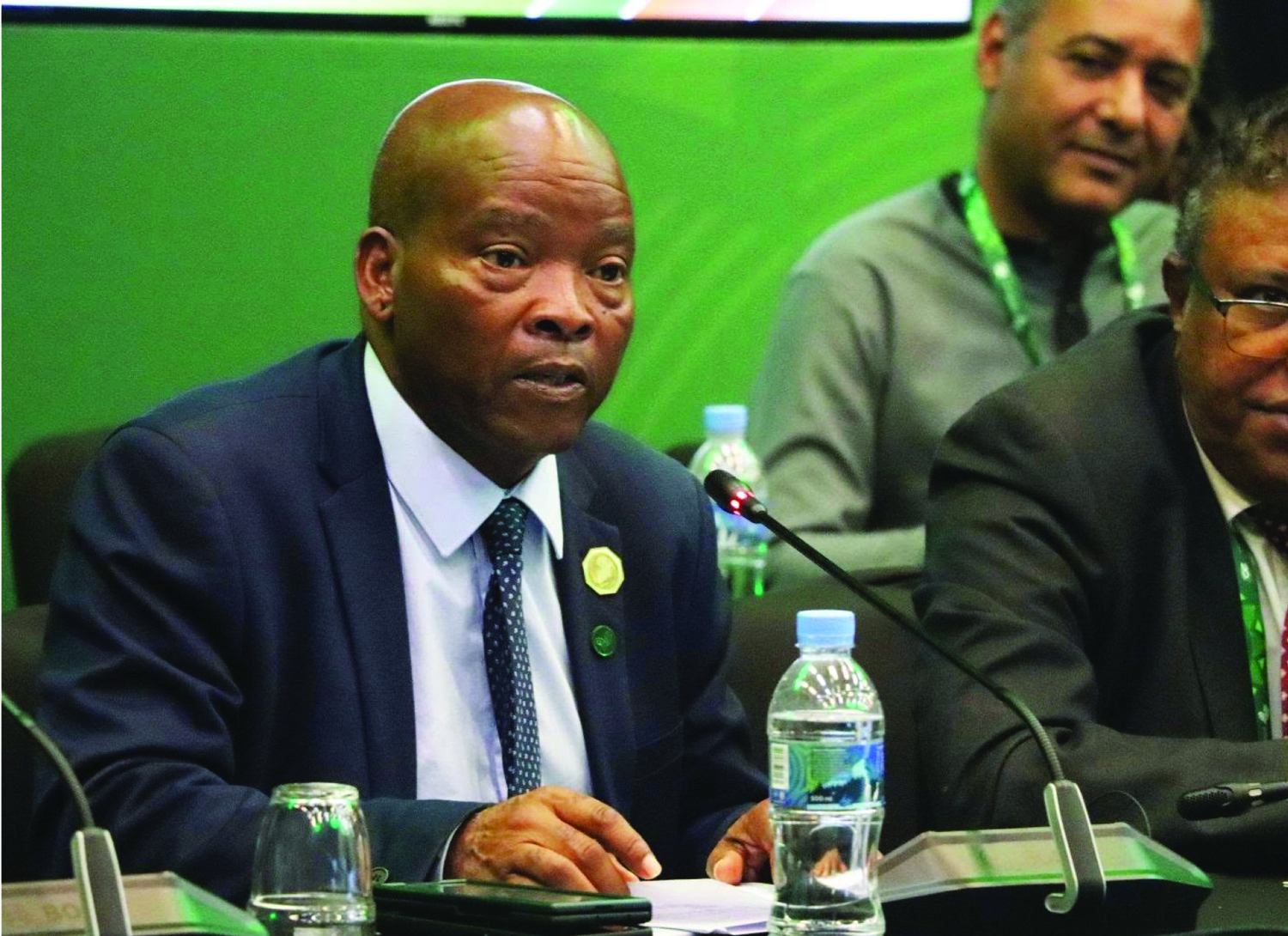
African Union (AU) Commissioner for Agriculture, Rural Development, Blue Economy and Sustainable Environment (ARBE), Moses Vilakati said Africa had the potential to feed itself, create employment for its growing youth population and become a global agricultural powerhouse.
Vilakati made the remarks while reflecting on his engagements at the Africa Food Systems Forum in Kigali, Rwanda, where he met leaders and development partners to discuss ways of accelerating agricultural transformation on the continent.
“The time for Africa’s food systems transformation is now,” Vilakati said.
He said Africa needed to move from potential to production, from ideas to investment and from commitments to action, noting that the transformation required over the coming decade would be unprecedented.
Vilakati said discussions in Kigali had reaffirmed that Africa already possessed many of the resources needed to transform its food systems, including knowledge, technology and strategic partnerships.
“What is required is stronger coordination, African leadership and collective action to unlock our continent’s immense agricultural potential,” he said.
One of his engagements was with President of Global Growth and Opportunity at the Gates Foundation Hari Menon where they discussed strategic opportunities to strengthen food security and agricultural transformation.
The discussions focused on agricultural innovation and technology, soil mapping and soil health, reducing Africa’s dependence on food imports and increasing productivity in key commodities, including wheat, rice, maize and edible oils.
Vilakati also identified young people as critical drivers of Africa’s agricultural transformation. He said creating meaningful and sustainable employment opportunities for the continent’s youth should remain central to Africa’s development agenda.
He said young people needed to be connected to investment, technology, entrepreneurship and emerging opportunities within agriculture and food systems.
He further called for the strengthening of agricultural corridors, development of climate-resilient food systems and expansion of partnerships that can translate innovation and investment into measurable results across African countries.
Vilakati said the African Union’s Department of Agriculture, Rural Development, Blue Economy and Sustainable Environment (AU-DARBE) was increasingly becoming the implementation engine for Africa’s agrifood transformation agenda.
However, he said more needed to be done to accelerate the implementation of continental initiatives, strengthen support to member States, mobilise investment, improve accountability and coordinate development partners.
“We therefore invite our partners to invest directly in AUC-led implementation platforms that can generate impact across all African countries,” Vilakati said.
He said such investments would help accelerate implementation of the Kampala CAADP Declaration, Agenda 2063, the African Continental Free Trade Area (AfCFTA) and the Soil Health and Fertilizer Action Plan.
Meanwhile, Vilakati highlighted Eswatini’s hosting of the inaugural Extraordinary Seed Summit, describing it as an important continental gathering aimed at strengthening Africa’s seed systems.
He said stronger and more resilient seed systems would be critical in improving agricultural productivity and helping the continent achieve food security.