



EMPLOYEES subjected to workplace bullying and toxic working environments must not be deprived of their fundamental rights to fairness, dignity and a fair hearing when facing disciplinary action.
Employment Law Practitioner Gabsile Xolile Mnisi raised concerns over the persistent power imbalance between employers and employees, warning that workplace structures often leave workers vulnerable to intimidation, unfair treatment and abuse of managerial authority.
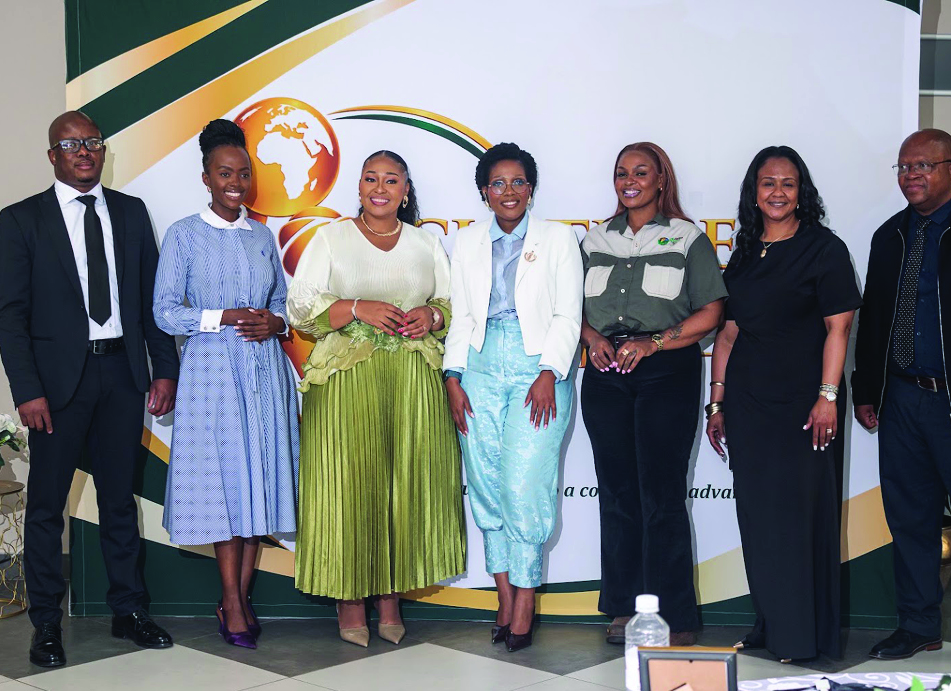
She was speaking during the second Empowerment Workplace Indaba championed by Culture Curator Africa at Mountain View Hotel on Friday.
The event was held under the theme ‘Leading well: The new standard for workplace culture’ and different speakers tackled the topic ‘Beyond toxic-use can do work differently’.
Mnisi said the unequal relationship between employers and employees remained one of the underlying challenges in addressing workplace toxicity. She explained that although employment laws had evolved to protect workers, the historical imbalance of power continued to influence how employees were treated in their workplaces.
Mnisi traced the origins of employment relationships to the traditional master-and-servant system, where workers were expected to follow instructions without questioning the authority of their employers. She explained that under this system, employers exercised considerable control over workers including determining their remuneration and conditions of service.
However, the evolution of labour laws and the emergence of trade unions introduced mechanisms intended to protect employees against exploitation and unfair treatment.
She said trade unions had played a role in attempting to address power imbalance by advocating for standardised wages and improved working conditions. Despite these developments, Mnisi maintained that the imbalance remained deeply rooted in modern employment relationships.
She challenged employees to reconsider their understanding of employment contracts, warning that such agreements did not necessarily provide the level of protection workers believed they offered.
“The starting point is that we need to demystify the issue of equality between an employer and an employee. That is a non-existent concept from the history of the evolution of industrial relations.
All of you here own a little document called an employment contract and as you sit here you think it is your greatest protector. I am sad to inform you that it is not,” Mnisi said. She further argued that employment contracts also established the employer’s authority over workers through what was commonly referred to as the duty of subordination and managerial prerogative.
She explained that employees were generally expected to submit to the authority of their supervisors and line managers, creating circumstances in which individuals could feel powerless when confronted with bullying or unfair treatment.
She said the situation became particularly difficult for employees who depended entirely on their jobs for survival and could not afford to challenge their employers or resign from toxic workplaces.
“You have to do what you have to do. You cannot give up the only job you have,” Mnisi added.
Drawing from her experiences, Mnisi revealed that she had previously confronted workplace toxicity and refused to tolerate treatment she considered unacceptable. She described herself as someone who had developed the courage to stand up against bullying, while acknowledging that not every employee possessed the same confidence or circumstances.
She said some workers were particularly vulnerable and entered employment environments seeking to perform their duties and earn a living. She explained that workplace disciplinary processes were governed by two important principles: substantive fairness and procedural fairness.
She also said substantive fairness concerned the reasons behind disciplinary action including whether an employee’s alleged misconduct justified the employer’s decision.
Toxic workplaces destroy health, families – Expert
TOXIC workplace environments are silently destroying employees’ mental and physical health.
They also damage family relationships and costing organisations productivity, even long after affected workers have left their jobs.
This was a warning delivered by Culture Curator Africa Director Sipholesihle Lukhele, where the devastating consequences of unhealthy workplace cultures came under the spotlight.
Speaking from experience, a workplace culture advocate and author of Pretty Suits and Poisoned Mugs revealed how prolonged exposure to a toxic working environment had severely affected her health, leaving emotional and physical scars that persisted even after she left the organisation.
She warned that workplace toxicity was not merely about disagreements between colleagues or demanding supervisors, but could have far-reaching consequences for employees’ wellbeing, families and overall quality of life.
The speaker explained that employees often underestimated the physical effects of prolonged workplace stress, dismissing symptoms as ordinary exhaustion or temporary discomfort. She recalled experiencing unexpected skin problems, which initially led her to suspect hormonal changes. However, after consulting her dermatologist she was informed that the symptoms were stress-related.
Lukhele said her experience demonstrated how prolonged exposure to unhealthy workplace environments could manifest physically, beyond the emotional distress commonly associated with workplace bullying.
The speaker also raised concerns about the possible effects of chronic stress on reproductive health and other medical conditions, emphasising the need to recognise workplace wellbeing as a serious concern.
She cautioned that the consequences of workplace toxicity extended beyond employees themselves, affecting spouses, children and other family members who were indirectly exposed to the emotional burden.
She said employees could not simply separate their personal lives from their professional experiences, as emotional distress experienced at work often followed them home. She argued that meaningful workplace transformation required organisations to confront harmful behaviours rather than merely creating the appearance of unity.
“If we shout one team on Friday and refuse to greet each other on Monday, all we’ve done is coordinated our wardrobes,” she said.
She explained that organisational culture was reflected in everyday behaviour, including how colleagues communicated, treated support staff, responded to complaints and respected one another.
She also emphasised that even seemingly minor actions contributed to the overall working environment and could either strengthen or undermine workplace relationships.