


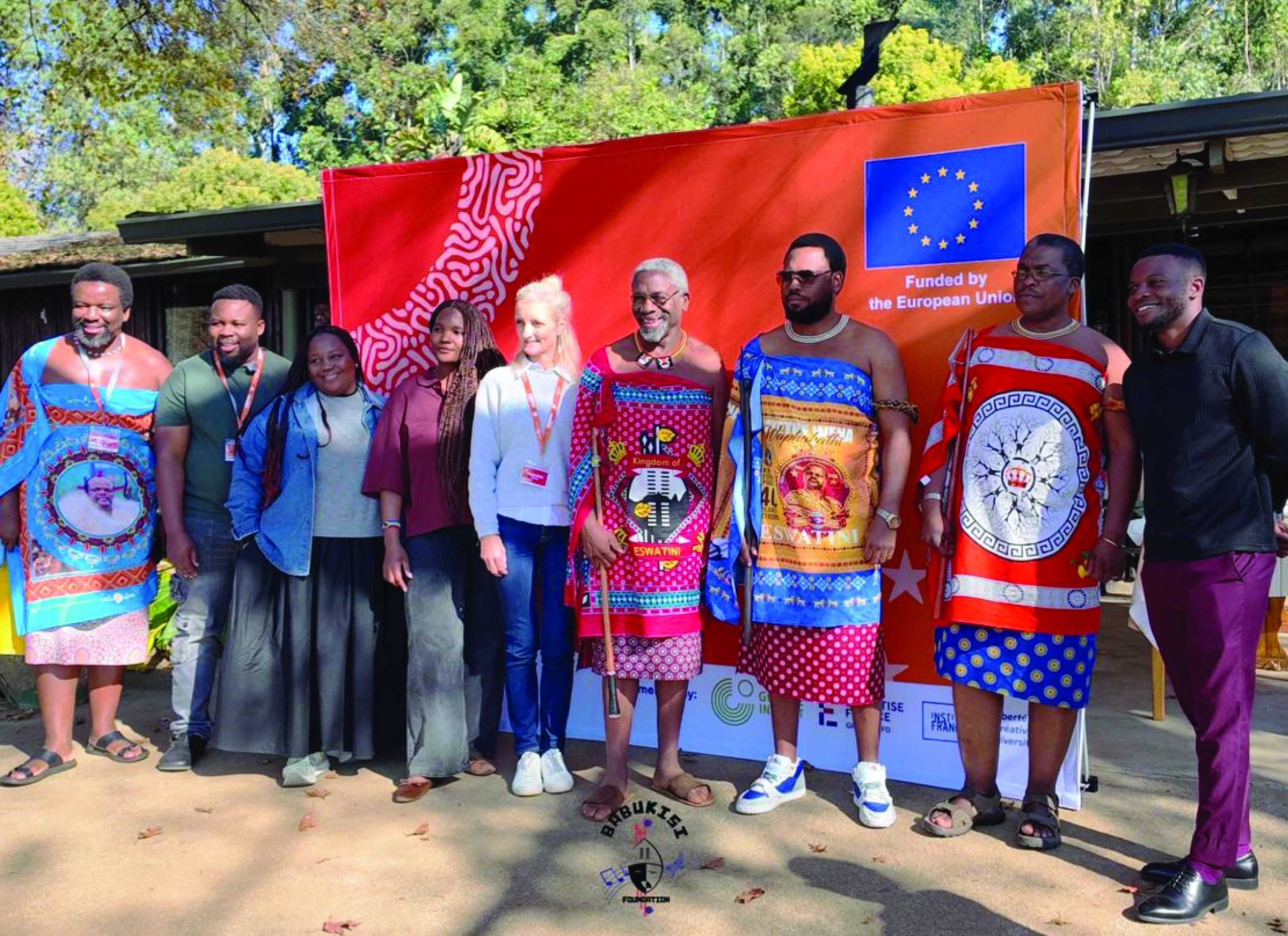
A week after this publication alerted Emaswati to a European Union funding opportunity, Babukisi Foundation and Eswatini Theatre Club have been awarded E1 million (€55 000) each.
The initiative, titled Co-Creation of New Heritage Narratives, is funded through the European Union’s Africa-Europe Partnerships for Culture (AEPC) Programme, with the Goethe Institute serving as the implementing partner.
Babukisi Foundation seeks to transform local cultural heritage into animation, film and visual art for future generations.
The project forms part of the E564.36 million (€30 million) programme designed to strengthen cultural heritage and places Babukisi Foundation among the selected clusters, alongside Likusasa Letfu and Eswatini Theatre Club, representing the country alongside organisations from Botswana, Lesotho, Namibia, Zimbabwe and South Africa.
The project will bring together nine artists, researchers, cultural practitioners and heritage custodians to develop three major productions inspired by local culture.
These include an animated series following the cultural journey of a Swati family during national ceremonies, a documentary exploring indigenous knowledge and identity and a visual art exhibition featuring 12 paintings based on Siswati names of the month and their connection to environmental conservation.
All productions will be created in both Siswati and English to reach wider audiences across the region.
Babukisi Foundation Operations Officer Kwanele Prince Tsabedze described the project as a major step towards protecting local heritage through creative innovation.
“Heritage should not only be remembered, it should continue to inspire,” he said.
He explained that many cultural stories and traditional practices remain undocumented, making it important to work with community knowledge holders while presenting their experiences in ways that connect with younger generations.
The foundation believes combining research with creative arts will help preserve valuable knowledge while making it relevant to modern audiences.
Beyond the artistic productions, the programme will include school outreach activities, creative workshops, documentary screenings, public exhibitions and community dialogues designed to increase appreciation of indigenous knowledge.
These activities aim to encourage young people to value their cultural identity while strengthening public understanding of traditional practices.
The project also places strong emphasis on involving women, young people and persons with disabilities as active contributors throughout the creative process.
The organisation also expressed gratitude to the European Union for funding the initiative and to the Goethe Institute for supporting cultural preservation across the region.
Goethe Institute Programme Manager Phillina Wittke, through a statement, welcomed the partnership, saying it promotes collaboration across Southern Africa while encouraging meaningful conversations around culture and identity.
“Indigenous knowledge can contribute to conversations on identity, sustainability and cultural resilience,” she said.
She noted that the programme supports inter-cultural dialogue and regional cooperation through creative heritage projects.
Founded in 2012, the organisation continues working with communities, traditional leaders, educational institutions and artists to preserve local tangible and intangible heritage through research, education, digital innovation and creative arts.