


Africa remains a continent rich in resources yet populated by poor people, and this contradiction must come to an end, SADC Public Service Commissions Forum Chairperson Professor Somadoda Fikeni has said.
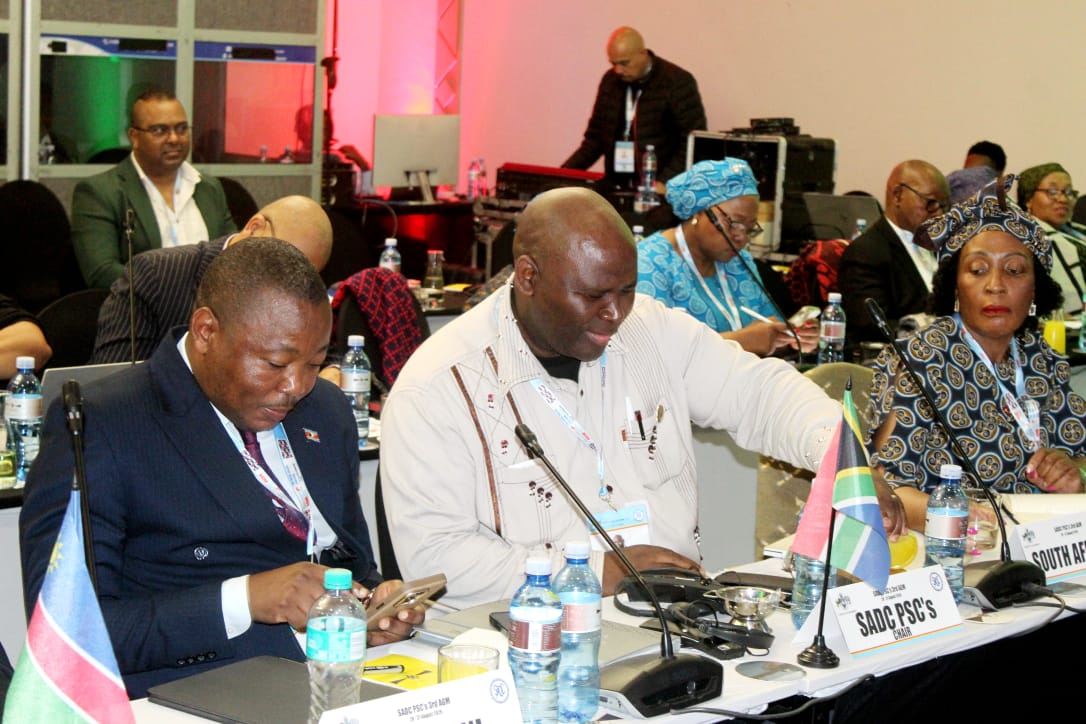
He was speaking yesterday during the opening of the 3rd Annual General Meeting of the Southern African Development Community (SADC) Public Service Commissions Forum held in Ezulwini under the theme, “Accelerating the Transformation of the SADC Region through Resilient, Responsive, Citizen-Centric, Innovative and Incorruptible Public Service Institutions from Rhetoric to Practical Actions.”
The meeting brought together public service commissions and partner institutions from across the region to strengthen public administration through collaboration, professionalisation, benchmarking and the sharing of expertise and best practices.
Fikeni said the continent’s wealth in land and other valuable resources stood in stark contrast to the poverty experienced by its people and questioned why African countries continued importing goods despite possessing resources that could support local production.
He described this as a ‘paradox’ of a rich African continent as well as poor Africans and linked the situation to the continent’s long history of slavery, colonialism, the Cold War and the post-Cold War era.
Fikeni also questioned whether the promises of independence and Constitutions had been fulfilled.
He asked what the struggles of African liberation heroes and heroines had been for if people continued to live in poverty and suffering decades after independence.
The professor said the continent needed to confront the gap between how governments assess their own performance and the lived experiences of ordinary people.
He criticised what he described as reliance on annual reports and compliance while people on the ground continued to experience challenges.
According to Fikeni, the problem goes beyond political leadership and includes the quality as well as character of public institutions that are expected to turn government policies and development plans into tangible improvements in people’s lives.
He said public service had increasingly been associated with corruption, poor service delivery, fragmentation, lack of innovation, poor transparency and accountability, wastefulness and a lack of urgency and responsiveness.
He warned that this had contributed to a growing legitimacy crisis affecting public institutions because they were increasingly perceived as failing in their responsibility to serve the public.
The forum chairperson said public service should instead become a key engine of development.
He argued that countries that had successfully achieved development had relied on professional, ethical and capable public servants while warning against systems where loyalty was valued above competence.
Fikeni said the region was operating in what social scientists had described as an era of ‘polycrisis’ and a VUCA moment — volatile, uncertain, complex and ambiguous.
He identified geopolitical tensions and conflicts, climate change, natural disasters, the frequency of earthquakes, the looming El Niño threat, extreme weather patterns, artificial intelligence, social media, migration and immigration as some of the pressures facing societies.
He also pointed to growing inequality, youth unemployment, intergenerational poverty and the collapse of the family as a basic building block of society.
The challenges, he said, were being compounded by an increasingly competitive global environment and sudden changes in donor funding.
Fikeni said Africa and the SADC region could no longer afford to respond to these challenges through compliance and declarations alone.
He called for a new ethos and moral code for public service that reflected African values and emphasised the need to humanise public institutions through values such as Ubuntu and Botho.
He said public servants needed to regain a caring human face and reconnect institutions with the people they were established to serve.
For Fikeni, the solution would require more than identifying problems. He said transformation needed a clear diagnosis and vision followed by urgency with clear timelines, clear allocation of roles and collective action supported by monitoring and impact assessment.
“It always seems impossible, until it is done,” he quoted former South African President Nelson Mandela.
The forum chairperson said the AGM should therefore become more than another meeting where delegates exchanged views before returning home.
He called for practical interventions including strengthening the institutional arrangements of the Forum, resource mobilisation, public sector reforms and the professionalisation of public service.
He also identified digital transformation and the integration of artificial intelligence as important areas while calling for stronger integration with the SADC and African Union ecosystems to advance regional and continental development goals.
Fikeni said the forum should also compile a book containing the various legislated and constitutional mandates of public service commissions and develop an effective communication strategy capable of capturing public attention around their work and plans.
He said the meeting in the country should become a turning point for public service transformation.
“Let us be pathfinders and trailblazers of public service shaping futures in service of our people, region and continent,” he said.