


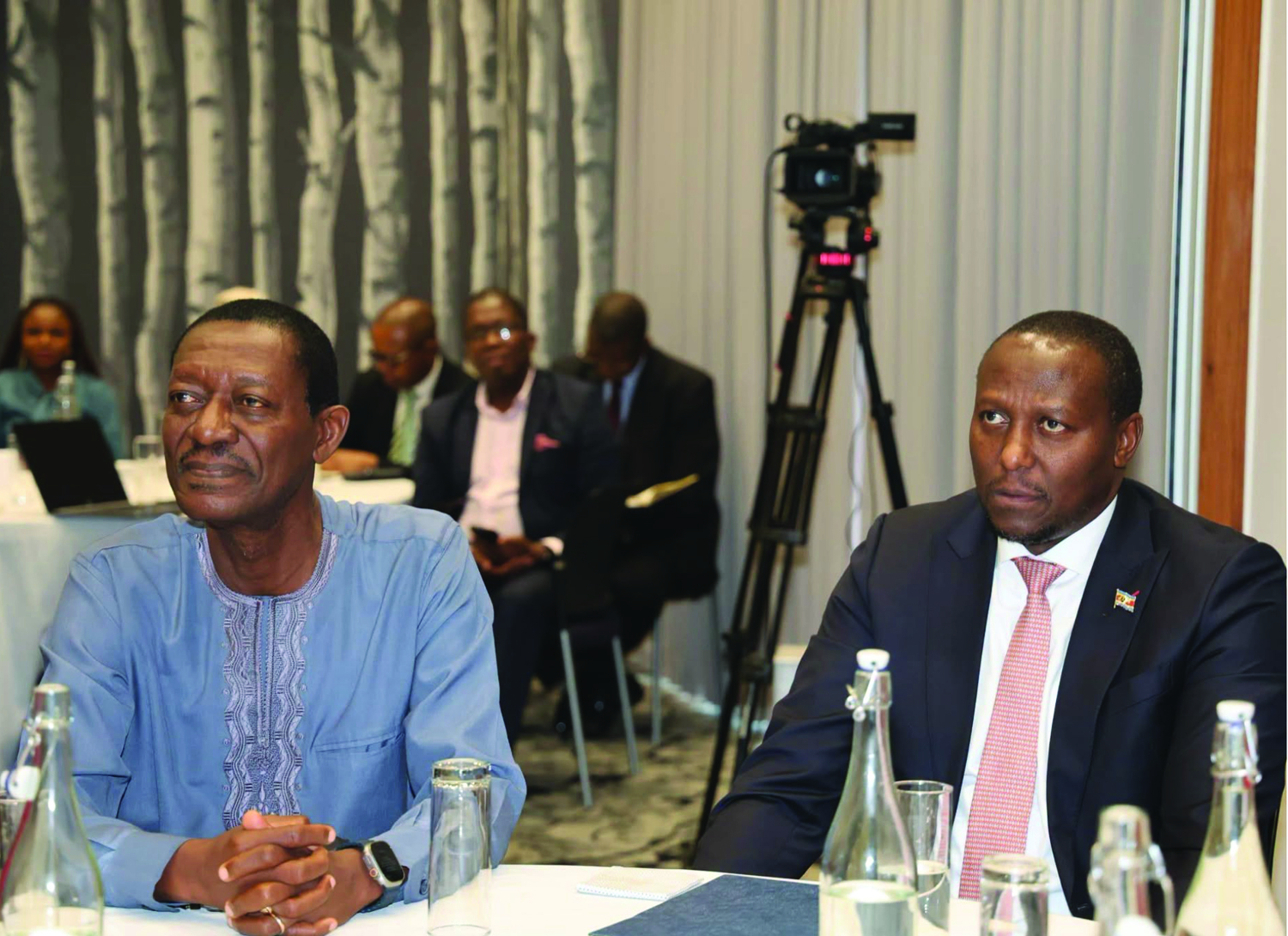
PRIME Minister Russell Mmiso Dlamini has called for a deeper transformation of leadership in the country.
He said Eswatini needs leaders who will embrace responsibility, service and a renewed mindset.
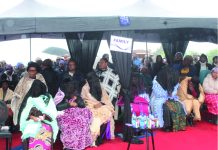
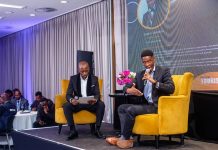
The premier was speaking during the Kingdom Leadership and National Transformation meeting hosted by Campus Crusade for Christ Eswatini at the Hilton Garden Inn yesterday.
Dlamini said the visit of Campus Crusade International Senior Global Vice-President Professor Delanyo Adadevoh as keynote speaker was important.
He described the professor as a significant influence in his life and the lives of many Emaswati. He said the visit presented an opportunity to ignite a wider movement of leadership transformation across the country.
Such transformation should extend beyond the church and reach workplaces, communities and the broader public sphere.
Dlamini emphasised that Professor Adadevoh made an important mark on his life, particularly during a period when many young people were still discovering their identity, purpose and the kind of lives they wanted to live before God.
He recalled the professor’s testimony that if he made God’s work his concern, God would make his needs His concern.
Dlamini said the professor’s life and ministry had demonstrated the importance of obedience and dedication to one’s calling.
“Your coming and speaking to us will ignite a movement that will reach far into the future; a movement of winning souls, a movement of taking God with us wherever we go and carrying His truth into our workplaces, our communities and to every part of this nation.
‘‘Your life and ministry remind us that no reason, no season is too late for obedience. No calling is too small for consecration and no sphere of life is beyond the reach of God’s purpose,” Dlamini said.
The PM also welcomed the work of the International Leadership Foundation which he said was focused on developing leaders capable of contributing to transformation across Africa.
He said the country had similarly been pursuing a Pan-African vision centred on responsibility and developing a new mindset among its people.
He said his engagement with Professor Adadevoh and his team had strengthened his conviction that the visit could help catalyse a broader leadership transformation programme in the country.
Dlamini said government hoped to facilitate further engagements between the professor and the country’s leadership, as well as larger national gatherings involving leaders and communities.
He expressed gratitude to those who helped facilitate the visit, particularly Dr Naton Kamanga.
He stated that the engagement could mark the beginning of a more deliberate effort to strengthen leadership development in the country.
He further thanked the professor for his contribution to leadership development across Africa and beyond. He said his ministry had demonstrated that meaningful transformation could be achieved through committed leadership and service.
“In many ways, you have come to the right people at the right time and you have come to the right place. We receive your visit not just as an event, but as a seed of what God still desires to do among us,” Dlamini added.
‘Discipleship key to raising leaders of integrity’
A call to make disciples rather than merely converts has been identified as critical to developing leaders of integrity capable of driving meaningful transformation in Africa.
Campus Crusade for Christ Eswatini Associate Dr Osborn Hleta shared his personal journey of faith and leadership during the Kingdom Leadership and National Transformation meeting hosted by the organisation.
Hleta said his encounter with Campus Crusade’s discipleship teachings completely changed the direction of his life while he was completing his studies in agricultural economics and management in 1995.
He said studying the biblical instruction in Matthew 28 to go and make disciples made him recognise a significant gap within the church; that Christians could grow older in the faith without necessarily developing the character associated with Christian discipleship.
He said the experience challenged his initial plan to pursue a career in agriculture while serving God on a part-time basis.
During the 1995 Explore conference for African students in Harare, Zimbabwe, Hleta said his understanding of the biblical reference to the harvest being plentiful changed his perspective.
As an agriculturalist and economist, he interpreted the biblical metaphor through the lens of farming recognising that preparing the soil, planting, nurturing and protecting a crop all precede the harvest.
He said he realised that his role was to respond to what he understood as God’s calling rather than trying to fit it around another career.
Following the conference, Hleta applied for theological studies and received provisional acceptance for a Master of Divinity programme at the Nairobi International School of Theology.
He recalled that some of his university lecturers questioned his decision to leave a promising academic and agricultural career for theology.
Calling
“I said now that I am about to graduate as an agricultural economist and manager, at least I can do God’s work part-time so that I support my family and then do the pastoring. One of the lecturers said, ‘what a waste,’ because they were thinking the brains were going into waste,” Dr Hleta recalled.
Hleta nevertheless pursued his calling and later served in the church in the country and across the Southern African Development Community (SADC) region.
He said his experience also reinforced his conviction that discipleship should be central to the church’s mission.
He said the message went further that disciples were expected to become multiplying disciples.
His current focus had shifted towards leadership development after identifying what he described as another major gap across Africa.
He added that his work in leadership development had included involvement in initiatives aimed at developing leaders with integrity and the competencies needed to contribute to holistic transformation and strategic leadership.
Hleta further stated that leadership development was not only about acquiring technical knowledge or holding positions of authority, but about developing people whose character could withstand the responsibilities placed upon them.
He linked this to an earlier lesson from Professor Adadevoh who he said had emphasised that education alone did not necessarily transform a person’s character.
For him, this underscored the importance of combining education, discipleship, character and leadership development.
The leadership development initiatives he had been involved in had grown beyond Africa, with programmes extending into Latin America, Europe, Asia and the United States.
He said the ultimate objective remained developing leaders of integrity who could use their competencies to create holistic transformation in their communities and countries.
“Matthew 28 doesn’t say, ‘Go and make converts.’ That is what I was taught, and it stuck with me. Go and make disciples. Everybody is talking about leadership.
So where is the gap? There is the lack of leadership with integrity. If you educate a thief, you end up with an educated thief,” Hleta closed.