



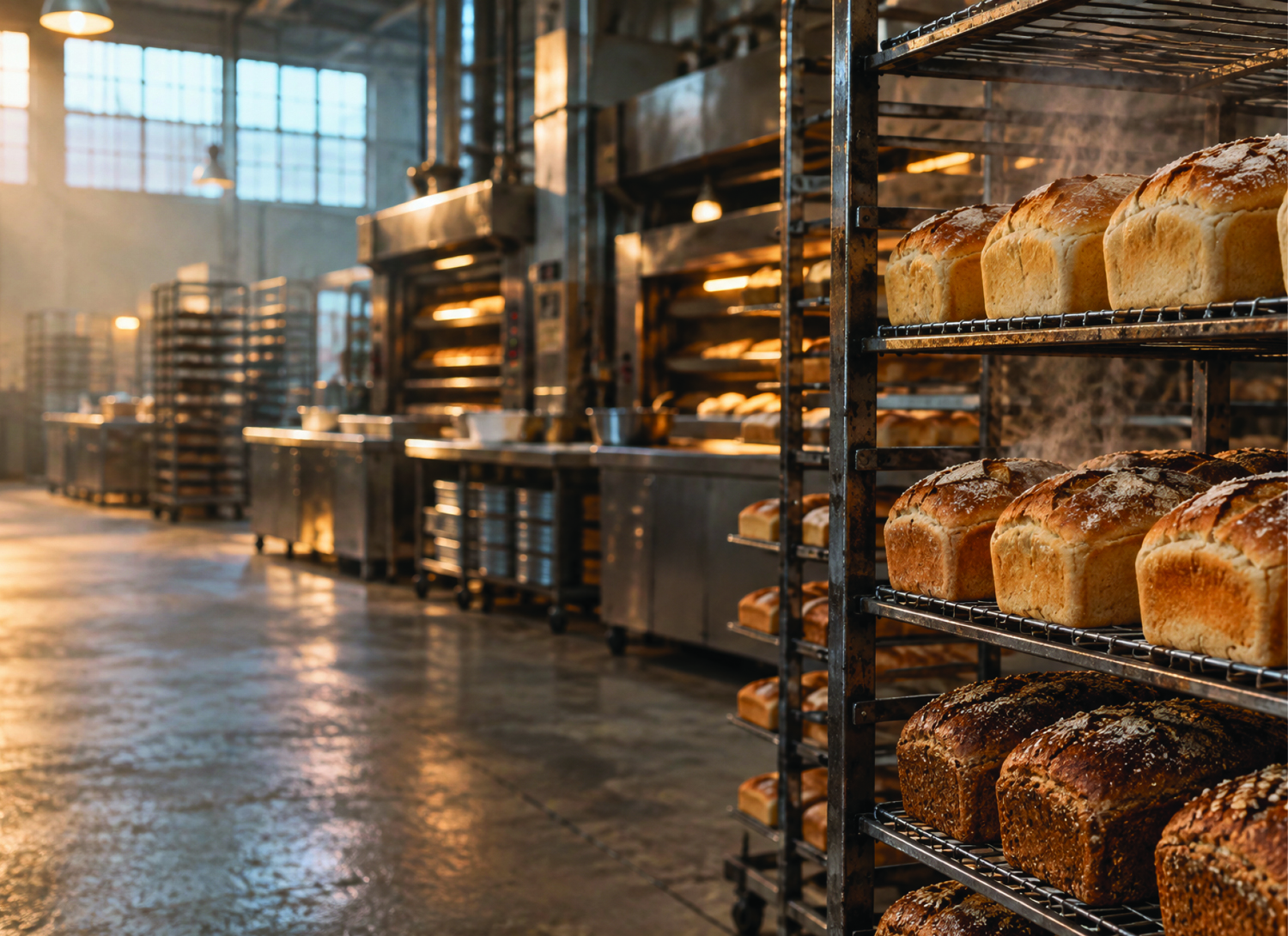
THE cost of bread is set to rise from next month with consumers expected to pay more for their daily loaf.
The price of bread will increase by 4.23% from October 1, following Cabinet’s approval of a request submitted by the Eswatini Bakers’ Association. The percentage equates to E0.66 and E0.76 for 800g of brown and white bread prices, respectively.
This was confirmed yesterday by the Ministry of Commerce, Industry and Trade Chief Commercial Officer Sonto Hlophe.
She said the decision was made in accordance with the Price Control Order of 1973, which mandates the ministry to regulate the prices of essential commodities, including bread.
Under the approved adjustment, the maximum retail price of an 800g brown loaf will increase from E15.60 to E16.26 while an 800g white loaf will rise from E17.90 to E18.66.
The latest increase follows a 7% adjustment effected on November 1, 2025. Before that, bread prices were increased by 20.76% on July 1, 2022.
According to Hlophe, the Bakers’ Association submitted a formal request for a price review earlier this year, citing escalating input and operational costs.
These included the cost of flour, premix, utilities, fuel and other expenses associated with running bakeries.
Hlophe said the request was prompted by rising production and distribution costs, which she said had placed financial pressure on local bakeries and threatened the sustainability of the sector.
She said the increase in fuel prices had been a major contributor to the rising cost of production, as it had also affected the cost of transporting key inputs and distributing bread.
Hlophe further attributed the escalation in fuel prices to geopolitical tensions, including the conflict involving Iran and the United States of America.
“As bread is a necessity across households in the kingdom, it is essential to ensure the continued viability of the sector to safeguard a reliable supply of bread and protect the jobs of the many Emaswati employed in the baking industry,” Hlophe said.
She said the Bakers’ Association had submitted information detailing increases in the cost of production inputs and changes in fuel prices.
To assess the request, Hlophe said the ministry calculated the average cost of the relevant inputs and analysed their movement over the period under review.
“The cost of key inputs used in the production of a standard (700g) loaf of bread has increased significantly between November 2025 and June 2026. We have also calculated the absolute and percentage increases,” she said.
The approved adjustment will be implemented in terms of Section 5(1) of the Price Control Order of 1973 and will be officially cited as the Maximum Wholesale and Retail Prices of Bread Notice, 2025.
Bakers in business, increase justified – Economist
ECONOMIST Thembinkosi Dube said the 4.23% increase was justified in light of the rising operational costs faced by bakeries.
Dube acknowledged that consumers would feel the impact of paying more for bread but said the financial pressures faced by bakeries also needed to be considered.
He said bakeries were businesses that needed to remain financially viable, meet their operational expenses and pay employees.
Dube warned that if bakeries were forced to maintain current prices while input and fuel costs continued to rise, some businesses would be operating at a loss.
He said this could ultimately put jobs and the ability of employers to meet their salary obligations at risk.
At the same time, Dube said there was a need to explore measures that could reduce the operational costs faced by bakeries, rather than relying solely on price increases to absorb rising expenses.
Consumer body calls for intervention
CONSUMER Association Chairman Bongani Bhanyaza Mdluli said consumers understood that bakeries, like other businesses, were affected by increases in input costs, including fuel.
However, he said rising operational costs should not automatically translate into higher bread prices for consumers.
Mdluli suggested that government should consider interventions to reduce the cost of key inputs and transportation.
“Maybe government needs to subsidise inputs such as flour and transport costs to ensure that bread prices do not increase rapidly,” said Mdluli.
BELOW IS THE CURRENT ESWATINI BREAD PRICE SCHEDULE
| Description | White Bread Including 15% VAT: Max Wholesale | White Bread Including 15% VAT: Max Retail | Brown Bread: Max Wholesale | Brown Bread: Max Retail |
|---|---|---|---|---|
| 800g | 18.21 | 18.66 | 15.81 | 16.26 |
| 700g | 16.58 | 17.05 | 14.79 | 15.26 |
| 600g | 14.95 | 15.41 | 12.92 | 13.60 |
| 500g | 13.71 | 14.18 | 11.85 | 12.32 |
| 400g | 8.59 | 8.82 | 7.66 | 7.88 |
BREAD PRICE INCREASE SCHEDULE AT 4.23% effective October 1
| Description | White Bread Including 15% VAT: Max Wholesale | White Bread Including 15% VAT: Max Retail | Brown Bread: Max Wholesale | Brown Bread: Max Retail |
|---|---|---|---|---|
| 800g | 17.47 | 17.90 | 15.16 | 15.60 |
| 700g | 15.91 | 16.36 | 14.19 | 14.64 |
| 600g | 14.34 | 14.78 | 12.40 | 13.05 |
| 500g | 13.15 | 13.61 | 11.37 | 11.82 |
| 400g | 8.24 | 8.46 | 7.35 | 7.56 |