



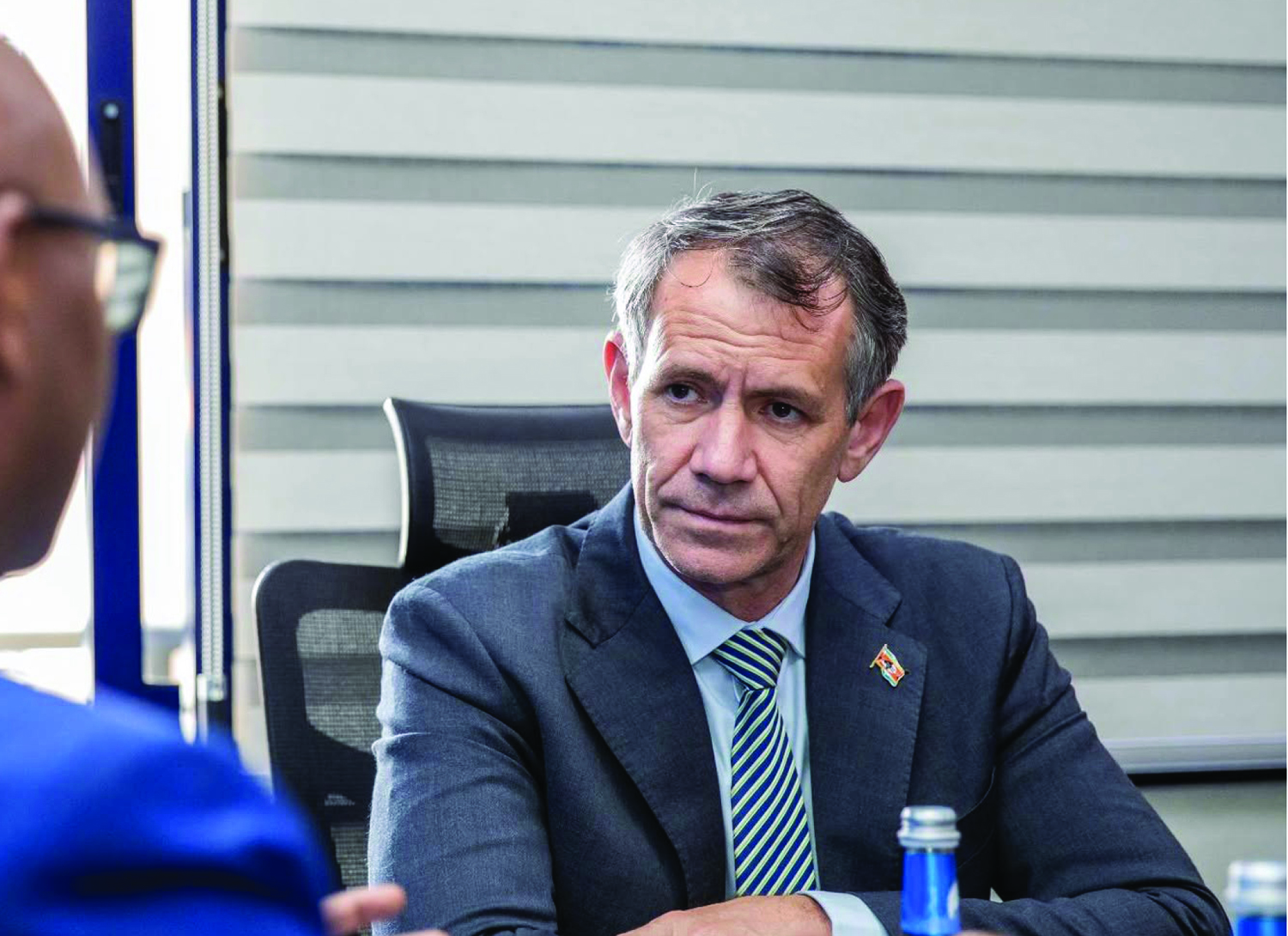
SOME Members of Parliament have raised concerns that government’s cashflow problems are slowing service delivery and development projects, with Lobamba MP Michael Masilela saying the situation could affect his chances of returning to Parliament in the next elections.
Masilela was speaking during the second reading of three loan Bills linked to the Eswatini Post and Telecommunications Corporation (EPTC) and the Digital Eswatini Project.
He said although the Digital Eswatini Project was aimed at a good cause, he was not excited about taking on more loans while some projects were being affected by government’s cashflow problems.
“Akusebenteki and angibuyi la,” Masilela said, meaning things were not working and that he did not expect to return to Parliament if the current situation continued. He said service delivery was moving slowly and that the situation was affecting legislators because communities expected them to deliver services and development.
Masilela said his integrity was also at stake because he was expected to provide services to the people but was struggling to do so because of the financial situation. He questioned why government was prioritising the EPTC loan when other areas of development were also in need of funding. His concerns were echoed by other MPs during the debate, particularly over stalled Microprojects and infrastructure development.
Sigwe MP David Cruiser Ngcamphalala said contractors working under Microprojects had been stood down and that services directly affecting citizens had stopped.
“The citizens are complaining everyday,” Ngcamphalala said.
He said he had expected the loans being considered by Parliament to include an allocation for projects such as road infrastructure and other services that directly affect communities. Sithobela MP Mancoba Sihlongonyane said he did not have a problem with the EPTC loan itself but was concerned that priority areas, including road construction and other important infrastructure, appeared to be taking a back seat.
Mbabane East MP Welcome Dlamini asked about the pension position at EPTC, including whether E26 million had been set aside from the loan to address the pension deficit. He further asked how much the pension deficit currently stood at. The MP also raised concerns about Microprojects, saying some projects had stalled or stopped because suppliers were owed money. Nhlambeni MP Manzi Zwane called on Minister of Finance Neal Rijkenberg to table EPTC’s latest financial position before the House of Assembly. He said Parliament needed to be provided with information on the company’s ability to service its debt, projected cashflows, risk assessments and the terms of government’s guarantee of the loan. Zwane also questioned why EPTC was not using its finances to obtain the loan instead of relying on government to borrow on its behalf.
Lobamba Lomdzala MP Marwick Khumalo said he supported the loans because of the human element involved. He, however, expressed concern about EPTC and wanted to know its future as the communications industry continued to change.
Khumalo said more people were relying on mobile phones for many services and therefore wanted clarity on the position of EPTC going forward.
The three Bills before Parliament were the International Bank for Reconstruction and Development (Eswatini Post and Telecommunications Corporation) Loan Guarantee Bill, 2026; the International Development Association (Digital Eswatini Project) Loan Bill, 2026; and the International Bank for Reconstruction and Development (Digital Eswatini Project) Loan Bill, 2026.
Responding to the concerns, Rijkenberg said the Digital Eswatini initiative was expected to reduce the cost of internet access. He said more people were relying on data to access the internet, adding that while the country had a good network, the cost of data remained high.
The minister said fixed-line cable infrastructure could significantly reduce costs and create opportunities for young people to study and work online.
On the concerns over Microprojects, Rijkenberg said government was also working to address the cashflow problem. He explained that the loans under consideration had taken years to reach Parliament and discussions on the projects had started about three years ago with the minister of information, communications and technology.
Rijkenberg said dealing with the urgent funding needs at Microprojects required budget support loans but obtaining such loans from financial institutions was more difficult than securing infrastructure loans. He said when government approached financial institutions for budget support, the institutions first assessed the country’s financial position. According to Rijkenberg, the institutions then identified areas that needed attention and set conditions that government had to meet before the funding could be approved.
However, he said meeting those conditions could take a long time.