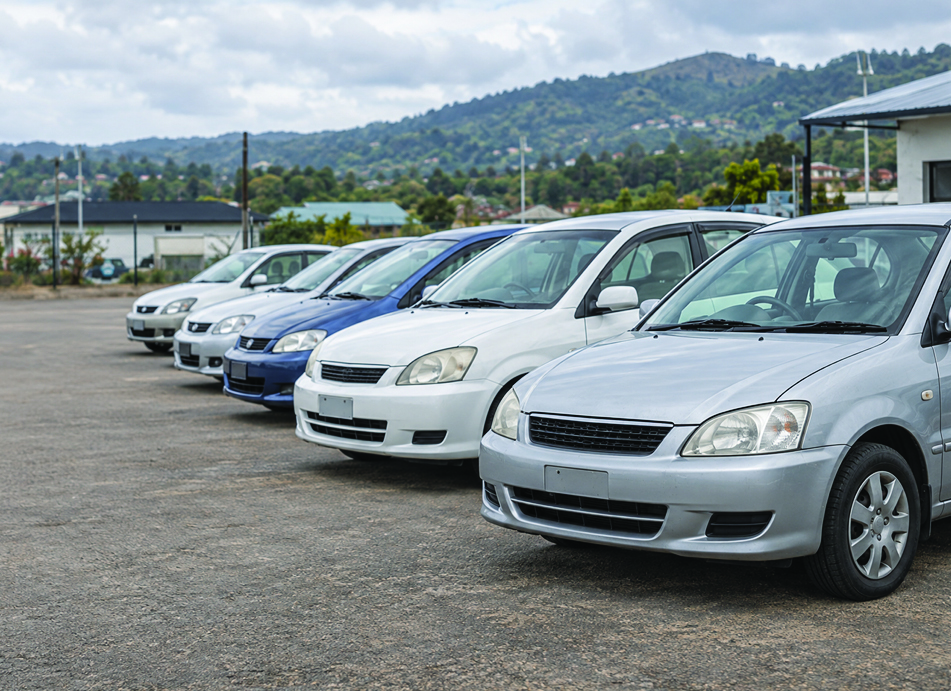
NKOMIYAHLABA Member of Parliament (MP) Mduduzi Dlamini has appealed to government to lift restrictions on the importation of second-hand vehicles, popularly known as Dubai cars.
He said the ban has made it difficult for ordinary Emaswati to afford personal transport. Dlamini wants government to reconsider the restrictions and allow the importation of vehicles first registered before 2011, arguing that these cars were more affordable and enabled many people to own vehicles.
It is now six years since government introduced measures restricting the importation of grey import vehicles, including those commonly referred to as Dubai cars. He made the appeal during the ministry of natural resources and energy’s second quarter budget performance report debate in Parliament yesterday.
Dlamini said while government deserved recognition for ensuring that there were enough fuel filling stations across the country, the affordability of vehicles remained a major concern.
He applauded the expansion of fuel stations, saying Emaswati no longer had to travel long distances to access fuel. However, he questioned the benefit of having more filling stations if ordinary citizens could no longer afford to buy cars.
The MP said the restrictions had affected people’s ability to own vehicles because newer models were more expensive compared to the second-hand vehicles that were previously imported.
Before the restrictions, many people could afford these vehicles, which provided ordinary citizens with access to reliable transport at lower prices.
“We cannot afford the expensive cars. When we do not bring back these vehicles, who is going to buy the fuel? Bring back these vehicles; they were helping Emaswati a lot.
‘‘Many are now struggling to own cars, with only a limited number of citizens affording them,” he said.
Dlamini appealed to the ministry of natural resources and energy to work together with that of finance to review the matter and find a solution that would make vehicle ownership affordable. He said government should consider allowing the importation of older second-hand vehicle models, adding that the current situation had made car ownership a privilege enjoyed by only a limited number of people.
Under the restrictions, vehicles older than 15 years are prohibited from being imported and registered in the country. Consequently, vehicles manufactured or first registered before 2011 cannot be imported.
The restrictions were introduced as part of government’s efforts to encourage Emaswati to purchase vehicles through the local motor industry. This was also expected to increase the country’s share of Southern African Customs Union (SACU) revenue.
LaMgabhi MP Sicelo Jele questioned the high fuel prices in Eswatini, comparing them with those in other Southern African Development Community (SADC) countries. Jele said fuel was expensive in both Eswatini and South Africa, but he had observed different prices during a recent visit to Lesotho.
He asked the ministry to explain why fuel appeared to be more affordable in some countries within the region despite their membership of the same regional economic grouping.
“We are all in the SADC region, but we have seen that in some SADC countries fuel is not as expensive as it is in Eswatini. Can we get clarity on these high prices?” he asked.
On another issue, Lobamba Lomdzala MP Marwick Khumalo questioned government’s preparedness for the growing use of electric vehicles.
Khumalo pointed to Ethiopia, which has introduced restrictions on the importation of petrol and diesel-powered vehicles while promoting electric vehicles. He said electric vehicles were becoming a reality and government needed to explain its plans for embracing this development.
“How does the country intend to balance its plans to establish strategic oil reserves with the growing shift towards electric vehicles,” he said.
Khumalo said government needed to consider the future of transport and energy as more countries moved towards alternative sources of power. Ndzingeni MP Gcina Magagula urged the ministry to consider reducing fuel prices following the establishment of the Strategic Oil Reserve.
He said the development should bring relief to consumers through lower fuel prices, adding that Emaswati should benefit from government’s efforts to strengthen the country’s fuel security.
Magagula said the availability of the reserve should translate into more affordable fuel.