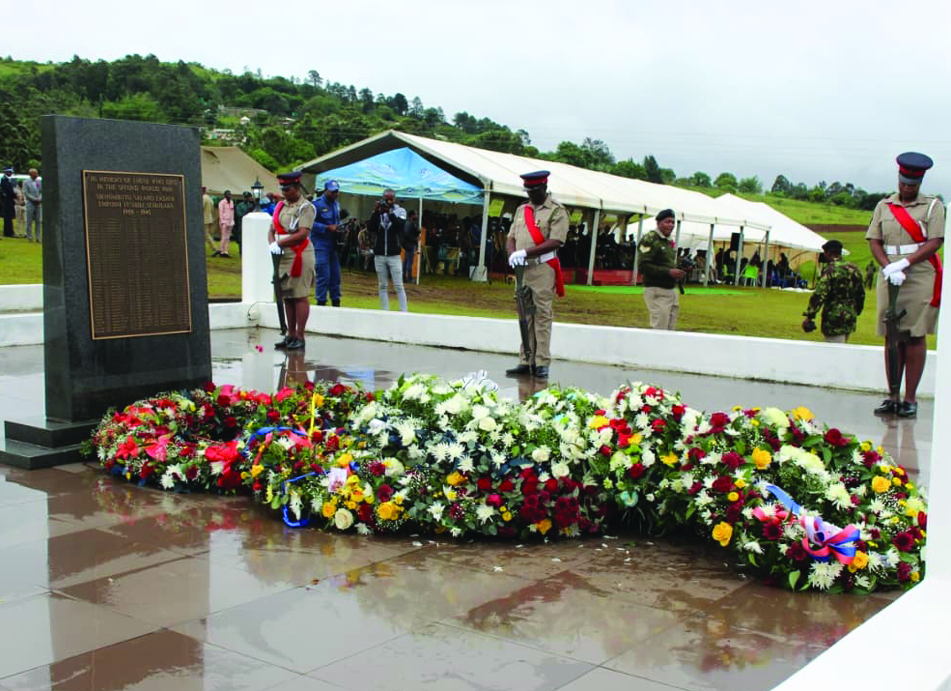
The sacrifices of fallen military servicemen who paid the ultimate price in the line of duty were brought into focus yesterday as the Umbutfo Eswatini Defence Force (UEDF) commemorated the 2026 Ex-Servicemen Remembrance Day, also known as Armistice Day, at the Nokwane Army Headquarters in Matsapha.
The annual commemoration, which is traditionally observed on November 11, brought together an array of high-ranking government officials, security force chiefs, diplomats, former military personnel and other dignitaries, who gathered to honour the memory of those who lost their lives while serving during World War II.
Among those in attendance were National Commissioner (NatCom) of Police Vusi Manoma Masango, former police commissioners Edgar Hillary and Senator Isaac Magagula, UEDF Commander General Mashikilisana Hulumende Fakudze, Chief Fire Officer Luke Lushaba and Manzini Regional Administrator (RA) Chief Gija, among other dignitaries.
Liqoqo Chairman Paul Dlamini represented His Majesty King Mswati III, while Deputy Prime Minister Thuli Dladla represented Prime Minister Russell Mmiso Dlamini and the deputy prime minister’s office (DPMO).
The solemn occasion was also attended by members of the country’s three security forces; the Eswatini Royal Police Service (REPS), His Majesty’s Correctional Services (HMCS) and the UEDF, who joined in to pay homage to the fallen servicemen.
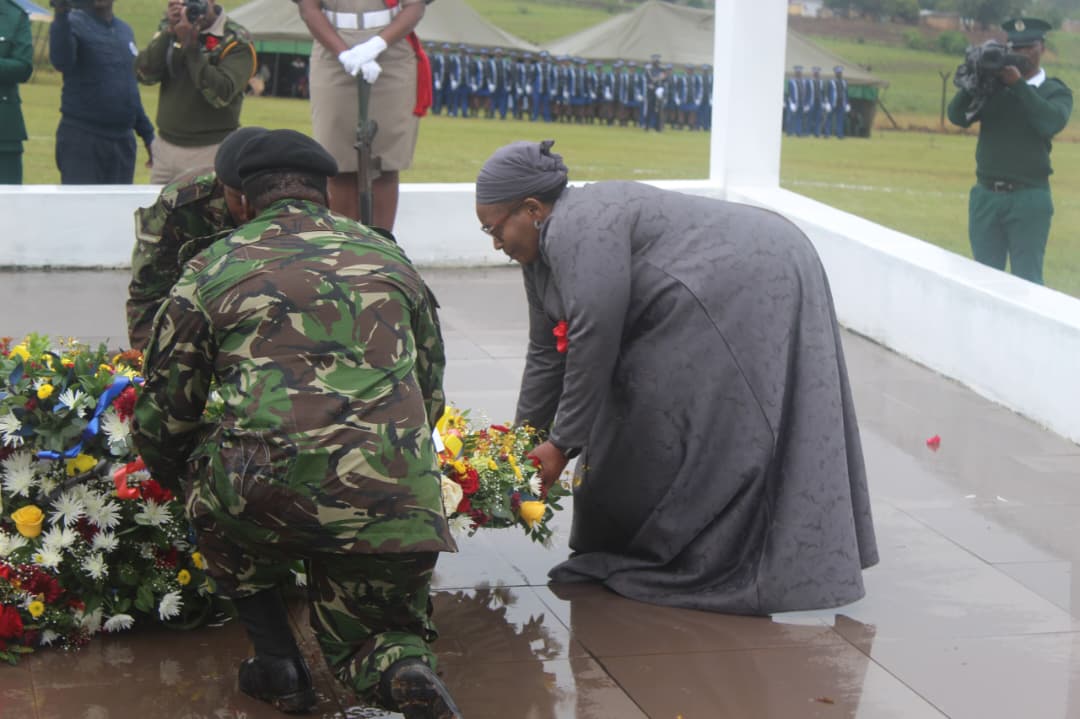
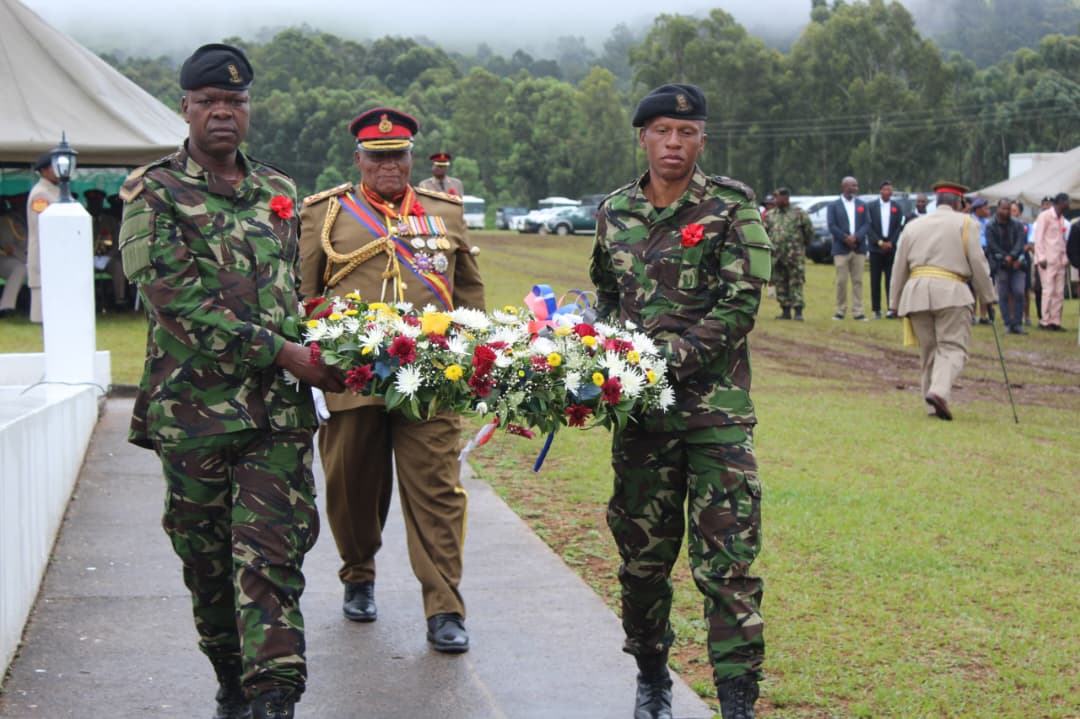
A major highlight of the ceremony was the laying of flowers at the cenotaph, a symbolic monument erected in remembrance of those who died in military service. The gesture served as a poignant reminder of the sacrifices made by servicemen during the two World Wars and other armed conflicts.
A cenotaph, derived from a Greek word meaning ‘empty tomb’, serves as a memorial for people whose remains were buried elsewhere or were never recovered. It is a focal point during Remembrance Day commemorations, where wreaths and flowers are laid in honour of the departed.
The ceremony also featured a military parade involving members of the UEDF and other security formations, demonstrating the unity and discipline of the country’s security forces.
A prayer was said in honour of the fallen servicemen, followed by the singing of the national anthem. A ceremonial gunshot was also fired as part of the commemoration, symbolically recalling the final moments of World War I and the historic ceasefire that brought the conflict to an end.
The event was further graced by members of the diplomatic corps, including Taiwan’s Ambassador to Eswatini Tsui Ching-lin, British High Commissioner Colin Neil Wells and South African High Commissioner Mmaikeletsi Dube.
Armistice Day traces its origins to November 11, 1918, when an agreement between the Allied Powers and Germany brought an end to hostilities during World War I. The armistice came into effect at 11am, marking the cessation of fighting after more than four years of devastating conflict.
The historic moment, which saw guns fall silent on the Western Front, gave the world an opportunity to begin negotiating peace terms and eventually evolved into an annual day of remembrance for those who lost their lives in war.
November 11 subsequently became synonymous with Armistice Day, although the commemoration later evolved into what is widely known today as Remembrance Day. In many Commonwealth countries, the observance is held on the Sunday closest to November 11, allowing communities to collectively reflect on the sacrifices of those who served.
Meanwhile, this year’s commemoration carried added significance for the country as it observed Remembrance Day without a surviving World War II veteran for the second time following the death of its last known surviving veteran, Philip Matanyatanya Nganekwane Matsebula.
Matsebula died on April 14, 2025, at the age of 113 while admitted to Mkhuzweni Health Centre. He had reportedly been unwell for some time before his passing.
His death marked the end of an era in the country’s military history, bringing to a close the chapter of living World War II veterans who had personally experienced one of the world’s most devastating conflicts.
For years, Matsebula stood as a living link between the present generation and the country’s contribution to the global war effort. His passing has left the nation with the responsibility of preserving the memories and sacrifices of those who served, ensuring that their contribution is not lost to history.
As the country continues to observe Remembrance Day, the absence of its last surviving World War II veteran serves as a poignant reminder that while those who witnessed the horrors of war may no longer be with us, their sacrifices remain etched in the nation’s history.