



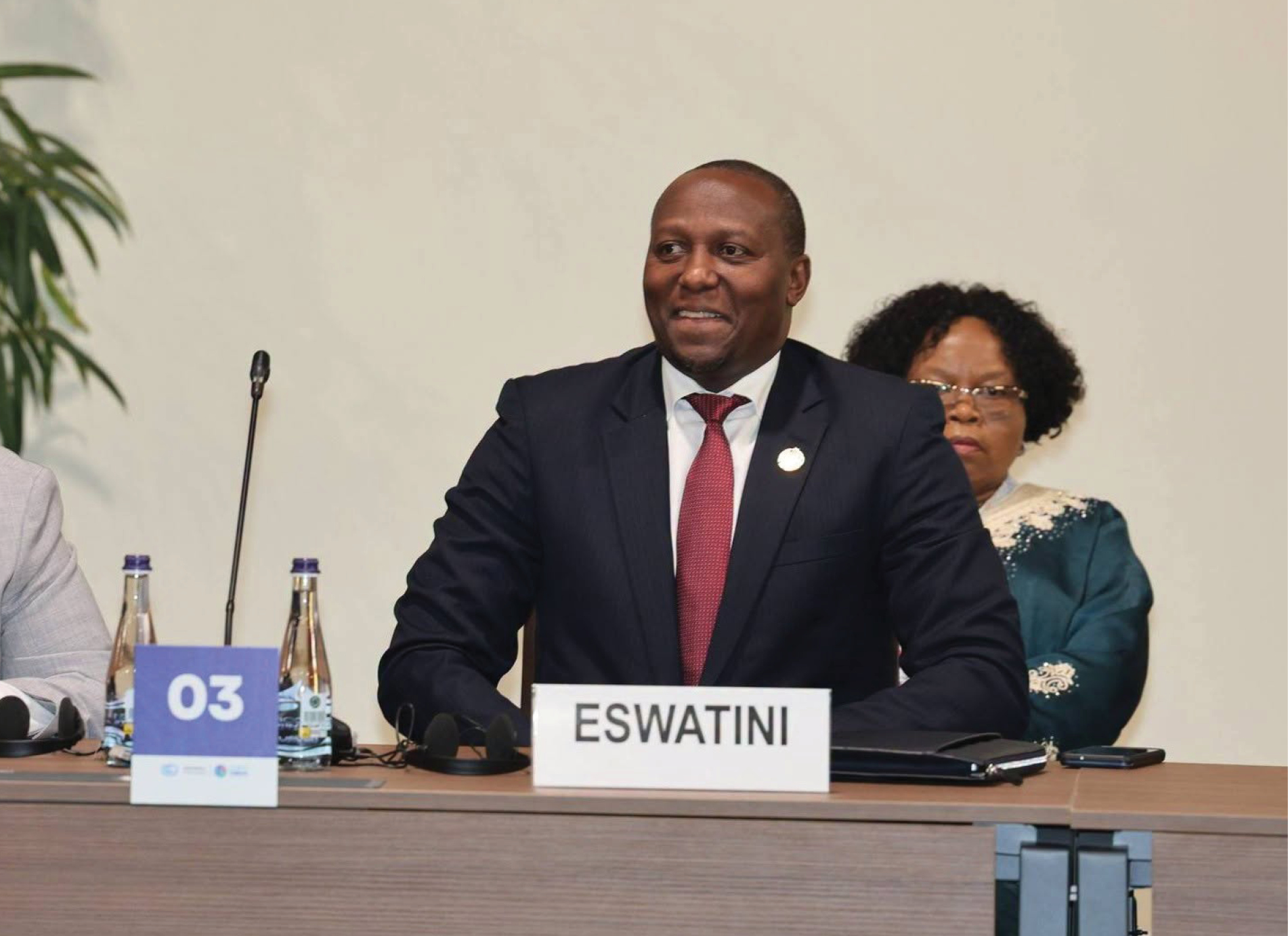
Prime Minister Russell Mmiso Dlamini is expected to approve annual foreign travel plans for all government ministries under a draft policy that seeks to place official international trips under a coordinated government-wide planning framework.
The proposed External Travel Management Policy requires each ministry to prepare an annual external travel plan, outlining the international engagements it intends to undertake during the financial year, the officials expected to participate and the budget allocated for such trips.
The plans would be submitted to the prime minister’s office (PMO) through the Public Policy Coordination Unit (PPCU) for approval before the start of government financial year.
The draft policy states that ‘all travel plans are to be submitted to the PMO for approval through the PPCU’.
Each ministry would be required to submit its annual plan two weeks before the start of each financial year. The document must be signed and stamped by both the principal secretary and the minister.
The plans must contain details of the activities to be undertaken, dates, venues, proposed officials to attend and the budget allocated for external travel.
The Public Policy Coordination Unit (PPCU), in collaboration with the ministry of public service and the Eswatini Economic Policy Analysis and Research Centre (ESEPARC), recently convened a consultative session with public sector unions (PSUs) to review and deliberate on the draft External Travel Management Policy Framework.
The objectives of the policy include the establishment of clear procedures and guidelines governing the planning, approval, execution and management of external travel by public officers, as well as strengthening accountability and transparency in the utilisation of public funds.
Under the proposed framework, ministries will be expected to include statutory, treaty, protocol, bilateral, multilateral and recurring travel related to royal duties in their annual plans.
The policy further proposes that no external travel request should be approved if it is not reflected in the approved annual travel plan.
“No external travel requests will be approved outside of the external travel plans,” states the policy.
This would make the annual planning process central to determining which international engagements government officials can undertake during the financial year.
The draft, however, recognises that unexpected, but necessary travel, may arise, particularly in relation to diplomatic engagements, emergencies, statutory obligations and strategic invitations.
It, therefore, proposes that provision be made for such circumstances.
Ministries seeking to amend their approved annual travel plans would also be required to submit the changes to the PMO for approval. The proposed amendments must be signed by the principal secretary and minister and submitted at least 10 days before departure.
Where the changes involve the reallocation of funds, ministries would have to attach an approved and signed budget allocation or reallocation from the ministry of finance.
The policy also seeks to prevent ministries from diverting substantial resources from other programmes to finance international trips.
It states that ‘Reallocation of resources from programmes to external travel are discouraged’.
Where a ministry has to reallocate funds for external travel, the amount would be limited to 5% of programme resources per budget line.
The draft further provides that no annual external travel plan would be approved without an accompanying budget. Ministries would, therefore, be required to prepare their travel plans alongside their annual external travel budgets.
This is intended to ensure that proposed trips are supported by available funding rather than creating pressure on other government programmes during the financial year.
The proposed framework also seeks to ensure that international travel is linked to national development priorities and the country’s international obligations. It requires ministries to justify travel against specific national priorities, National Development Plan outcomes or international obligations.
Officials face travel ban for missing reports
Government officials who fail to submit reports and account for funds after official foreign trips could be denied approval for future travel under the draft External Travel Management Policy.
The proposed measure seeks to ensure that officials demonstrate what the country gained from international assignments and account for public funds spent on their travel.
The draft requires all travelling officials to submit post-travel reports within 14 days of returning to their duty stations. It further makes a report from an official’s previous trip a requirement for any subsequent travel request initiated by a ministry.
“A travel report from an officer’s previous travel will be a requirement for any subsequent travel request initiated by a ministry,” states the policy.
This would mean that an official who has not submitted the required report would not qualify for another trip until the outstanding reporting requirement has been addressed.
The draft also provides that officials must retire their travel advances within the same 14-day period, in line with the Financial Management and Accounting Procedures Manual of 1993.
The policy identifies weak post-travel accountability as one of the problems affecting the management of official external travel. It notes that reporting has not always been consistently enforced and that the benefits arising from international assignments need to be followed through.
Under the proposed arrangements, an official’s report would have to go beyond simply confirming attendance at a meeting, conference, workshop or training programme.
It must provide a description of the travel, including the venue, country and dates, explain its purpose, outline lessons learnt, identify the implications for Eswatini and make recommendations.
It must also include an action plan showing how the benefits gained will be implemented in the official’s workplace. This should include arrangements for sharing information with colleagues and officials from other ministries.
The policy requires the report to contain “an action plan for implementing the benefits from the meeting in the participants’ workplace, including a plan for information dissemination to work colleagues and other ministries’ officials.”
For officials attending an international engagement as part of a multi-ministerial delegation, the report must contain a section for each participant and an implementation plan for each participating ministry.
Where the outcomes of an international meeting require a government decision, the relevant ministry must submit a Cabinet Paper for consideration.
The policy also requires reports on diplomatic missions to cover policy outcomes, negotiated positions and strategic gains, rather than being limited to administrative information about the trip.
In addition to reporting on the outcomes of travel, officials would be required to submit their travel retirement documents to the accounts department within 14 days of returning.
The required documents include a copy of the bank receipt showing the retirement of the advance, a copy of the passport photograph page, passport pages showing dates of departure and entry, a completed and signed honours certificate and a completed and signed voucher.
Drivers would also be required to submit fuel slips and other vehicle-related incidental receipts, and account for any difference in fuel allowances issued.
The draft states that payment vouchers must be supported by appropriate receipts and other documents relating to the expenditure.
Where receipts cannot be produced, a payment voucher must be supported by an honours certificate countersigned by the officer authorising payment.
The PPCU will also be responsible for monitoring whether ministries comply with the reporting requirements.
All ministries, departments and agencies (MDAs) will be required to submit quarterly external travel reports to the PPCU.
These reports must provide detailed expenditure information, including any funds reallocated to finance travel. They must also show cumulative external travel costs per official, department and ministry for the current financial year.
The PPCU will review the submissions and prepare a consolidated report on government external travel expenditure for presentation to Cabinet every quarter.
The proposed policy provides a further consequence for ministries that fail to meet the reporting requirements.
It states that ‘Future External Travel Plans from the line ministry will not be considered or approved by the prime minister until reporting requirements are met.”
This means that failure to account for previous trips could affect an entire ministry’s ability to secure approval for future external travel.
The ministry of public service will separately submit quarterly consolidated reports on training and related travel, showing how these assignments relate to ministries’ training plans.
The draft also proposes that the PPCU produce annual and quarterly external travel management reports for Cabinet, assessing the policy’s effect on expenditure, efficiency and strategic alignment.