



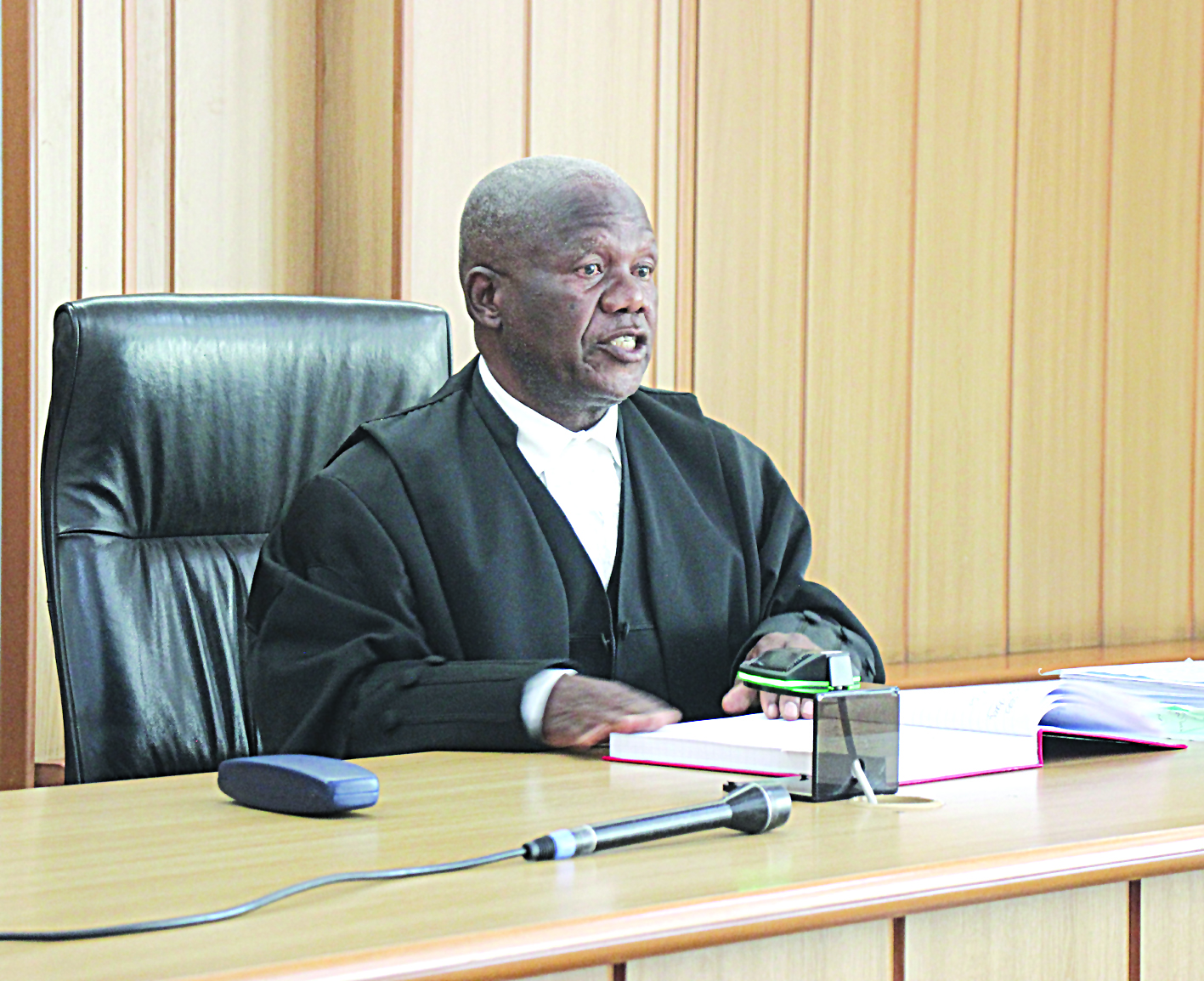
There were scenes of relief and emotion at the High Court after a woman convicted of assault had her six-year prison sentence reduced to three months or a fine of E500.
Zanele Shongwe, from Luhlokohla in the Manzini district, had been serving her sentence at Mawelawela Correctional Centre following her conviction by the Mafutseni Magistrate’s Court.
She was arrested on or about July 17 by officers from Mafutseni Police Station and subsequently charged with assault common.
She was alleged to have assaulted a 9 year old neighbour’s child while at school over allegations of food that was stolen at the school.
After her conviction, the magistrate sentenced Shongwe to six years imprisonment with the option of paying a E12 000 fine. Dissatisfied with the sentence, Shongwe noted an appeal to the High Court and also applied for bail pending the hearing of her appeal, arguing that she was not a flight risk and that there were reasonable prospects of success.
In her affidavit and notice of appeal, Shongwe challenged both the conviction and the severity of the sentence.
She argued that the magistrate erred in fact and in law by failing to properly consider the personal circumstances of the appellant when imposing sentence. She further submitted that the evidence led by the State did not establish the elements of assault common beyond reasonable doubt.
Among the grounds of appeal was the assertion that the complainant, who testified as the State’s first witness, expressly stated that Shongwe did not assault him, but merely held him by the arm.
ALSO READ | ‘Politicians’ pay-raise unsustainable, insensitive’
Shongwe further contended that no evidence was led to prove allegations contained in the charge sheet that she assaulted the complainant with open hands, dragged him by the clothes or acted with intent to injure him. She maintained that the six-year sentence induced a sense of shock.
The matter came before High Court Judge Titus Mlangeni, who expressed concern over the sentence imposed by the lower court. During the proceedings, Judge Mlangeni remarked in vernacular that the sentence appeared excessive.
“Bebafuna ubolele ejele,” he stated in vernacular, which could be translated to, ‘they wanted you to rot in prison’.
The judge stated that the sentence seemed to fell on the higher scale of assault with intent to cause grievous bodily harm.
After hearing submissions from Shongwe’s legal representative, Nomakhosi Mamba, Judge Mlangeni set aside the original sentence and substituted it with a fine of E500 or, in default of payment, three months imprisonment.
Following the ruling, Shongwe was visibly emotional as the court order brought an end to her lengthy custodial sentence, pending finalisation of the appeal process.