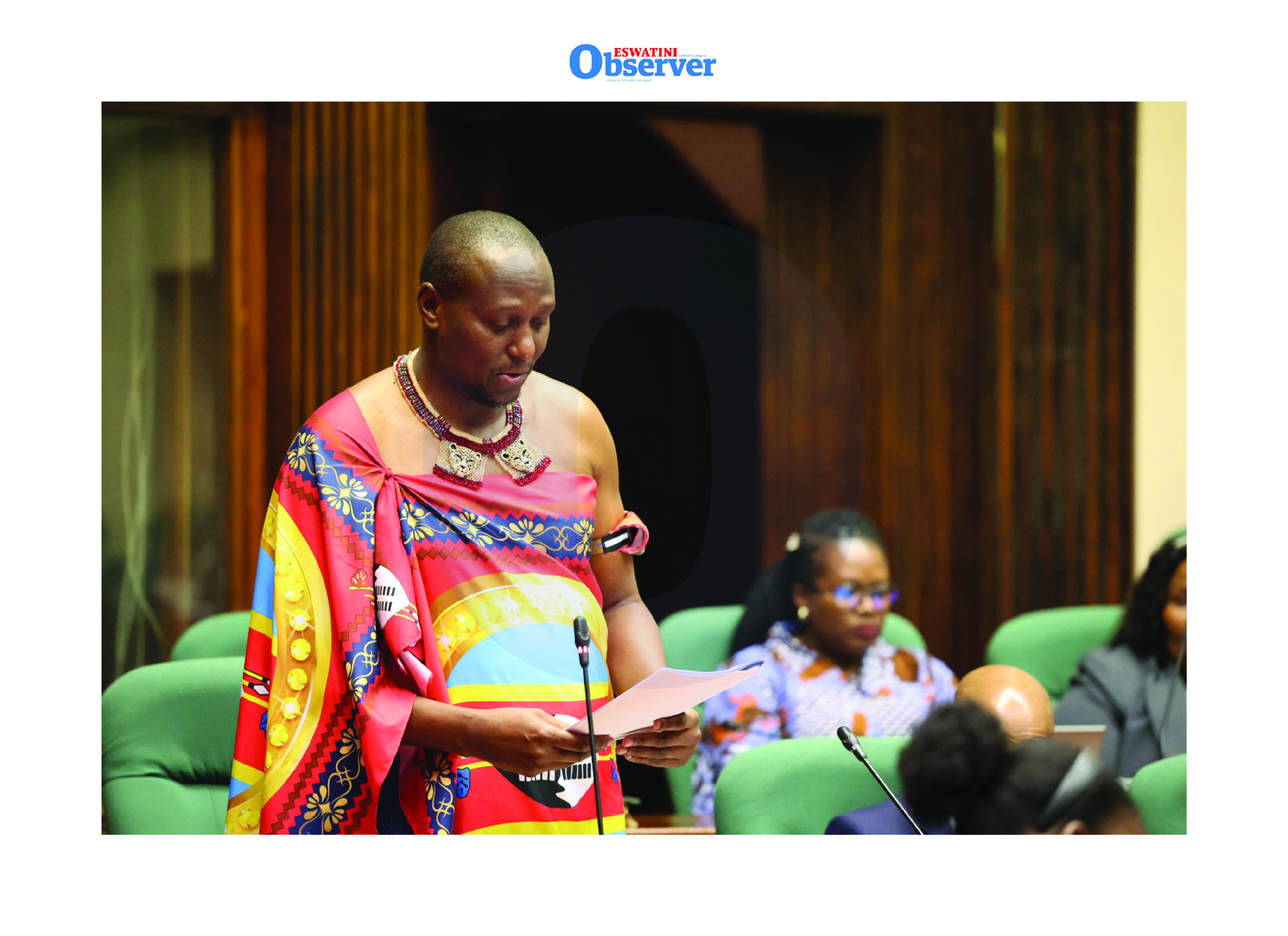
Prime Minister Russell Mmiso Dlamini has revealed that government will soon publicly name members of a cabal operating within the country, warning that there were already signs the group is pushing Eswatini towards State capture.
He added that the cabal was actively paralysing government operations.
The prime minister said the individuals behind the shadowy network were known, including some Members of Parliament (MPs) and that evidence was being compiled ahead of their exposure.
“It must come to an end because if we do not address the issue of the cabal, it will lead to State capture. Already there are signs of the cabal leading us to State capture and it is also paralysing government as that is their main intention,” he said when speaking during an Eswatini TV interview programme Asakhe Kwetfu, hosted by Lington Gule this week.
Dlamini described the cabal as a secretive group operating behind the scenes to influence and manipulate both government and private sector processes for their own benefit.
He said while the group may not strictly fit the narrow definition of corruption, its conduct could amount to corruption depending on how power and influence were used.
He explained that corruption should be understood as the use of authority for personal gain at the expense of the people, institutions or government one is meant to serve. In that context, he said, if the cabal’s actions aligned with such conduct, then it must be treated as corruption.
RELATED | Hhohho Regional MP confirms there’s cabal in Parly
The prime minister said the existence of the cabal was not speculative, but a confirmed reality, with some members allegedly operating within Parliament and others embedded in government structures.
He warned that failure to decisively confront the group could have far-reaching consequences for governance and economic progress.
Meanwhile, Dlamini reflected on his tenure since assuming office on November 6, 2023, describing the journey as demanding, but expected of someone in his position.
He said leadership was inherently difficult globally and should not be mistaken for a popularity exercise.
Responding to criticism that he was a dictator, who did not take advice from others, he said such perceptions misunderstood the nature of leadership, which required firm and sometimes unpopular decisions in the interest of national progress.
He pointed to international examples, including Singapore, noting that strong leadership, even when it does not “mince words”, had enabled countries to transform into stable and developed economies.
He said he was drawing lessons from countries that had progressed rapidly, including Rwanda and Malaysia, which adapted successful models from Singapore to suit their own contexts.
The PM said the focus of his administration was to ensure the country does not remain stagnant or regress, but instead moves forward at a faster pace. He stressed that leadership should ultimately be judged by outcomes, particularly when one looks back at what has been achieved.
He further addressed the need for a national mindset shift, saying development aspirations required a change in how Emaswati perceive both local and external value.
He noted that negative narratives about the country, including those amplified by foreign media, had contributed to a perception that what comes from outside is inherently better than what is local.
Dlamini said this mindset needed to be corrected if the country was to fully realise its development ambitions, adding that most citizens desired a peaceful and prosperous Eswatini free from hardship.