




Last week, I wrote about Israel at war and increasingly at odds with much of the world: a country still living with the trauma of October 7, divided over Benjamin Netanyahu, losing international support and asking harder questions about the alliances on which its security depends.
Without diminishing what we had encountered in communities near Gaza, where the stories of October 7 were harrowing, or Jerusalem, where history seems to occupy almost every corner, Tel Aviv was the part of Israel I enjoyed most.
Perhaps age had something to do with it. People dressed differently and the city carried a different energy. At times, it felt as though I had entered another country altogether, rather than travelled only a few hours from communities where the scars of October 7 remained painfully visible.
There was something else difficult to ignore: an almost restless appetite for invention.
At the Peres Center for Peace and Innovation in Jaffa, that instinct is presented almost as a national characteristic. The centre, a legacy of former Israeli president and Prime Minister Shimon Peres, showcases technologies developed around problems ranging from medicine and agriculture to water scarcity and mobility.
Some sounded almost improbable when explained: technology capable of extracting drinking water from air; autonomous vehicles; work aimed at anticipating pressures that population growth will place on food production and aviation.
The emphasis was rarely simply on what had already been invented, but on the next problem waiting to be solved. That experience built on what I had encountered earlier at the Hebrew University of Jerusalem, where the Givat Ram innovation ecosystem attempts to move ideas from lecture rooms and laboratories into companies capable of surviving outside them.
Students and researchers are encouraged to turn academic research into businesses and social ventures. The remarkable part was not simply the technology, but the architecture around the ideas: universities, researchers, entrepreneurs, investors and institutions deliberately brought into one ecosystem.
Coming from Eswatini, that was difficult not to notice. Israel is a small country with limited natural resources and a domestic market dwarfed by those of major economies. Yet it has built an economy in which technological innovation has become one of its most recognisable exports.
LOOKING TO THE FUTURE
Mark Regev, former senior adviser to Netanyahu and former Israeli ambassador to the United Kingdom, pointed to Israel’s performance in the World Happiness Report as evidence of what he sees as an enduring optimism about the future.
Despite years of war and national trauma, Israel ranked eighth in the 2026 World Happiness Report for the second consecutive year. Eswatini, by comparison, ranked 137th globally.
“Israel’s ranking has consistently gone up since 2021. This doesn’t surprise me because Israelis have a sense of meaning and purpose, which contributes to their overall satisfaction with life,” Regev stated.
Then there is Israel’s younger generation. Those under 25 ranked among the happiest young populations measured globally, even as many in that generation have come of age through October 7, military service and prolonged war. To Regev, those realities do not necessarily contradict each other.
He explained that to him, happiness in this context should not be confused with being cheerful every day, arguing that the report captures people’s broader assessment of their lives rather than the emotions of a particular morning.
Israelis, he emphasised, can be angry with their government, exhausted by war and worried about relatives serving in the military while retaining confidence in their lives and future.

“You are here yourself. You can see and talk to the people here and see how happy they are and how hopeful they are for the future,” Regev said.
In Tel Aviv, there was plenty for me to observe. The Mediterranean stretched along a beachfront busy from morning until sunset, with runners on the promenade, swimmers in the water and groups gathering on the sand playing netball.
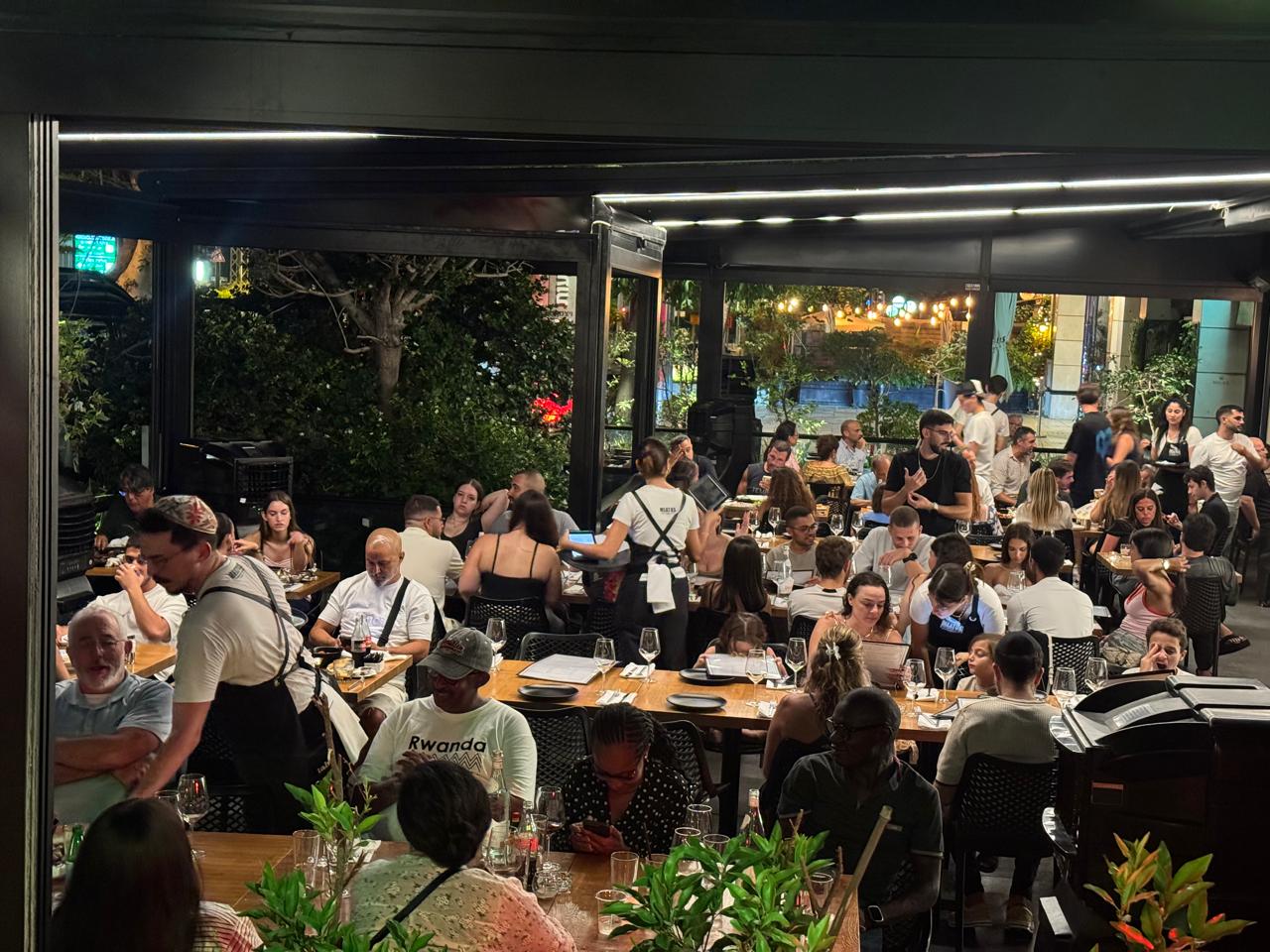
Restaurants filled as evening approached and, after dark, the city’s pubs and streets remained lively. It was also a city I found quite easy to move through. I could go for an evening run, walk back from a night out or head to the beach around sunrise without constantly calculating my safety even though there was no heavy police presence creating that sense of security.
The contrast was difficult to miss. Only a few hours away, the damage left by October 7 remained visible in communities near Gaza, while the war continued beyond them. It did not erase the suffering in Gaza or the grief of those affected. Nor did the innovation and optimism I encountered provide some convenient counterweight to either.
But it does reveal another Israel. For much of the world, Israel is presently encountered through war: Gaza, hostages, missiles, Netanyahu, international courts and casualty figures. Those realities are unavoidable. Yet spend time in its universities and innovation centres and another national pre-occupation becomes visible: what comes next.
Perhaps that is what stayed with me most about Tel Aviv. In a country consumed by arguments over its present, there were still rooms full of people busy designing for a better future they seemed certain would arrive.
LESSONS FOR ESWATINI
After a week in Israel, I returned home with no pretence that I had somehow understood the country, much less the conflicts surrounding it. If anything, proximity made simple conclusions harder.
But there were things I saw that stayed with me. The first was an uncomfortable appreciation for peace. I had never encountered people who appeared simultaneously traumatised and functional in quite that way. You could see a 21-year-old carrying a rifle while on a date. Conversations could turn to missile alerts and bomb shelters before returning to dinner or plans for the next weekend.
The extraordinary had somehow been absorbed into the ordinary. It made me wish we protected what we have at home more deliberately. Eswatini has its problems, serious ones. But most Emaswati wake without wondering whether a missile will interrupt breakfast or whether a child serving in the military will return from the front. Peace becomes easy to undervalue when it has been inherited rather than fought for every morning.
But the most important lesson had little to do with nightlife, technology or even security.
It was purpose. I noticed it repeatedly among young Israelis I met, including those around my age on Tel Aviv’s beaches and during evenings out.
They disagreed about Netanyahu. Some were unhappy about how long the war had lasted. Others had their own grievances about the direction of the country. This was certainly not a population marching obediently behind its government.
Yet beneath those disagreements was something that became clearer the more people I met: a sense that Israel belonged to them and that they therefore owed something to it.
Atir Vinnikov, a 25-year-old business student at Reichman University in Tel Aviv who is a survivor of the Hamas attack on the Nova music festival, gave that sense of responsibility a human face.
For about half an hour, he took me through the horrific story of how he and his friends escaped the violence around them. Yet after surviving an attack that could easily have killed him, Vinnikov returned to military service and wanted to serve barely 48 hours later.
“This is because I understand that it is my responsibility to protect my country,” he said.
Here was a young man who had just survived October 7 but returned to serve as his responsibility. That was the sense of purpose I had been trying to put my finger on.
The military service undoubtedly plays a role. Israel’s system brings many young citizens into direct contact with the obligations of the state in a way that young Emaswati do not experience.
That, perhaps, is where the Israeli experience became most interesting for me. Eswatini is a very young country, with a median age of about 21. That youthfulness should be one of our greatest national assets.
Yet too often we appear convinced that the better answer must come from somewhere else. Everything foreign appears to be ideal than our own. Israel offered an interesting contradiction to that instinct.
This is a small country with few natural resources and a limited domestic market. Yet the innovation centres I visited were not organised around waiting for somebody elsewhere to solve Israeli problems.
PATRIOTISM NOT BLIND LOYALTY TO POLITICIANS
The question running through them seemed to be, what can we build ourselves?
There are practical lessons Eswatini can take from that. Stronger links between universities and industry, better support for start-ups, greater investment in research and institutions willing to tolerate experimentation and failure.
Those are things governments can design, fund and measure.
Purpose on the other hand, is harder. Nor should national purpose mean unquestioning loyalty to government.
People could be deeply critical of Netanyahu and still speak about Israel with an unmistakable sense of ownership and responsibility.
That distinction for me is the greater lesson. A country is not its government. Loving one does not require agreeing with the other, therefore, criticism of government does not diminish one’s commitment to the country itself.
Patriotism should have room for criticism, not despite our belief in a country, but because of it.
It can mean looking at what is failing and believing it is still ours to improve; seeing what works elsewhere without assuming that everything worth building must come from somewhere else.
That, more than any technology I saw or political argument I heard, is what travelled home with me. I had gone to Israel to better understand a country Eswatini has called a friend for decades, including through periods when that friendship has not always been diplomatically comfortable.
I returned without simple conclusions about it. A week among the grief of communities near Gaza, the arguments over Netanyahu, the confidence of Tel Aviv and the restless ambition of its innovation centres made simple conclusions harder, not easier.
But somewhere between those contradictions was something I could recognise from home: a country does not have to be perfect for its people to believe it is worth building. Therefore, criticising politicians is not the same as rejecting the country they serve.
Those of us in the media may often find ourselves in an adversarial relationship with politicians; that comes with the work. But adversaries are not enemies of the State.
We ask difficult questions, expose what is failing and demand better because this is our country too and we believe it can be better.
It is one lesson I hope our politicians can take. Disagreement and patriotism can occupy the same room. Sometimes, the people who challenge you most do so not because they have given up on their country, but because they refuse to give up on it.