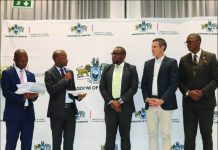



The African Development Bank (AfDB) has assessed the implementation of major projects it is financing in Eswatini.
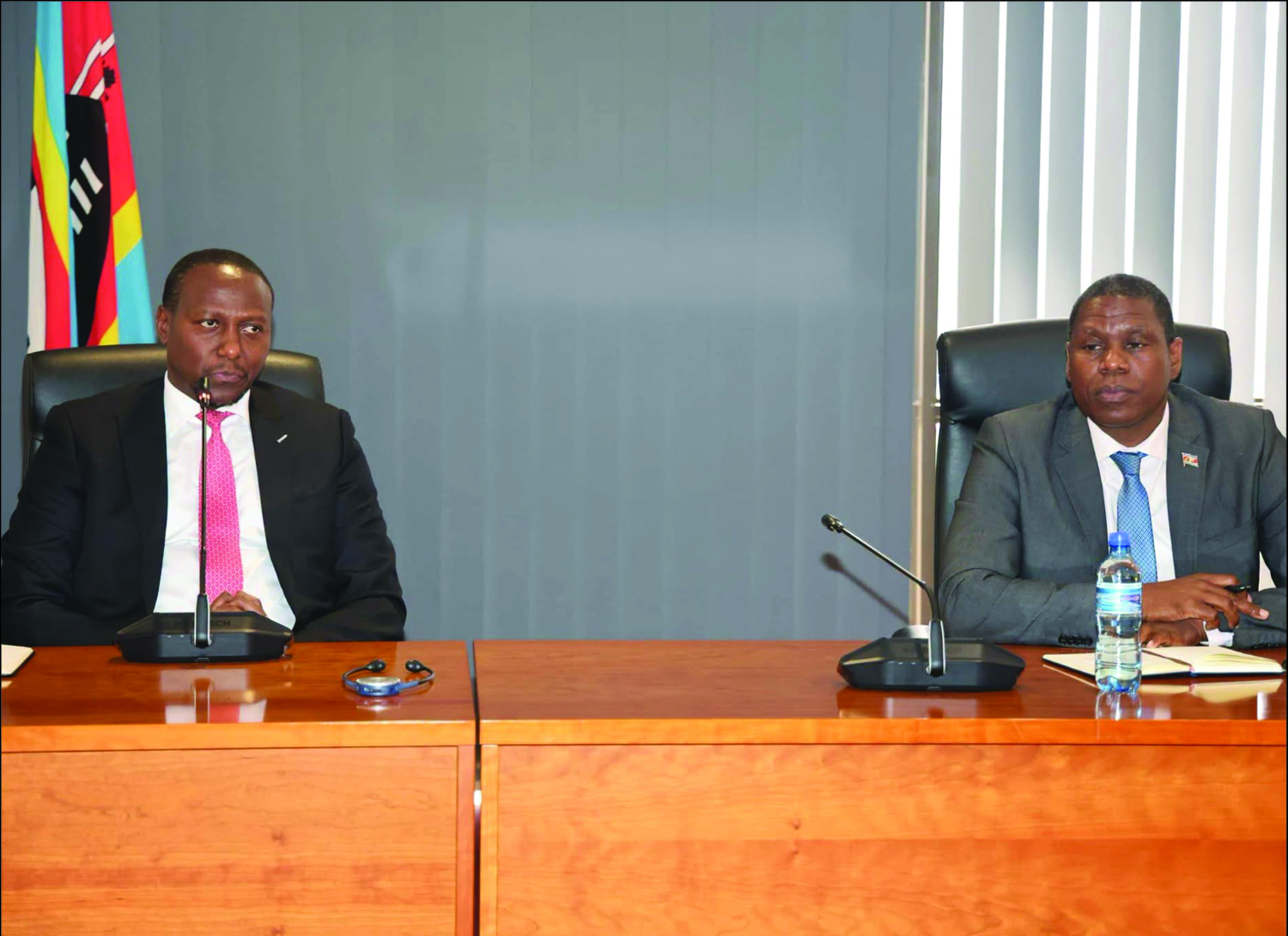
The bank’s senior advisors and advisors representing 30 countries expressed a positive assessment of the projects they had visited. The delegation paid a courtesy call on Prime Minister Russell Mmiso Dlamini last Friday following its assessment of projects including the Lower Usuthu Smallholder Irrigation Project Phase II (LUSIP II) and the Mpakeni Dam.
LUSIP II, which is aimed at expanding irrigated agriculture and transforming smallholder farmers into commercial producers, was approved by the AfDB in 2016 with a loan of about US$63 million. The project is designed to develop infrastructure to irrigate about 5 000 hectares and directly benefit a further 1 000 households.
The Mpakeni Dam forms part of the Mkhondvo-Ngwavuma Water Augmentation Programme (MNWAP), a major water and irrigation development initiative in the southern part of the country. The first phase, which includes construction of the Mpakeni Dam and downstream conveyance infrastructure, was estimated at 83 million units of account (UA) in AfDB project documentation.
The broader MNWAP involves the construction of Mpakeni Dam and associated conveyance and irrigation infrastructure, with the overall cost of the dam, associated works, conveyance system and in-field irrigation infrastructure estimated at about €400 million.
Other AfDB-supported initiatives in Eswatini include the Eswatini Road Infrastructure Improvement Programme Phase I, with a total cost of US$175.71 million, with US$140.6 million financed by the AfDB and the remainder by Government. The programme includes upgrading the Siphofaneni-Sithobela-Maloma-Nsoko (MR14) road and is intended to improve connectivity and mobility in rural and urban areas.
The bank is also supporting the MNWAP’s Phase 1A and Phase 1B components, including the main conveyance from Mpakeni Dam. Recent AfDB records show continued implementation and procurement activity under both components.
During the meeting with the delegation, the prime minister welcomed what he described as the positive assessment of projects visited and expressed His Majesty’s government’s appreciation for the AfDB’s continued partnership in advancing the country’s development agenda.
According to the Government Press Office, the discussions also explored opportunities for deeper cooperation on a number of strategic mega projects being pursued by government.
These include industrial parks, the Intermodal Transport and Logistics Project, the SADC University of Transformation, the national stadium, a referral hospital and the new Parliament building and campus.
Dlamini emphasised that development partnerships should ultimately translate into tangible benefits for Emaswati.
He therefore urged the AfDB to consider procurement frameworks that would create greater opportunities for qualified local businesses and young people to participate in and benefit from projects implemented in the kingdom.
According to the prime minister, ensuring greater local participation would help major investments achieve benefits beyond infrastructure development by supporting local enterprise development, employment creation and improved livelihoods.
He reiterated government’s commitment to strengthening its partnerships with development institutions as the country pursues its aspirations.