



Business Eswatini (BE), the country’s leading private-sector representative body, has shut the door on a membership bid by Inyatsi Group Holdings, turning down applications from some of the Group’s companies while declining re-admission to others that were previously members.
Under the chairmanship of Zambia-born businessman Michelo Shakantu, Inyatsi Group Holdings is one of the country’s most diversified corporate groups, with companies spanning construction, telecommunications, mining, healthcare, insurance, manufacturing, property and media, and an annual turnover of about E18 billion, according to Shakantu.
The bid involves some of the Group’s companies seeking to join BE, while others are seeking re-admission or upgraded membership after previously belonging to the organisation.
The Sunday Observer understands the companies were seeking membership under BE’s two highest corporate tiers: Platinum, the organisation’s top membership category, and Gold, the tier immediately below it. Sources said Platinum membership costs more than E100 000 annually for each company.
With several of the Group’s companies seeking admission, re-admission or upgraded membership across the two categories, their combined annual subscriptions would have exceeded half a million Emalangeni. The applications have, however, not progressed to the memberships sought.
“The matter has not even reached the wider membership for discussion. It was known only to a few people within the organisation, and a decision was taken without any explanation being given to the broader membership,” said a source, who requested anonymity because they were not authorised to speak on behalf of the organisation.
Inyatsi Group Holdings confirmed that it applied to BE for membership, re-admission and membership upgrades involving several of its companies.
However, the applications have not resulted in the memberships sought, with some held in abeyance, others receiving what it described as ‘technical responses’ and some going unanswered.
In a written response to questions from the Sunday Observer, the Group said an executive decision was taken earlier this year to bring all its entities into BE, either by reinstating companies whose previous memberships had elapsed, applying for membership for other entities or upgrading existing memberships to reflect the size of individual businesses. The Group said the decision followed its experience with subsidiaries already active within Business Eswatini, including Lidwala Insurance, Maloma Colliery, The Clinic Group and Eswatini Mobile.
“From joint executive meetings involving subsidiaries that were active members of Business Eswatini, namely Lidwala Insurance, Maloma Colliery, The Clinic Group and Eswatini Mobile, the Group has seen the benefits of being part of this national body and realised the value accruing from same,” Inyatsi said.
It disclosed that Inyatsi Construction and Eswatini Meat Industries (EMI) had also previously been members of BE, but their subscriptions elapsed over the years as leadership changed.
As the Group moved to streamline and consolidate some of its operations and processes, it said aligning its businesses within BE was seen as a way of strengthening partnerships across the private sector.
The Group, however, said its companies had received differing responses to their applications.
“It’s unfortunate that, for some reason, some entities haven’t received a response on the application for reinstatement,” Inyatsi said.
It added that some companies seeking to upgrade their membership to categories more closely aligned with the size of their businesses had either had their applications held in abeyance, received what the Group described as “technical responses”, or had not received a response at all.
Despite this, Inyatsi said it had taken no further action and remained hopeful that the applications would ultimately be considered.
“As a Group, we believe in forming formidable business relationships.
“It is true that at certain times when we do business, paths get crossed and relationships impaired. We understand that as a Group we cannot operate in an island. We need the entire business community of Eswatini to thrive and the inverse is true,” the statement said.
The Group said it remained optimistic about the outstanding applications and had chosen not to escalate the matter.
“We have not taken any further action on the applications because we are optimistic and believe the executive of BE will be ethical and prudent in adjudicating the entity applications and reinstatement and upgrade of membership,” it said.
Business Eswatini, on the other hand, maintained that the membership status and applications of individual companies were confidential and said it would therefore not discuss or disclose details relating to the Inyatsi Group companies’ applications.
The organisation did, however, explain that membership applications were considered in accordance with its governing instruments and established internal processes.
“Where an application requires further consideration, this is dealt with through the appropriate governance structures of the organisation,” it said.
INSIDERS DRAW LINK TO ENPF BOARD IMPASSE
Insiders, however, have drawn a link between the current membership impasse and the governance battle over the appointment of former Inyatsi Construction Chief Executive Officer (CEO) Derrick Shiba as chairman of the Eswatini National Provident Fund (ENPF).
That connection could not be independently established, and neither BE nor Inyatsi have attributed the handling of the applications to the ENPF dispute.
The ENPF dispute became one of the country’s most recent prominent clashes between government and the social partners after Shiba was appointed chairman of the board governing one of the country’s largest institutional investors, which manages more than E7.9 billion in assets on behalf of over 170 000 members.
BE was among the organisations that challenged the process surrounding his appointment, while representatives of the social partners subsequently declined to participate fully in the board’s activities until their concerns were addressed.
At the centre of the disagreement was a long-standing convention governing the ENPF chairmanship. The position had traditionally rotated among employers and organised labour. Although stakeholders regarded that arrangement as an important governance convention, it was not expressly provided for in the ENPF Order. Government, through Minister of Labour and Social Security Phila Buthelezi, maintained that the law empowered the responsible minister to appoint the chairman and deputy chairman. The social partners, meanwhile, placed weight on the long-standing rotational arrangement and consultation among the three constituencies governing the Fund.
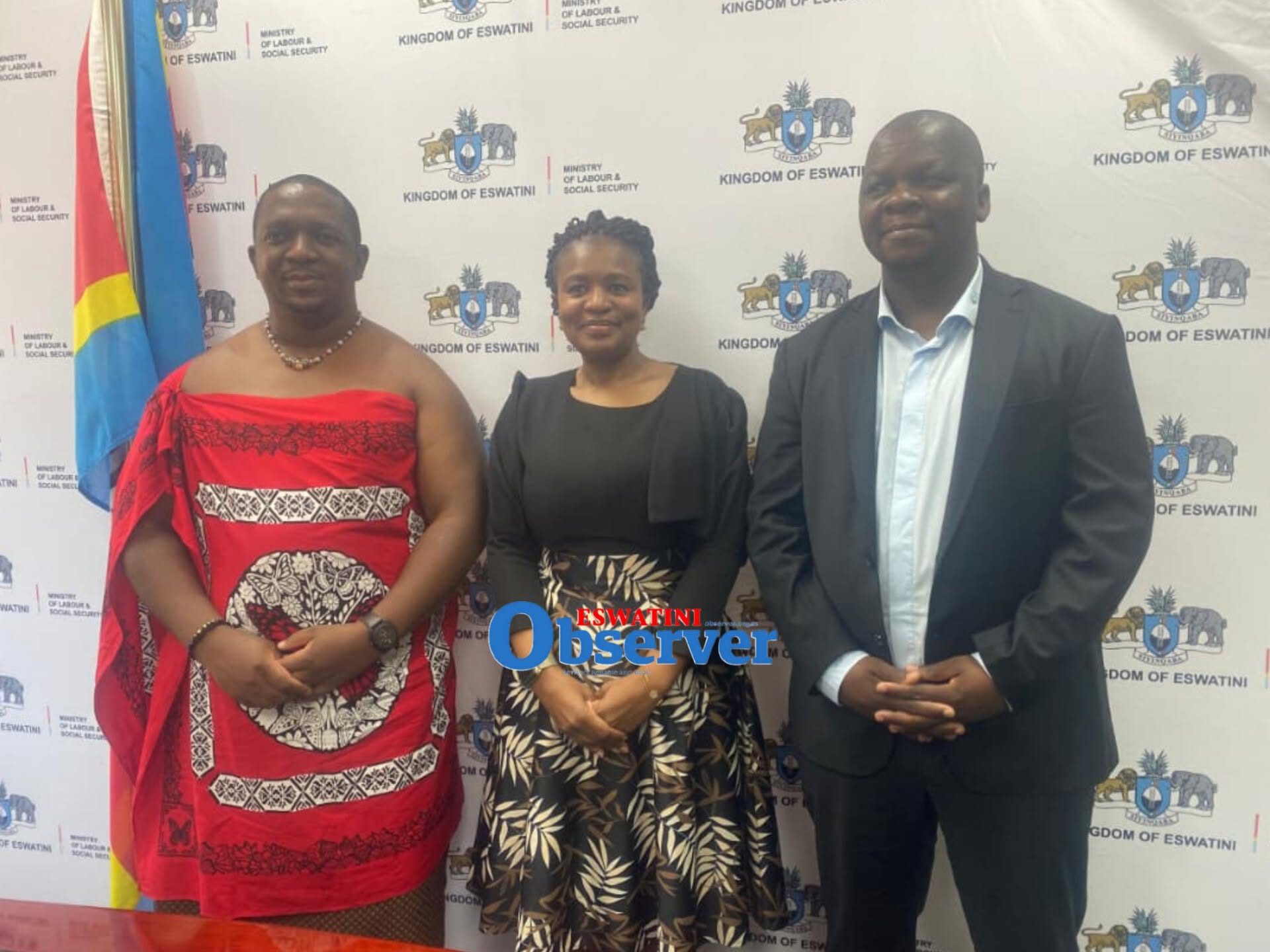
Those competing positions collided following Shiba’s appointment, resulting in a governance deadlock that prevented the board from becoming fully operational. The standoff lasted for about eight months before Minister of Labour and Social Security Phila Buthelezi dissolved the Board on July 17. A seven-member parliamentary select committee chaired by Lobamba Lomdzala MP Marwick Khumalo subsequently investigated what led to the impasse. Its inquiry heard evidence from Business Eswatini, organised labour, government ministers, ENPF officials, legal experts and Shiba himself.
The committee concluded that legislative ambiguity, competing governance traditions and a breakdown of trust among the stakeholders were central to the crisis, finding that the dispute went considerably deeper than the identity of the chairman.
Shiba himself rejected suggestions that the dispute was fundamentally about him.
He told the select committee that some stakeholders objected to the manner in which government had exercised its appointment powers and believed the chairmanship should continue rotating among Government, employers and organised labour.
His testimony also established an important distinction in considering the latest developments: his relationship with Inyatsi. Although Shiba remained widely associated with the company after almost two decades at Inyatsi Construction, he told Parliament that he was no longer part of the business.
During questioning about whether his previous links with Inyatsi Construction and Swazi Mobile could compromise the independence expected of an ENPF chairman, Shiba told MPs that he resigned from Inyatsi Construction in November 2024 after 19 years with the company. He further stated that his previous business relationship with the company ceased when he left.
The latest developments involving Inyatsi Group, therefore, emerge from a recent history involving some of the same institutions and personalities.
There is, however, no public evidence establishing that the ENPF disagreement has determined BE’s handling of the Group companies’ membership applications.