


For the past two weeks, many of us have started enjoying the return of warmer days. Jackets are coming off a little earlier, that extra blanket has found its way back into the drawer and mornings no longer require as much courage to leave the warmth of bed. Winter is loosening its grip.
Normally, we welcome that. This year, however, the warmth arrives with a warning. The Eswatini Meteorological Service has issued an El Niño advisory for the 2026/27 season, warning that conditions are expected to strengthen over summer. Strong El Niño events have been associated with below-normal rainfall and higher maximum temperatures, increasing the probability of drier and hotter conditions across Eswatini and Southern Africa. And finance is, at its core, partly about what we do before uncertainty becomes an invoice.
The minister of agriculture has already explained how government wants farmers to prepare: expand irrigation, use irrigated commercial estates to produce more food, intensify production in areas with more reliable rainfall and strengthen conservation agriculture.
Those measures make sense from the farm. But drought does not remain on the farm and that is where today’s money conversation begins. Imagine rainfall disappoints and a maize farmer harvests less. That is the first-order effect, but the financial system does not stop there. The miller still needs grain.
Retailers still need stock. Households still need food. Now the drought has travelled. Agriculture feels it as lost output. A food processor feels it as a more expensive input. A transporter feels it through fuel and volumes. A retailer receives a new price from the wholesaler. And the household meets it at the till.
Nobody standing in the supermarket queue says: “El Niño reduced agricultural output and altered the domestic supply-demand balance.” They say: “Why has this become so expensive?”
That is the first important financial lesson. A drought rarely presents itself to households as drought. It presents itself as prices. Now follow what happens next.
A household has E8 000 or E15 000 or E30 000 available each month. Its income does not automatically increase because food, electricity, transport or water becomes more expensive. So when essential expenditure grows, something else must shrink.
That ‘something else’ is where drought moves from agriculture into the rest of the economy. The family postpones new furniture. It eats out less. The clothing purchase waits. The weekend trip disappears. Perhaps a home renovation is delayed. One household making those choices is personal budgeting.
Thousands of households making them at the same time is an economic event. The restaurant sees fewer customers. The furniture shop has a quieter month. The salon loses the client who normally came twice. The building supplier notices people postponing improvements.
That is why a drought can hurt a business that has never planted a seed. The farm loses rainfall. The household loses purchasing power. The SME loses revenue. Same shock. Different balance sheets.
SMES NEED TO THINK IN SYSTEMS
Small businesses should therefore, resist asking only: “Will drought affect my business?” That question is too narrow. Ask instead: “Through which channel will drought reach my business?”
There are at least three. The first is input exposure. A restaurant is exposed to food prices. A bakery to flour. A logistics business to fuel. A manufacturer may depend on imported raw materials. A salon may use products whose prices change when transport or import costs rise.
The second is customer exposure. You might sell nothing connected to agriculture and still suffer because your customers have less disposable income.
The third is continuity exposure. Water shortages, disrupted suppliers or slower payments can interfere with day-to-day operations.
Those are three very different risks that require three different preparations. This is where drought planning becomes financial strategy rather than simply buying a water tank.
GOVERNMENT HAS LESS ROOM
There is another layer to the system. Government itself is not entering this risk from a position of unlimited financial comfort.
This week, government through the finance minister made it known that cash flow remains under strain while it works to secure budget support and other financing.
He has explained that major commitments, including the salary review and completion of the International Convention Centre, placed pressure on available cash, while government continues working to raise additional funds.
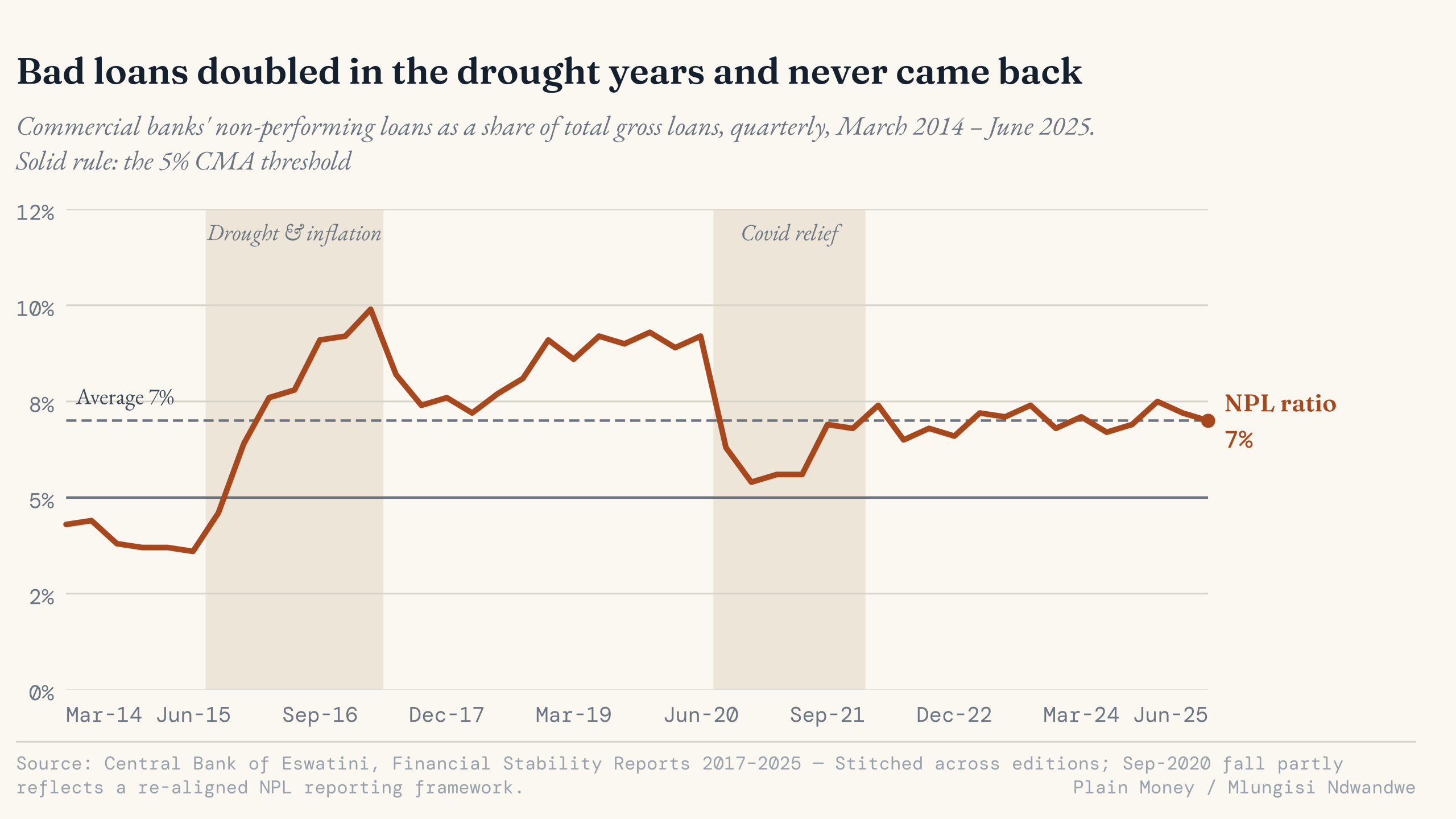
That matters because a drought requires government to spend more precisely when the wider economy is becoming weaker. Food support may be needed. Water infrastructure may require intervention. Farmers need assistance.
Imports rise. Meanwhile, households experiencing higher living costs may spend less elsewhere, weakening some businesses and potentially reducing parts of the tax base. That creates a feedback loop. Drought pressures households, households cut spending, businesses weaken and government faces greater social demands while parts of economic activity soften. That is why financial resilience cannot be outsourced entirely to government.
There may be public intervention, but there should be contingency planning. And households as well as SMEs that have any ability to create their own buffers should use this warning period to do so.
PREPARATION IS KEY
So what should households and businesses actually do? Not panic because panic is usually expensive and it never helps to worry about something that you cannot control anyways. Do something more useful and find your exposure.
For households, identify the essentials that already consume the largest share of income. Ask what happens if that basket becomes moderately more expensive. If there is room, build a buffer before prices force you to. If expensive short-term debt can be reduced, reduce it. Avoid committing too much future income to discretionary borrowing just before uncertainty increases.
For SMEs, model three things at once: lower sales, higher costs and slower customer payments. That is a proper stress test. A business that can survive any one of those shocks separately may struggle when all three arrive together. And that is exactly how systemic shocks behave. They rarely knock on one door.
The most dangerous thing about drought financially is that it will probably not feel dramatic at first. There may be no single morning when everyone wakes up and realises the drought has arrived.
Instead, the grocery basket becomes slightly more expensive. Then the supplier sends a revised quotation. Then a customer asks for another 30 days. Then the quick loan seems reasonable. Then government announces another intervention. The individual events appear separate, but they are not.
That is systems thinking in finance: recognising that what looks like five unrelated problems may actually be one shock travelling through five different balance sheets.
The Meteorological Service has given us something money cannot buy once a crisis has arrived. Time. Time for farmers to think about water. Time for government to strengthen contingency plans. Time for businesses to understand their customers, suppliers and cashflow. And time for households to create whatever room their incomes realistically allow.
Resilience is not having enough money to avoid every shock. It is having enough room to avoid turning one shock into three. That is why the smartest preparation this summer is not simply to ask whether the rains will come, but rather if they do not, where does the shock reach me first and how do I stop it there?
Mlungisi Ndwandwe is a seasoned strategy and investment executive with extensive experience in corporate development, capital allocation and business growth across international markets. He writes in his capacity as Founder and Chief Executive Officer of Sicebi International Group Holdings.