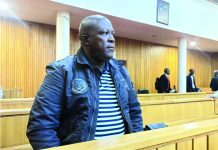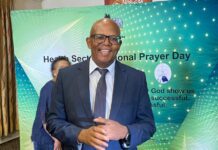

A confidential legal opinion by one of the country’s top law firms has challenged Minister of Labour and Social Security Phila Buthelezi’s defence of the now-controversial appointment of Inyatsi Construction Chief Executive Officer Derrick Shiba as chairperson of the incapacitated Eswatini National Provident Fund (ENPF) Board.
Commissioned by one of the ENPF stakeholders, the advisory opinion disputes the interpretation of the law relied upon by the minister to justify the appointments and argues that aspects of the process were ‘incorrect legally and factually.’
The ENPF Board oversees one of the country’s most critical institutional investors and a foundational pillar of the non-banking financial sector, holding over E7.14 billion in assets.
Shiba’s appointment as the board chairperson has emerged as the defining fault line in a dispute that has effectively paralysed the governing authority of one of the country’s most systemically important statutory funds since its appointment in October last year.
Employer and employee representatives have taken a unified stand by suspending and boycotting participation in all board activities. Because they (employer and employee representatives) together constitute the voting majority of the board, their withdrawal has effectively left it unable to function for nearly seven months.
The intervention of Prime Minister Russell Dlamini is now required.
Despite the paralysis, board members have continued receiving monthly allowances and operational benefits, with more than E132 000 already paid out in retainers alone despite the board failing to convene a substantive meeting since its appointment.
What has emerged as the fundamental legal question in the stand-off is an obscure clause buried within the ENPF Order of 1974 which provides that one member of the board must be ‘a person nominated by the minister for local administration.’ However, that ministry no longer exists.
Minister Buthelezi has defended the appointment by arguing that the old ministry of local administration effectively evolved into the present-day ministry of housing and urban development because local councils historically fell under that portfolio.
“I followed the law. If anyone has questions, they should get a lawyer to properly break down the law for them,” said the minister in a previous interview with this newspaper.
Now, in the detailed legal analysis obtained by the Sunday Observer, the law firm directly disputes that interpretation.
Instead, the firm concludes that the true legal successor to the former ministry of local administration is the present-day ministry of home affairs.
“It, therefore, follows that the ministry presently known as the ministry of home affairs is the successor to the former ministry of local administration,” the advisory opinion states.
“Accordingly, the reference in the ENPF Order to the ‘minister for local administration’ must, in our view, be construed as a reference to the minister for home affairs,” reads another part.
The opinion further argues that the legal identity of a ministry is not changed merely through administrative restructuring or the reassignment of portfolios.

“The legal identity of the ministry is not altered merely by periodic changes in nomenclature or the reassignment of ministerial portfolios,” the lawyers wrote.
In reaching that conclusion, the firm conducted historical and constitutional research tracing the evolution of government ministries from 1974 to the present day.
According to the opinion, the former ministry of local administration later became the ministry of interior, then the ministry of interior and immigration, before ultimately evolving into today’s ministry of home affairs.
The legal opinion goes even further as the lawyers reveal that they interviewed a former principal secretary who also once chaired the Fund Mbuso Dlamini.
According to the opinion, the retired statesman explained that the original inclusion of the local administration ministry within the ENPF governance structure stemmed partly from the role allegedly played by the late Prince Masitsela in conceptualising the Fund during the 1970s.
The lawyers, however, cautiously highlighted that they were unable to independently verify that account.
Appearing before the Public Accounts Committee (PAC) last week, Ministry of Labour and Social Security Principal Secretary Makhosini Mndawe admitted before MPs that the board was still not functioning properly and disclosed that the matter had now escalated to the PM’s office.
“The matter is now with the office of the prime minister where it will be discussed and concluded,” Mndawe told MPs.
PAC Vice Chairperson Manzi Zwane warned that the paralysis threatened the integrity of one of the country’s most important public financial institutions.
“We had heard that the board was appointed, but is not functioning, which means the Fund is under threat,” Zwane said.
The board’s incapacitation arrives at a particularly sensitive moment for the Fund, which sits at the centre of government’s proposed conversion of the ENPF into a compulsory National Pension Fund.
That proposed restructuring has already triggered tensions between the ENPF and the Public Service Pension Fund (PSPF). The PSPF contends that aspects of the proposed model could threaten its long-term sustainability, while the ENPF has rejected those concerns, maintaining that both institutions can coexist within a reformed national pension framework.
In Parliament, legislators questioned whether the board’s inability to function had begun affecting progress on the proposed conversion.
Mndawe rejected that the process had stalled entirely, insisting that consultations with Parliament were continuing and that the proposal remained before the House.
Even so, MPs questioned how a board unable to properly convene and exercise oversight could effectively steer one of the most significant institutional reforms in the country’s recent economic history.
Kubuta MP Masiphula Mamba emphasised that substantial public funds had already been spent on consultations, lobbying efforts and preparatory work linked to the transition, while other PAC members warned that the unresolved instability within the board was now raising broader governance concerns around the reform process itself.
Insiders within ENPF also raised concerns that the ongoing paralysis has weakened institutional oversight precisely when major policy decisions are looming with the proposed conversion.
“There is a vacuum at the worst possible time,” one insider told this newspaper.
Acting Government Spokesperson Thabile Mdluli confirmed that the PM invited all stakeholders for talks aimed at resolving the impasse after previously meeting employer and employee federations.
“The PM has invited stakeholders of ENPF for a meeting with him and the Minister of Labour,” Mdluli said.
The board currently comprises Shiba, E. Nathi Dlamini (deputy chairperson), Prince Themba Dlamini, PS Mndawe, Khanyisile Dlamini, Phendukile Zikalala, Tokky Hou, Kingdom Mamba, Phila Mthethwa, Wonder Mkhonza and the fund’s Executive Officer, Futhi Tembe, who acts as its secretary.