



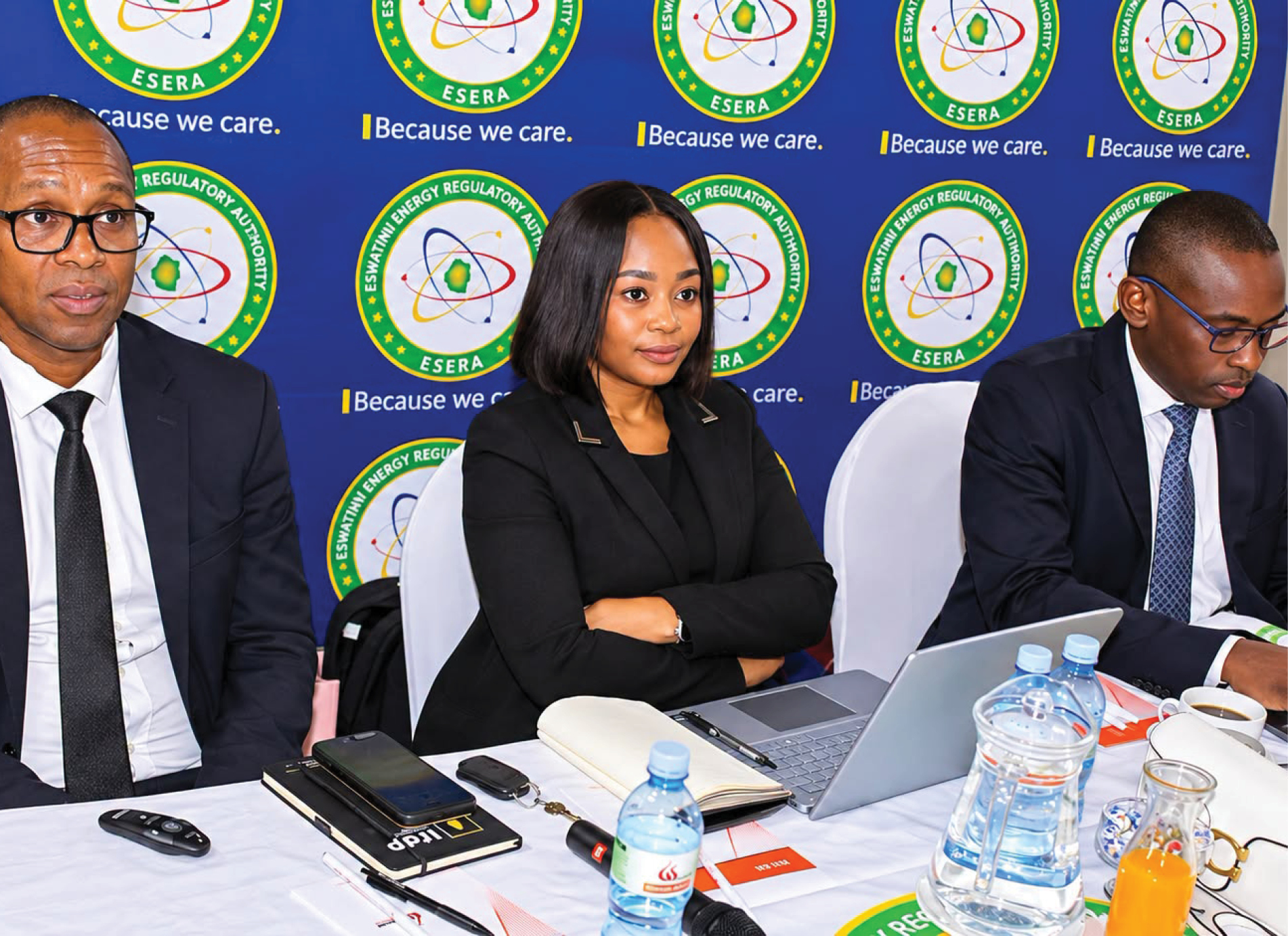
The Eswatini Electricity Company (EEC) will not automatically get the electricity tariff increase as per its request.
This was assurance given by Eswatini Energy Regulatory Authority (ESERA) Chief Executive Officer Sikhumbuzo Tsabedze to the public during the first session of the public consultations on the electricity tariff increase requested by EEC. The meeting was held at SibaneSami Hotel on Tuesday [November 24, 2026].
Tsabedze explained that despite the perception that the regulator merely responds unrestrained to the increases requested by the electricity company, this is far from the truth. He explained that although it is true that the regulator has to consider the revenue requirements of the electricity company, consumers are also considered and eventually factored into the final tariff increase.
ESERA will assess EEC’s proposed electricity tariff increases against the requirements of the Electricity Act of 2007, the tariff methodology and the interests of electricity consumers.
EEC has requested for an electricity tariff hike of 18.38% for the 2027/28 financial year and 14.68% for the 2028/29 financial year. This application is driven by the cost of bulk electricity purchases which constitute approximately 61% of the total revenue requirement as well as the recovery of E 533.1 million in past under recoveries.
The proposed increases will only come into effect if ESERA gives EEC the green light after reviewing the application and considering submissions from electricity consumers and other stakeholders.
EEC requests a revenue requirement of E4. 683 billion for the financial year 2027/28 and E4.939 billion for the financial year 2028/29.
The energy utility stated that the proposed revenues are required to cover prudently incurred costs, maintain network operations, and ensure the continued reliability and quality of electricity supply.
“EEC has further applied for approval to restructure its Time-Of-Use (TOU) tariffs by removing the distinction between high and low demand season energy charges applicable to the full range of tariff categories. Under the proposal, seasonal charges would be replaced with a single year-round set of peak. Standard and off-peak energy charges,” the CEO said.
EEC has indicated that the proposed tariff restructuring is intended to be revenue neutral and follows changes in its bulk electricity supply arrangements, where seasonal differentiation in bulk supply tariffs has been removed. The proposal does not seek additional revenue but aims to realign tariff structures with the current cost of supply.
The energy utility has also made an application seeking approval of embedded generation feed in tariffs and related connection as well as administrative charges for the financial years 2027/28 and 2028/29. The application maintains the avoided-cost principle for determination of compensation for eligible embedded generators through a net-billing mechanism. For 2027/28, EEC proposes a flat non-Time-of-Use feed-in tariff of 79.65 cents/kWh, while for 2028/29 the proposed tariff is 77.36 cents/kWh. Proposed TOU export credits vary according to off-peak, standard and peak periods.
As part of this exercise, ESERA would consider several technical, financial, economic, legal and consumer-protection factors when determining whether to approve the electricity tariff application.
ESERA will scrutinise EEC’s financial information to establish whether the proposed expenditure is necessary, reasonable and efficiently incurred.
Tsabedze said the regulator would not simply pass inefficient expenditure on to consumers through higher tariffs. It will consider the economic circumstances of ordinary households, businesses and vulnerable consumers.
The regulator would consider the public interest and not only EEC’s financial requirements.
It will have to determine whether EEC’s operating costs, revenue requirements and financial projections are reasonable and whether the costs EEC incurs when purchasing electricity from neighboring countries is justified.
ESERA will have to assess whether the claimed E533.1 million in previous under-recoveries is legitimate and should be recovered from consumers and whether the proposed increases are reasonable given the financial circumstances of households and businesses.
Therefore, the ongoing national public hearings will also play a significant role in terms of determining what consumers, businesses, government and other stakeholders say during public consultations.
These considerations are consistent with ESERA’s regulatory methodology.
The public hearings and financial scrutiny are particularly important because electricity is an essential service and the proposed increases will significantly affect the cost of living in the country.