
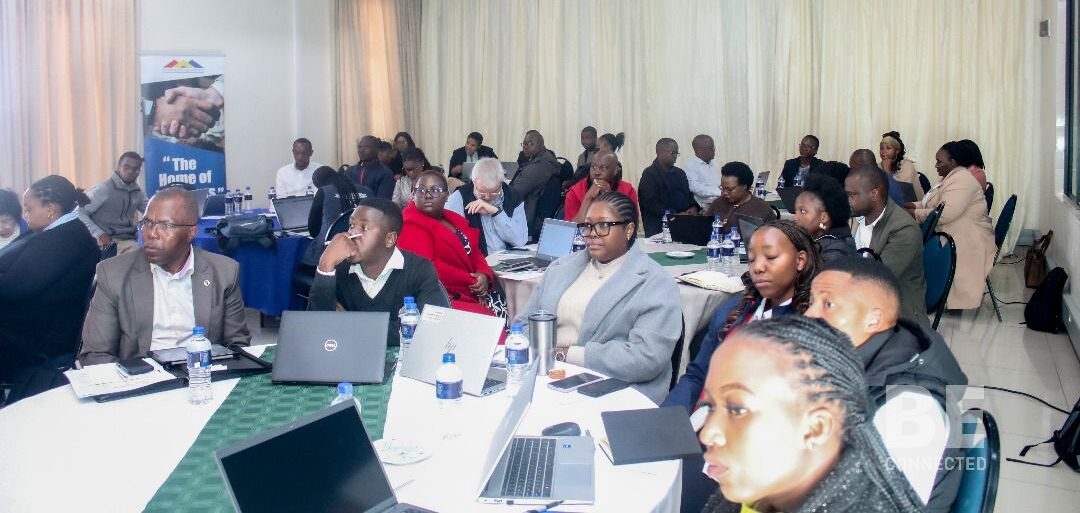
Business Eswatini (BE) brought together private sector leaders, financial institutions and government officials for a workshop focused on unlocking Green Climate Fund (GCF) capital for local climate-smart projects.
Held on Thursday, the workshop aimed to help Eswatini’s private sector gain practical tools to access global climate finance, especially through the GCF. The event also focused on supporting local institutions in building systems to meet the fund’s strict requirements. Speaking during the official opening of the session, Dr Lindani Mavimbela, representing the Food and Agriculture Organisation (FAO), said their work in Eswatini was focused on strengthening national capacity to meet GCF standards. He said this included working with the ministry of tourism and environmental affairs to put in place the necessary systems to access GCF funding directly.
“Our goal is to unlock direct access to Green Climate Fund resources so that local institutions can finance climate-smart investments, create decent jobs and help Eswatini meet its Nationally Determined Contributions (NDCs),” he said.
EswatiniBank, which is currently working towards GCF direct access accreditation, also shared its progress and plans. The bank’s representative, Project Coordinator Nozipho Mziyako, said the project aligned with their mission of financing inclusive growth and building climate resilience.
Mziyako added that the bank was developing several finance options, including concessional loans, performance-based grants, and partial guarantees, to attract more private investment in renewable energy, green agriculture and sustainable infrastructure. She encouraged other financial institutions in the country and region to join in these efforts.
“We see real value in collaborating with other financial institutions as this accreditation is for the nation, not the bank alone,” she said.
Representatives from the Eswatini Environment Authority (EEA) took time to explain their different roles.
National Environment Fund Officer Mfundo Langwenya clarified that while the Authority was responsible for enforcing environmental laws, its funding arm, the Eswatini Environment Fund (EEF), focuses on supporting climate projects.
He said the EEF offered grants for both climate change mitigation projects, such as renewable energy and clean transport, and adaptation projects, including water security and climate-resilient agriculture.
Langwenya added that the Fund prefers projects that can grow with support from GCF co-funding. Closing the workshop, BE Head of Trade and Commerce Musa Maseko said the session was the beginning of a broader sustainability programme to launched soon.
He urged businesses to identify potential projects that align with the country’s climate goals. “Eswatini’s private sector cannot afford to be a spectator in the race to a low-carbon, climate-resilient future. Today’s dialogue is our springboard from intent to investment,” he said.