


THE country has pledged to deepen its partnership with the United States of America and remain alongside Washington “through whatever comes next”, as the American government marked 250 years of independence.
Speaking through Prince Guduza at the United States Embassy’s Independence Day celebrations yesterday, His Majesty King Mswati III said the kingdom regarded itself not simply as a guest at the commemoration, but as a long-standing partner of the United States.
“We have walked beside you for more than half a century of our history and we intend to walk beside you through whatever comes next,” the king said.
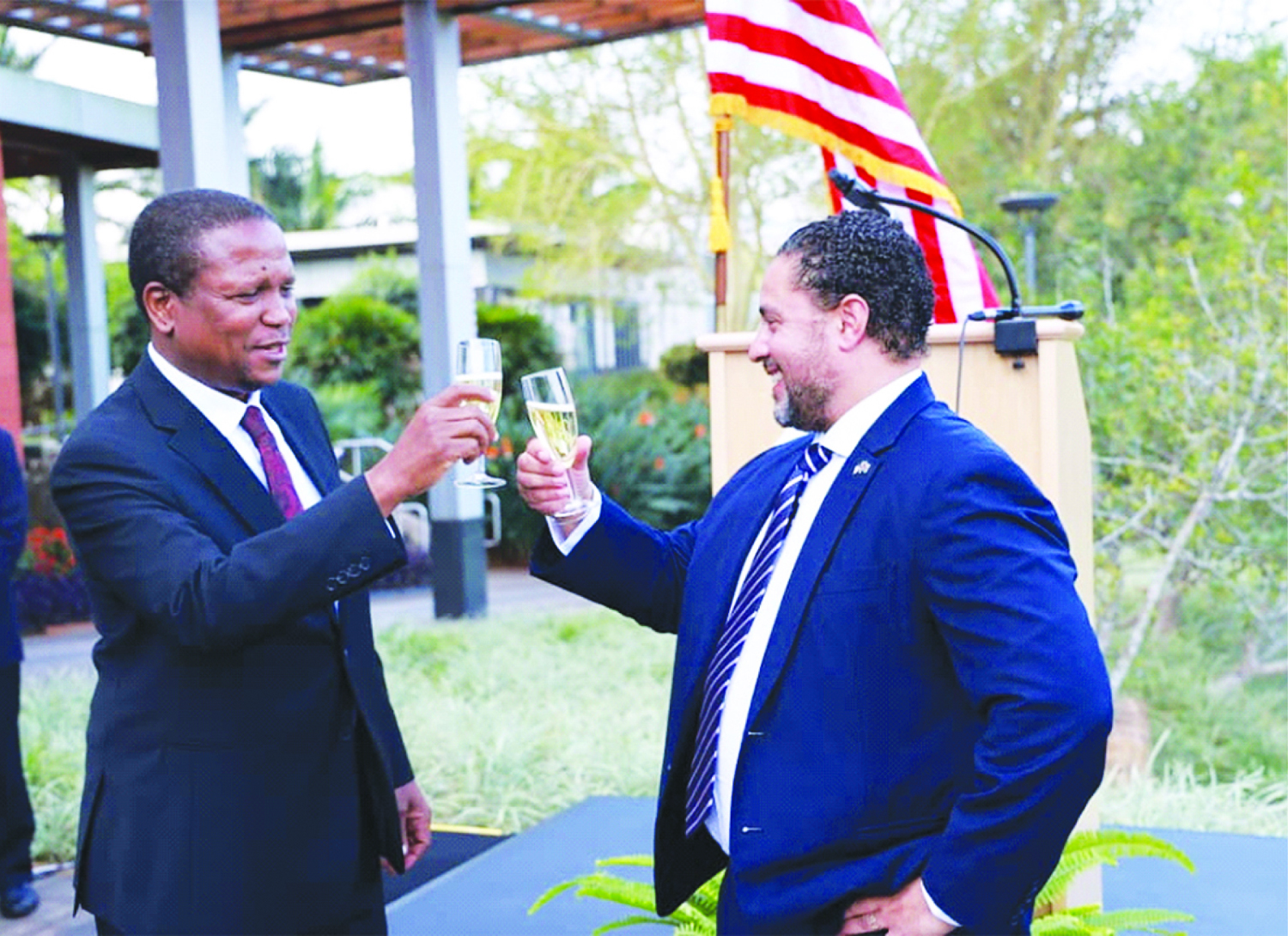
The event was attended by United States Chargé d’Affaires Marc Weinstock, diplomats, captains of industry, civil society representatives and alumni of American-sponsored exchange and leadership programmes.
The king said the relationship between the two countries extended beyond formal diplomacy, describing it as one rooted in cooperation between governments, institutions and ordinary citizens.
“We join you this afternoon not as distant observers, but as a country that has, for more than five decades, walked closely beside you. This milestone belongs in some measure to both of us,” he said.
The remarks came after a year in which Eswatini’s relationship with the US has attracted international scrutiny on two significant fronts: the country’s agreement to receive third-country deportees from the US, and a new five-year health cooperation agreement between the two governments.
The deportation arrangement drew public concern and the matter was even challenged in the High Court, with civil rights organisations arguing that the arrangement was concluded without sufficient parliamentary oversight or public disclosure.
The second major development has been the signing of a five-year Global Health Cooperation Memorandum of Understanding between Eswatini and the United States.
Under the agreement, Washington intends to provide up to US$205 million, about E3.48 billion, for health programmes over five years, while Eswatini has committed to increase domestic health spending by a further US$37 million.
The agreement has attracted attention after a Kenyan court suspended implementation of a similar health deal over concerns relating to data privacy and national sovereignty.
The United States Embassy in Eswatini has said the local agreement does not introduce new requirements for sharing personal health information and that Eswatini retains ownership and control of its data.
Against that backdrop, the king said the bilateral relationship had delivered practical benefits, particularly in health, education, youth development and innovation.
He cited the kingdom’s access to COVID-19 vaccines during the global pandemic, continued training for health workers and the recent health agreement, which he said reflected trust between the two governments.
“We wish to place on record our deep gratitude for this commitment and for the trust it represents,” he said.
His Majesty also referred to Eswatini’s inclusion among the first countries to benefit from a breakthrough in HIV prevention, as well as programmes that have supported young people through skills development, entrepreneurship and leadership opportunities.
He singled out graduates of the Fulbright Programme, International Visitor Leadership Programme, Young African Leaders Initiative and Pan-African Youth Leadership Programme, saying they had returned to Eswatini with skills and ambitions that could contribute to national development.
The king further paid tribute to the Peace Corps, which marks 50 years of work in Eswatini, particularly in education and community development.
“As the United States marks 250 years of independence, the Kingdom of Eswatini stands not merely as a guest of this commemoration, but as a genuine partner,” he said.
Eswatini, he added, remains committed to expanding cooperation with the United States in trade, health, tourism, education and innovation, while navigating changing global conditions “as friends who choose cooperation over uncertainty”.
Prince Guduza concluded the address by proposing a toast to the health of the United States president, the American government and people, as well as the continued friendship between Eswatini and the United States.